12 MAY 2025 | Mulembe Times Security Correspondent
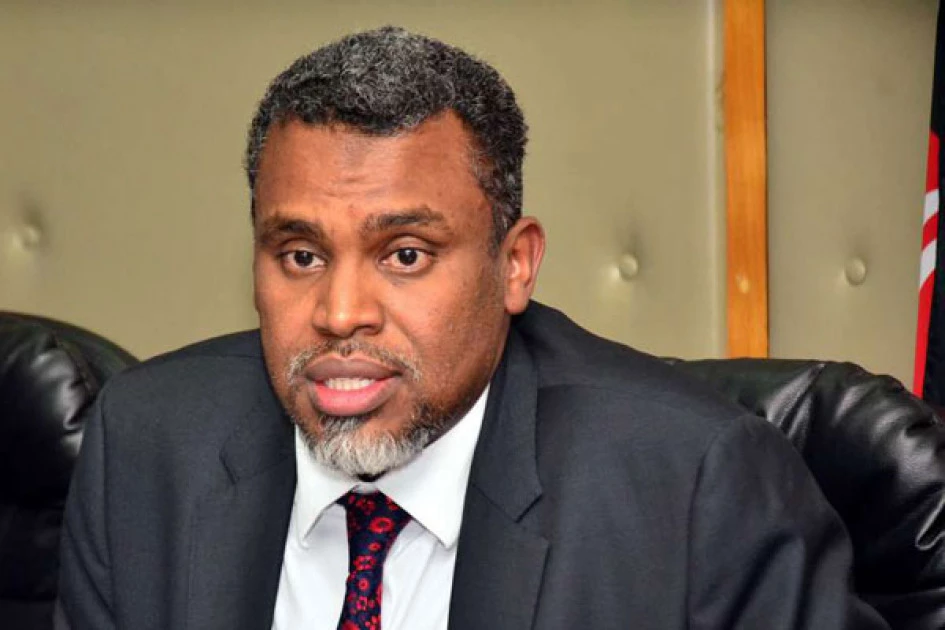
Kenya lacks critical defense equipment to secure its borders, NIS boss Noordin Haji warns MPs, citing rising threats and underfunding of the intelligence and security sectors.
Kenya is facing serious national security vulnerabilities due to inadequate defense equipment and persistent underfunding of its intelligence and security agencies, according to the National Intelligence Service (NIS) Director General Noordin Haji.
In a candid address to the parliamentary committee on Defence, Intelligence, and Foreign Relations on Monday, May 12, 2025, Haji painted a grim picture of the country’s border security situation. He revealed that Kenya lacks modern surveillance and combat equipment necessary to effectively secure its borders against increasing external threats.
“Our border areas are exposed and vulnerable,” Haji told lawmakers. “We are witnessing incursions and insecurity in areas such as the North Rift and northern Kenya, and our forces lack the proper equipment to respond effectively.”
Haji cited several security threats emanating from Kenya’s neighbors, including the incursion of Uganda’s Karamojong militia into Turkana County for cattle rustling, the proliferation of illegal small arms from South Sudan, and activities by Ethiopia’s Oromo Liberation Army (OLA) near the Kenyan border. These, he explained, have led to insecurity, displacement of residents, and occupation of Kenyan territory in some cases.
“These challenges are not just local — they are geopolitical. But without modern surveillance systems, armored response units, and proper border installations, our ability to defend our sovereignty is increasingly compromised,” Haji warned.
He revealed that the NIS had initially proposed a budget of Ksh.65 billion to address these emerging threats, but only received Ksh.51 billion from the National Treasury. The shortfall, according to Haji, has critically limited the service’s ability to invest in surveillance technology, communication systems, and intelligence infrastructure necessary to counter both internal and cross-border threats.
While acknowledging the recent Ksh.9.3 billion budget increment by the Treasury — which raised the NIS budget to Sh55.65 billion — Haji said it still falls short of the amount needed to comprehensively address the scope of Kenya’s evolving security threats.
“These are improvements, but more needs to be done. We cannot compromise on national security. Our adversaries are becoming more sophisticated, and we must match that with equal strength and preparedness,” he told MPs.
Haji’s concerns were echoed by Defence Principal Secretary Patrick Mariru, who separately appeared before the committee and admitted that continued underfunding has hampered the Ministry of Defence’s ability to fulfill its constitutional and strategic mandate.
“Our forces operate in some of the most difficult terrains, and they need resources — both financial and logistical — to serve effectively,” Mariru said.
The committee hearing comes at a time when Kenya is facing heightened security concerns across multiple regions. From recurrent banditry in the North Rift, insurgent threats from Somalia’s Al-Shabaab militants, to rising ethnic tensions along border areas, the country’s security apparatus is increasingly stretched thin.
In response, lawmakers from across the political divide expressed concern over the revelations and called for urgent reallocation of funds to prioritize border security and national defense. “It is unacceptable that our forces are under-equipped while threats continue to rise. Parliament must act,” one MP noted during the hearing.
The revelations have also sparked wider public debate about national priorities and government spending. With Kenya’s debt burden mounting and essential services facing austerity measures, many are questioning whether national security is receiving the attention it deserves.
Meanwhile, citizens living in border regions continue to bear the brunt of insecurity. Reports of livestock theft, armed raids, and cross-border gunfire are common in parts of Turkana, West Pokot, Marsabit, and Mandera counties — areas where state presence remains thin and poorly resourced.
As Kenya looks ahead to the next fiscal year, experts and security analysts agree that Haji’s warnings should be treated with urgency. Investment in modern defense equipment, training, and border infrastructure is not just a military concern but a matter of national survival.