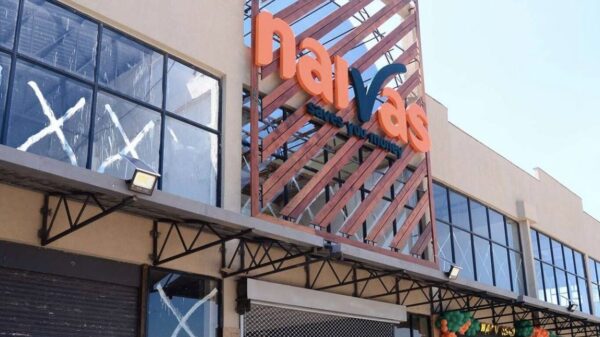
Naivas Supermarket refutes claims of selling expired products, calling the Nairobi County closure directive false and extortionary. All outlets remain operational and compliant.
NAIROBI, Kenya, May 14 — Naivas Supermarket has issued a fiery rebuttal to what it terms “extortionary tactics” from a Nairobi County Assembly Health Committee directive ordering the closure of its outlets over allegations of stocking expired products. The retail giant has dismissed the claims as “false and misleading,” arguing that no expired items were found on its shelves during recent inspections.
In a strongly worded statement released on Wednesday, the company denied the accusations made by Health Committee Chairperson Maurice Ochieng and suggested the closure threats may be part of a broader scheme to extort the business.
“Naivas has a very strict anti-bribery and corruption policy and will not submit to extortionary tactics,” the company declared.
Ochieng had earlier claimed that the committee’s inspection of the Naivas branch on Moi Avenue revealed expired items being stocked, posing a public health risk to Nairobi residents.
“We have visited nearly all eateries and supermarkets. Here at Naivas Moi Avenue, we found expired products being stocked, which puts Nairobi residents at risk,” he stated.
In a quick rebuttal, Naivas insisted that its branches maintain rigorous quality control and stock management practices in line with national health and safety regulations. “No expired products have been found on our shelves,” the company responded, adding that the committee’s remarks were both defamatory and harmful to the brand’s reputation.
“We maintain stringent internal quality control and stock management systems across all our branches to ensure product safety and compliance with health regulations,” read part of the supermarket’s statement.
Additionally, Naivas clarified that none of its outlets had been officially shut down by any regulatory or public health authority, countering reports circulating on social media and unofficial news platforms.
“All our stores remain fully operational and compliant with all national and county-level standards set by the Kenya Bureau of Standards (KEBS), the Ministry of Health, and relevant bodies,” the statement added.
The supermarket chain further revealed that it is currently seeking legal counsel and may take formal action against those it believes are deliberately spreading falsehoods with the intent to tarnish its image and disrupt operations.
Speaking to the press, a Naivas spokesperson stated:
“We are deeply concerned by the reckless nature of these allegations. At Naivas, we treat food safety with the utmost seriousness and have built trust over decades. These claims are not only false but appear designed to tarnish our brand and unsettle our loyal customer base. We will not hesitate to defend our reputation through all available legal channels.”
With over 90 branches and a 30-year legacy, Naivas remains one of the most recognized and trusted retail brands in Kenya. The company urged the public to rely solely on verified information and avoid being misled by what it described as “malicious rumors.”
“We thank our loyal customers and partners for their continued support. We reaffirm our commitment to the highest standards of product integrity and customer satisfaction,” the retailer said.
As investigations into the matter continue, industry stakeholders and members of the public await clarity on the authenticity of the Health Committee’s claims and whether due process was followed in issuing such a public directive.
Naivas’ defiant stance could set a precedent for how retail giants handle perceived regulatory overreach and public smear campaigns in the digital age.
Industry experts have weighed in on the matter, warning that such public disputes between businesses and regulatory arms must be handled transparently to protect consumer confidence and ensure fair enforcement of health standards. Retail analyst Miriam Ndung’u noted that while consumer protection is critical, public accusations without conclusive evidence risk damaging long-standing brands.
“The ripple effect of such claims — even if later disproven — can be devastating for any business, especially in the retail space where trust and perception drive foot traffic,” she said.
Several Nairobi residents also took to social media to express mixed reactions. While some lauded the Health Committee for attempting to ensure food safety standards are upheld, others criticized what they perceived as a politically motivated attack on a key employer in the local economy.
“I shop at Naivas every week. I’ve never seen expired goods. This sounds like politics to me,” wrote Twitter user @CarolK_Nairobi.
The Kenya Association of Manufacturers (KAM) has not yet commented on the incident but has in the past emphasized the need for due process when public accusations are made against corporate entities.
Consumer watchdog groups have also called for transparency, urging both parties to release inspection reports and evidence to back up their respective claims.
Meanwhile, legal experts suggest that if Naivas proceeds with formal legal action, the case could set an important precedent about the boundaries of county oversight versus business rights. Lawyer Peter Wambua remarked that “any regulatory body issuing public accusations must ensure it has concrete, verifiable evidence — failure to do so could result in defamation suits and public mistrust.”
The Nairobi County Government is yet to issue an official response to Naivas’ statement.