Friday, May 16, 2025 – Nairobi, Kenya:
Freemasons deny being a secret society after Nairobi County shuts down their hall over Ksh.19M land rates. The fraternity says it promotes values and is handling the matter legally.
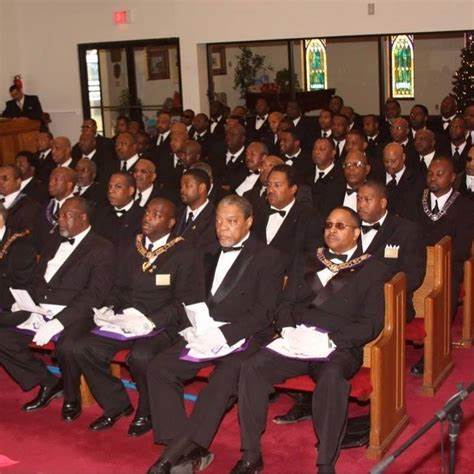
The Grand Lodge of East Africa has strongly refuted allegations of secrecy and cultism amid growing public interest and online speculation, following the recent closure of their historic Freemasons’ Hall in Nairobi by county authorities over land rate arrears amounting to Ksh.19 million.
The closure, carried out by officers from the Nairobi City County Government, reignited controversy surrounding the global fraternal organization—often perceived by the public as secretive and elusive. In response, senior members of the fraternity sought to clarify their position, defend their activities, and set the record straight on the legal dispute.
Hall Shut Down Over Alleged Unpaid Land Rates
On May 14, 2025, Nairobi City Hall enforcement officials descended on the Freemasons’ Hall located along Nyerere Road in Nairobi’s Central Business District. They clamped the premises and sealed access to the historic building, citing non-payment of rates totaling Ksh.19,241,876.
The structure, an iconic landmark with over a century of presence in Kenya, is the official headquarters of the Grand Lodge of East Africa, which is affiliated with the Grand Lodge of Scotland. The move sparked widespread online chatter and a fresh round of conspiracy theories involving the group.
However, Freemasonry officials quickly issued a statement dismissing the claims and confirmed that the matter had been referred to their legal team for appropriate action.
“I have been briefed on the issue that this place has been closed. I am not fully aware of the situation, but I know it has been passed to the legal advisors,” said Bro. William Ramsay McGhee, Grand Master of the Grand Lodge of Scotland, who is currently on an official tour of Kenya.
1994 Exemption and 2015 Court Ruling
Freemasonry leaders argue that the Nairobi County action is unjustified and ignores a previous legal determination. According to their statement, the organization was granted exemption from paying land rates back in 1994—an arrangement which was later challenged in court.
In 2015, the matter was ruled in their favor, reaffirming their exemption. The group insists that the County’s latest demand is not only inconsistent with the court’s decision but also an overreach that disrespects legal precedent.
“This is not about avoiding responsibility. We went to court over this and won. The county government is fully aware of the judgment. The matter is now with our legal department for further response,” a source within the Grand Lodge of East Africa told Mulembe Times.
A Global Fraternity Under Scrutiny
The closure of the Freemasons’ Hall has brought the fraternity into rare public focus. The Grand Lodge of East Africa, one of several Masonic bodies operating in the region, says it has been misunderstood for decades.
Speaking to journalists, Grand Master McGhee attempted to demystify Freemasonry’s operations and philosophy, highlighting the group’s charitable focus, values-driven approach, and global footprint in over 40 countries.
“Contrary to what some people believe, Freemasonry is purely and simply an organization where we try to make good men, better men,” he said.
“We try and instill in them values of integrity, honesty, being God-fearing—whatever they wish. If Freemasonry was a secret society, I wouldn’t be standing here talking to you today.”
He added that while the organization does maintain some internal traditions—often referred to as “secrets”—they are ceremonial and symbolic, not occultic or dangerous.
“There is no hocus-pocus or anything about it at all. A lot of what’s said about us on websites is simply untrue,” McGhee clarified.
Online Speculation and Conspiracy Theories
Despite the organization’s transparency campaign, public skepticism remains strong, especially on social media platforms where theories about Freemasonry’s influence continue to circulate.
The Nairobi closure appeared to fan these flames. Within hours of the clampdown, hashtags like #Freemasons, #SecretSociety, and #NairobiMystery began trending on X (formerly Twitter), with users speculating about the group’s wealth, power, and global affiliations.
Some religious and cultural commentators revived old accusations linking Freemasonry to Satanism or cultic rituals—a charge the organization has long denied.
“That building has always given off strange vibes,” one post read, while another said, “Why does a group with this much money not pay land rates?”
Freemasonry members say such narratives are born out of misinformation and fear of the unknown.
A Call for Openness and Understanding
While acknowledging the group’s history of privacy, the Grand Lodge has emphasized that Freemasonry is not a religion, cult, or political movement. Instead, it defines itself as a brotherhood committed to personal development, ethical living, and service to the community.
“We are not a secret society. We are a society with secrets,” a senior Freemason in Nairobi remarked, echoing a common slogan used by lodges globally.
In East Africa, Freemasonry has contributed to health initiatives, scholarships, and community programs—efforts often left out of the spotlight due to the group’s traditional low profile.
The recent events may now force a shift in public relations strategy as the fraternity seeks to counter disinformation with openness.
Legal Battle Ahead
As the Freemasons’ legal team prepares to challenge the Nairobi County government’s action, observers are watching closely to see if the court will uphold the 2015 ruling or allow the rates claim to stand.
Meanwhile, the historic Freemasons’ Hall remains closed to the public, with uncertainty hanging over its future operations.
Whether or not the organization succeeds in its legal argument, one thing is clear: the spotlight is now firmly on Freemasonry in Kenya—and the group is seizing the opportunity to shed its cloak of mystery.