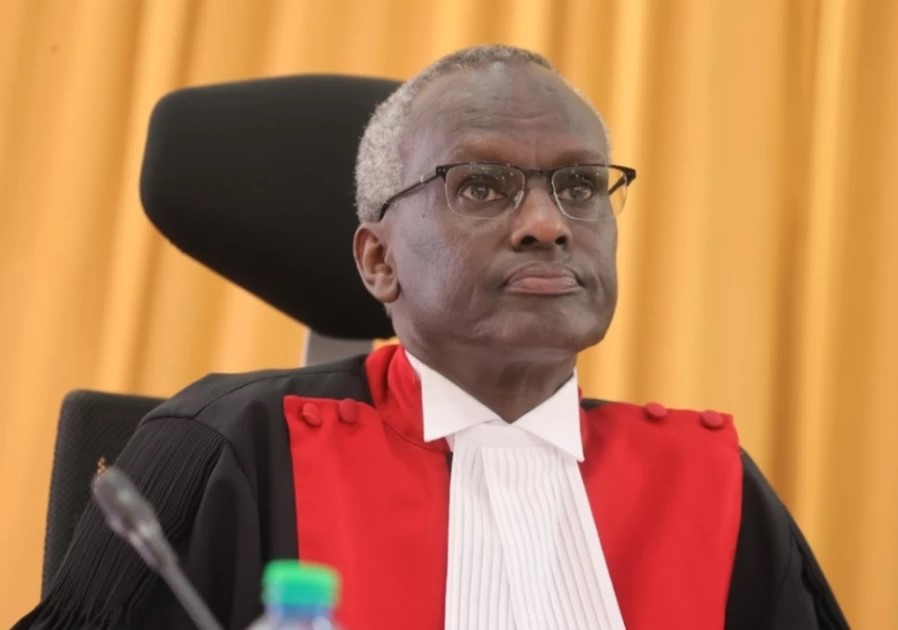
The High Court has stopped businessman Kungu Muigai from making or publishing further statements against Supreme Court Judge Isaac Lenaola, which the court said were defamatory.
The temporary order was issued by Justice Nixon Sifuna after Lenaola, through the law firm Ngeri, Omiti & Bush Advocates LLP, filed an urgent application seeking protection of his reputation. The judge directed that Muigai, or any person acting on his behalf, should immediately refrain from publishing any material linking Justice Lenaola to corruption or criminal conduct. The court further ordered that Muigai be served with the application within two days, after which he will have five days to file his response and three more days if he wishes to file a supplementary affidavit. The matter will be mentioned on October 13, 2025, when the court will give further directions.
The dispute stems from two video interviews held on September 8 and September 12, where Muigai allegedly accused Justice Lenaola and other senior judges of corruption and suggested that they were connected to the death of lawyer Kyalo Mbobu. According to court documents, when Muigai was served with a demand notice requiring him to withdraw the remarks and apologize, he went on to repeat the allegations in other interviews and dared the Supreme Court judge to sue him.
Lenaola’s legal team argues that the remarks were not only false but also malicious, intended to injure both his personal reputation and the image of the Judiciary. They further noted that Muigai had previously appeared before Justice Lenaola in legal proceedings without raising any concerns about bias or impropriety, suggesting that the accusations were motivated by bad faith. The lawyers warned that such statements, if left unchecked, could erode public confidence in the Judiciary at a time when its independence and integrity are vital to the country’s constitutional order.
In granting the injunction, Justice Sifuna made it clear that the order was interim and would remain in force until the matter is fully heard and determined. This means that for now, Muigai is barred from issuing any further comments about Justice Lenaola relating to the allegations in question.
The case also brings into focus a wider debate on the limits of free expression in Kenya. While the Constitution guarantees every citizen the right to freedom of speech, the law also protects individuals from defamatory statements that can cause lasting harm. Past disputes of this nature involving judges and public officials have often tested the boundaries between public scrutiny and the protection of reputation. Legal experts note that while accountability is essential in a democracy, allegations of corruption or criminal activity must be supported by credible evidence and not used recklessly.
The matter will now proceed to the stage of written submissions, where both sides will present their arguments in detail before the court makes a final ruling. If successful, Lenaola’s lawyers are expected to push for a permanent injunction, alongside possible retractions and apologies.
As the case unfolds, attention will remain fixed not only on the individuals involved but also on the broader implications for Kenya’s judicial system and the country’s democratic space. The outcome is likely to shape future conversations about how far free expression can go when it risks damaging the reputation of key public officials and institutions.
IMAGE BY CITIZEN DIGITAL