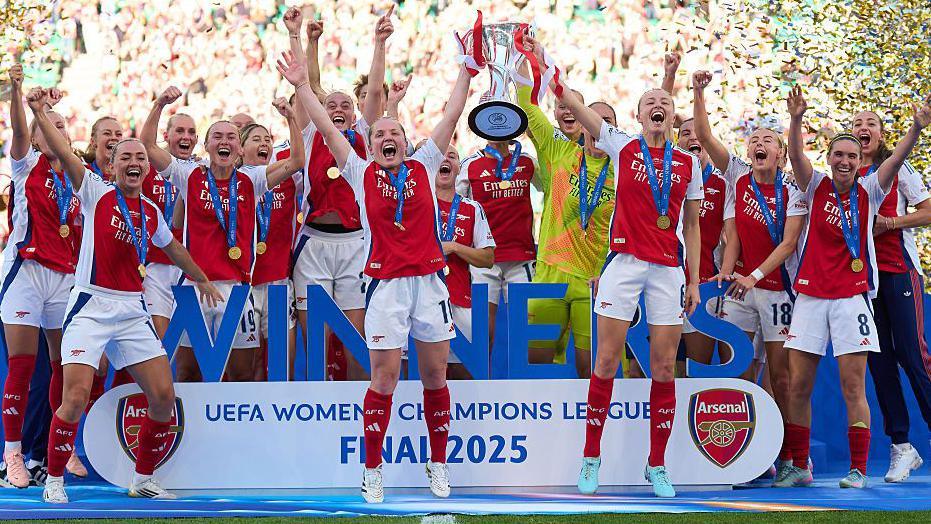
Arsenal Women are set to take on Lyon in what will mark the beginning of a new chapter in women’s football as the UEFA Women’s Champions League introduces a revamped league format. The match, which brings together two of Europe’s most successful sides, symbolizes not only a clash of giants but also the dawn of a more competitive and inclusive era for the sport.
The new format replaces the traditional group-stage system with an 18-team league phase, where each team will play six matches—three at home and three away—against different opponents. The change, according to UEFA, aims to make the competition more exciting, ensuring that top clubs face each other more often while also providing greater exposure for women’s football across Europe.
Arsenal, under manager Jonas Eidevall, will look to build on their strong domestic form and make an early statement of intent in this season’s campaign. The London side, who have steadily grown into one of Europe’s elite, will be keen to prove that their recent progress can be matched by continental success. Their clash with Lyon, who boast a record eight Champions League titles, is expected to be a thrilling test of experience against rising ambition.
For Lyon, this match offers an opportunity to reassert their dominance after recent seasons of intense competition from English and Spanish clubs. With seasoned players like Wendie Renard and Ada Hegerberg leading the squad, Lyon remains a formidable force—one capable of dictating play and punishing any defensive lapses. Arsenal, on the other hand, will rely heavily on their creative midfield led by Kim Little and the attacking prowess of players such as Alessia Russo and Caitlin Foord to break through Lyon’s well-organized defence.
UEFA’s decision to adopt the new league-style system aligns with its broader mission to enhance visibility and competitiveness in the women’s game. The top eight teams from the league phase will advance to the knockout rounds, leading to a more merit-based and unpredictable pathway to the final. This transformation is expected to draw more global attention, elevate the quality of matches, and boost sponsorships for women’s clubs.
Football analysts have hailed the format change as a step in the right direction, emphasizing that it mirrors the evolution seen in the men’s game while preserving the unique identity of women’s football. Fans are also expected to benefit, as the new structure guarantees a wider variety of high-stakes matches from the early stages.
As Arsenal prepare to host Lyon, excitement continues to build among supporters and players alike. The fixture promises not just footballing brilliance but a celebration of how far the women’s game has come, and how much further it can go. Whether it’s Arsenal’s hunger to rise or Lyon’s determination to retain their legacy, one thing is clear: the Women’s Champions League is entering an era defined by greater competition, global appeal, and limitless potential.
IMAGE : BBC