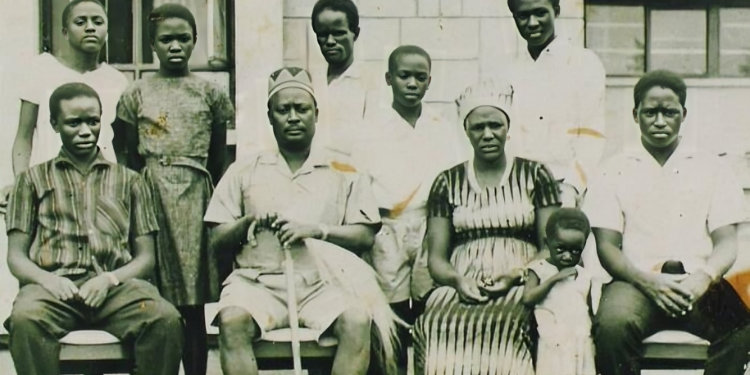
A little-known chapter from Kenya’s colonial past reveals how a young Jaramogi Oginga Odinga defied church conventions to protect his children’s African identity — a bold stand that nearly denied baptism to his son, the late Raila Amolo Odinga.
A Clash Between Faith and Identity
In the early 1950s, Jaramogi, then a respected educator and nationalist thinker, approached the Anglican Church Missionary Society (CMS) seeking baptism for his children. However, he made one unusual demand — that his sons be baptized with their traditional Luo names, without adopting the English or Biblical ones that missionaries insisted upon.
At the time, it was unheard of for African children to be baptized without “Christian” names. Jaramogi’s insistence triggered a standoff with local clergy, exposing the tension between colonial-era religious authority and African cultural identity.
Missionary Resistance and a Bishop’s Decision
Archdeacon Alfred Stanway, a senior CMS figure, consulted the bishop in Nairobi about Jaramogi’s request. After deliberation, the bishop ruled that African names were indeed acceptable for baptism and that no theological grounds existed to reject them.
Despite the bishop’s approval, no local African priest was willing to perform the ceremony. Many feared backlash from their European superiors or viewed Jaramogi’s position as an act of rebellion against church norms.
In his autobiography Not Yet Uhuru, Jaramogi recalled the intense resistance he faced, writing:
“Church zealots of the day thought I was insane when I insisted that my three eldest sons be baptised with the names of local community heroes.”
A European Priest Breaks the Silence
After days of stalemate, Jaramogi found a European priest willing to carry out the baptism under his terms. The discreet ceremony took place quietly, with limited attendance.
The priest baptized Jaramogi’s children — Ng’ong’a Molo Oburu, Raila Amolo Odinga, and Ngire Omuodo Agola — preserving their Luo names and heritage.
Even Jaramogi’s wife initially refused to attend the ceremony, protesting what she viewed as a compromise of faith for culture. She eventually entered the church at the last minute, allowing the baptism to proceed.
A Small Act, a Lasting Legacy
Though it drew little attention at the time, the act was a watershed moment for cultural identity in colonial Kenya. Jaramogi’s stand challenged the church’s monopoly on naming and religious identity, paving the way for many African families to embrace baptism without abandoning their indigenous names.
Raila Odinga would later reflect that his father’s defiance encouraged others to follow suit, saying:
“Although people had at first thought him very strange, many later followed and baptised their children with African names.”
No Word from England
Contrary to popular belief, the decision to allow African names was not made in London but locally by church leadership in Kenya. The ruling marked an important shift within the missionary movement, as African clergy slowly began asserting autonomy within the church hierarchy.
Raila’s Quiet Faith
Throughout his life, Raila Odinga maintained a deep yet private faith. He regularly attended Anglican services and supported interfaith dialogue, often appearing at both Christian and Muslim events.
During his funeral service, Bishop Kodia described Raila as a man of quiet devotion, saying:
“I saw in him a man who had made peace with God in everything that he said and everything that he did.”
Jaramogi’s quiet defiance in the 1950s was not just about names — it was about dignity, identity, and the right of Africans to define their faith on their own terms. That decision would echo through generations, shaping the spiritual legacy of one of Kenya’s most influential families.