Former U.S. President Donald Trump has once again listed Nigeria as a “Country of Particular Concern” (CPC), citing what he calls an “existential threat” to the nation’s Christian population — a move that has reignited debate over religious freedom and violence in Africa’s most populous country.
The designation, announced Friday, follows months of lobbying by conservative U.S. lawmakers and Christian advocacy groups, who allege that Christians in Nigeria face systematic persecution amounting to genocide. The Nigerian government has rejected the claims as false and politically motivated, insisting that the country’s violence is driven by complex security challenges, not religion.
“There is no genocide, now or ever, in Nigeria,” said Foreign Minister Yusuf Tuggar in a statement posted on X (formerly Twitter). “Our government is fully committed to protecting all citizens, regardless of faith.”
A Nation in Crisis
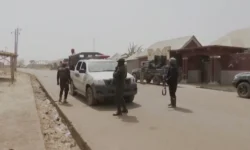
Nigeria continues to face overlapping security crises that have claimed tens of thousands of lives. The Boko Haram insurgency in the northeast, which began in 2009, has killed more than 40,000 people and displaced over two million, according to United Nations estimates.
Though weakened, Boko Haram and its offshoot, the Islamic State West Africa Province (ISWAP), remain active — launching attacks on both Muslim and Christian communities.
In central Nigeria, clashes between Muslim herders and Christian farmers have escalated over the years, often framed as religious conflict but rooted in fierce competition for land and water amid worsening climate pressures. Meanwhile, in the northwest, criminal gangs known locally as “bandits” continue to raid villages, killing, kidnapping, and burning homes in exchange for ransom.
Analysts say these intertwined conflicts have blurred religious lines, challenging simplified narratives of persecution.
Who Is Driving the Accusations?
The push to relist Nigeria as a CPC has been spearheaded by conservative American politicians and Christian advocacy groups.
In March, U.S. Congressman Chris Smith urged Washington to sanction Abuja over alleged persecution, while in October, Senator Ted Cruz and Congressman Riley Moore accused Nigerian authorities of turning a blind eye to the “mass murder” of Christians. Their remarks have resonated among far-right European politicians, including Poland’s Dominik Tarczyński, who echoed the genocide claims.
Christian organizations such as Open Doors and Global Christian Relief have also played a major role. Open Doors’ 2023 report claimed that “89 percent of Christians martyred worldwide are in one country — Nigeria.”
However, the group’s methodology has been criticized for lacking context, as it does not account for the fact that extremist violence in Nigeria targets both Muslims and Christians alike.
Biafran Separatists Join the Lobby
The Biafra separatist movement, which seeks independence for southeastern Nigeria, has also leveraged the persecution narrative to attract international support. The exiled Biafra Republic Government, led by activist Simon Ekpa, has reportedly hired former U.S. congressman Jim Moran as a lobbyist in Washington to highlight alleged Christian oppression and push its secessionist agenda.
Observers say this has further politicized the discourse, blurring the line between genuine human rights advocacy and strategic lobbying for political gain.
What Do the Numbers Show?
Data paints a more nuanced picture than the sweeping claims of genocide. According to Armed Conflict Location & Event Data (ACLED), which tracks conflict globally, at least 52,915 civilians have been killed in targeted political violence in Nigeria since 2009 — including both Muslims and Christians.
Between 2020 and 2025, ACLED recorded 389 attacks targeting Christians, resulting in 318 deaths, while 197 attacks targeting Muslims killed 418 people.
Ladd Serwat, a senior Africa analyst at ACLED, told AFP that Islamist violence in Nigeria is largely indiscriminate, targeting communities based on geography or perceived collaboration with the government rather than religion.
“The claim that 100,000 Christians have been killed is an overestimation,” Serwat said.
Potential Fallout
The CPC designation could pave the way for U.S. sanctions on Nigeria, including travel bans and economic restrictions. The decision also threatens to strain bilateral relations, especially as Nigeria remains a key U.S. ally in counterterrorism operations across West Africa.
Trump had previously placed Nigeria on the CPC list during his first term, but the designation was reversed by President Joe Biden in 2021. In July this year, the Trump administration imposed visa restrictions on Nigerians, limiting them to short-term stays as part of its broader immigration policy.
Yet even within Trump’s own circle, there are differing views. Massad Boulos, Trump’s senior advisor for Arab and African affairs, recently acknowledged that jihadist groups in Nigeria “are killing more Muslims than Christians.”
As accusations and counterclaims intensify, analysts warn that oversimplifying Nigeria’s violence into a “Christian genocide” narrative risks ignoring the broader political, ethnic, and economic roots of the crisis — and could further inflame religious tensions on the ground.