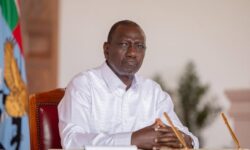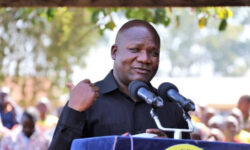
Interior Cabinet Secretary Kithure Oketch-Salah has pushed back strongly against criticism from opposition leader Winnie Odinga, saying he stands by his statements and will not be swayed by attempts to undermine his credibility. The exchange marks another flashpoint in Kenya’s increasingly heated political climate as leaders trade accusations ahead of the 2027 general election.
Oketch-Salah’s comments come in response to remarks made by Odinga, who had publicly challenged his recent statements on security and governance issues. Odinga accused the Cabinet Secretary of misinforming the public and questioned his motives, suggesting that his comments served political ends rather than national interest.
In a firm rebuttal, Oketch-Salah rejected the criticism, asserting that his statements were factual and rooted in his mandate to ensure public safety and transparency. “I stand by every word I said,” he declared in a televised briefing, adding that his role requires him to communicate honestly about security threats and government actions. He further argued that disagreeing with his conclusions does not make his remarks untrue or irresponsible.
The row began after Oketch-Salah spoke publicly about rising insecurity in certain parts of the country and outlined measures the government is taking to address them. In particular, he pointed to alleged incursions and threats in regions bordering conflict zones, and efforts by security agencies to pre-empt and counter criminal activity. Odinga responded by questioning the accuracy of the information and suggesting that such pronouncements risked creating unnecessary alarm among citizens.
Oketch-Salah dismissed that line of criticism, saying that raising awareness about security concerns is a legitimate part of his responsibilities and that national interest must always come before political point-scoring. “My first duty is to protect Kenyans,” he said. “If that means highlighting challenges before they escalate, I will not shy away from doing so.”
He also suggested that Odinga’s critique was politically motivated, aimed at weakening the government’s narrative in the run-up to the national polls. Oketch-Salah urged political rivals to engage more constructively with issues affecting the country, rather than resort to what he described as “empty rhetoric.”
Political analysts say the exchange reflects broader tensions in Kenya’s political discourse, where debates on policy and governance often spill into personality clashes between prominent figures. With the 2027 election cycle approaching, observers note that such confrontations are likely to intensify as leaders seek to consolidate support and define political narratives.
Supporters of Oketch-Salah have rallied behind his defence, echoing his call for honesty and strong leadership in public communication. They argue that ministers must be candid about national challenges without fear of backlash from opposition figures. Some have accused Odinga of politicising security issues for strategic gains.
Meanwhile, Odinga’s camp stands by her criticism, maintaining that public officials should be held accountable for statements that could influence public perception and social stability. They say that scrutiny of government narratives is a healthy part of democratic engagement, particularly in matters of national security and public trust.
The debate has stirred discussions on social media and in political circles, highlighting differing views on how government officials should communicate about sensitive issues. Some commentators suggest that while transparency is important, officials also have a responsibility to ensure that information shared with the public is carefully calibrated to avoid panic or misinterpretation.
Despite the sharp exchange, Oketch-Salah reiterated his commitment to continuing his duties and communicating openly with Kenyans. He said he welcomed robust debate but would not retract statements he believes to be true and in the country’s interest.
As the political temperature rises, interactions between government leaders and opposition figures are expected to remain closely watched, with many stakeholders calling for a focus on substantive policy discussions rather than personal attacks.
Image by Nairobi Leo