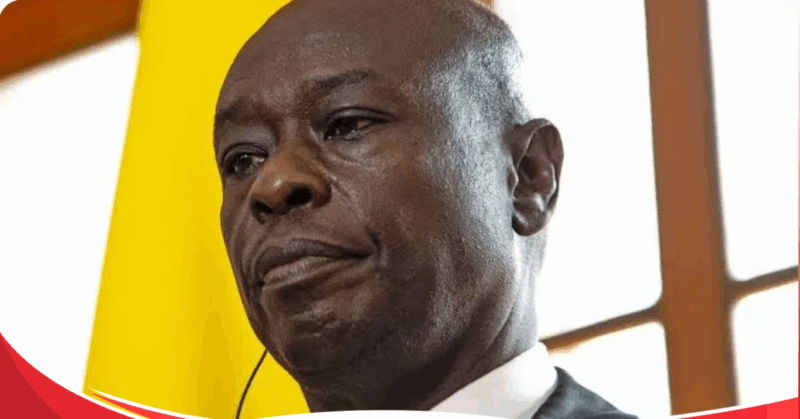
Former Deputy President Rigathi Gachagua has suffered a legal setback after the Supreme Court declined to suspend the hearing of more than 40 High Court petitions he filed challenging his impeachment.
In a ruling delivered by a five-judge bench led by Chief Justice Martha Koome, the apex court directed that the High Court cases should proceed to full hearing, despite an ongoing appeal by the National Assembly over the legality of the empanelment of judges.
The court rejected an application by Mr Gachagua seeking to halt the High Court proceedings, strike out the National Assembly’s appeal and expunge certain documents from the court record.
At the same time, the Supreme Court dismissed a separate application by the National Assembly that sought the summary dismissal of Mr Gachagua’s cross-appeal.
The dispute stems from a series of constitutional challenges that followed Mr Gachagua’s impeachment in October 2024.
The impeachment motion was introduced in the National Assembly by Kibwezi West MP Mwengi Mutuse and was passed by 281 MPs, surpassing the constitutional threshold required to remove a Deputy President from office.
The Senate later upheld the impeachment, clearing the way for the nomination and subsequent swearing-in of Professor Kithure Kindiki as Deputy President.
Following the removal, dozens of constitutional petitions were filed in the High Court contesting different stages of the impeachment process.
The petitions were certified as raising substantial constitutional questions under Article 165(4) of the Constitution, leading to the empanelment of a three-judge bench to hear the matter.
A central issue in the dispute is the decision by Deputy Chief Justice Philomena Mwilu to empanel the High Court bench at a time when the Chief Justice was away.
Mr Gachagua challenged the legality of that decision and separately sought the recusal of the judges, citing alleged bias. Both applications were dismissed by the High Court.
However, the Court of Appeal partly overturned that ruling, finding that the power to empanel judges under Article 165(4) is an exclusive constitutional mandate of the Chief Justice, which the Deputy Chief Justice may only exercise in exceptional and clearly demonstrated circumstances.
That decision prompted the National Assembly to move to the Supreme Court, arguing that the Deputy Chief Justice acted lawfully when she constituted the bench.
Mr Gachagua, in turn, filed a cross-appeal, faulting the appellate court for failing to order the recusal of the High Court judges.
Before the Supreme Court, Mr Gachagua asked the court to stay the High Court proceedings pending the determination of both the appeal and the cross-appeal.
The judges, however, held that the Supreme Court lacks jurisdiction to halt proceedings before the High Court, noting that its power to grant stay orders is limited to matters pending before the Court of Appeal.
The court further declined to strike out the National Assembly’s appeal, finding that it raises serious constitutional questions that warrant a full hearing.
It also rejected Mr Gachagua’s request to expunge certain documents from the record, ruling that the material forms an integral part of the dispute and had already been relied upon by both the High Court and the Court of Appeal.
Similarly, the Supreme Court dismissed the National Assembly’s application to strike out Mr Gachagua’s cross-appeal, holding that it did not meet the threshold for summary dismissal.
As a result, both the appeal and the cross-appeal will proceed to full hearing before the apex court.
The Supreme Court is expected to use the case to conclusively define the scope of the Deputy Chief Justice’s constitutional powers and to provide authoritative guidance on the empanelment of judges under Article 165(4) of the Constitution.