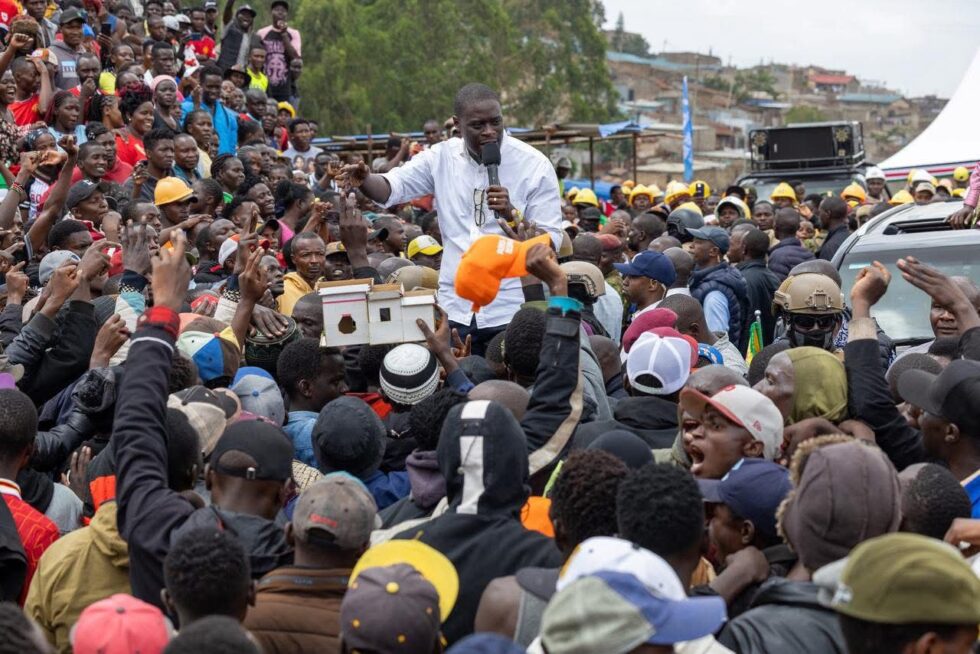
President William Ruto and Nairobi Governor Sakaja Johnson have moved to calm political tension surrounding the National Government–Nairobi County cooperation framework, firmly dismissing claims that the capital has been “handed over” to the national administration.
Speaking on Wednesday during the Climate Works Nairobi River Regeneration Programme in Lucky Summer, the President said the partnership is strictly collaborative and designed to fast-track service delivery, infrastructure renewal and environmental restoration in Nairobi.
Ruto said the County Government remains fully in charge of oversight and implementation, while the National Government is only providing financial and technical support to accelerate development.
“No Nairobi has been handed over; I have a job to do. What we have done is cooperation so that we can build our city. Development will be overseen by the County Government, the governor working together with the MCAs. My role as President is to support them so that Nairobi continues to progress,” Ruto said.
The Head of State strongly criticised what he described as political distraction, telling leaders to put aside partisan battles and concentrate on delivering tangible change to residents.
He insisted the new partnership seeks to lift the capital to international standards in infrastructure, safety and environmental management, noting that Nairobi, as the country’s capital, must reflect Kenya’s global image.
As part of the cooperation framework, the President announced a wide-ranging package of urban projects aimed at transforming the city.
Ruto revealed that more than Sh13 billion has been earmarked for new road construction and upgrades across the capital, in a move he said would improve mobility and reduce congestion. He further announced that 50,000 new floodlights will be installed in estates and public spaces to enhance safety and improve night-time security.
In addition, the government plans to construct 44 pedestrian bridges along the Nairobi River corridor to improve access and protect residents from accidents, particularly in flood-prone and densely populated neighbourhoods.
The President said the river regeneration programme has already created employment opportunities for young people, noting that more than 45,000 youths are currently engaged in clean-up, rehabilitation and environmental conservation activities linked to the initiative.
For decades, Nairobi River has been synonymous with pollution, informal dumping and neglected sewer infrastructure. Ruto said the new programme will introduce modern sewer systems, restore the river ecosystem and permanently change the environmental outlook of surrounding communities.
“Nairobi is the capital city of Kenya; it is the face of the nation. Together we must transform it. For many years it has suffered, but now we are turning a new page,” Ruto said.
He urged leaders across the political divide to give priority to development, saying the country would have enough time for politics later.
“Politics time will come; for now our part is work, work,” he added.
Governor Sakaja echoed the President’s remarks, insisting that cooperation between the two levels of government does not undermine his mandate or the authority of the Nairobi County administration.
Speaking earlier in Ngomongo, Sakaja said rumours that he had surrendered power were false and misleading.
“Thank you for giving me the mandate to be your Governor. I have not handed over power — those are rumours. I am cooperating with the President to deliver clean streets, better roads, schools and hospitals. Nairobi is not just a county but Kenya’s capital, so there is nothing wrong with receiving more funding,” Sakaja said.
The governor described the partnership as a people-centred agenda meant to accelerate stalled and slow-moving development projects across the city, particularly in informal settlements and underserved neighbourhoods.
He called on residents, Members of County Assembly and political leaders to support the cooperation framework, saying unity between the national and county governments would unlock faster and more sustainable development for the capital.
Prime Cabinet Secretary Musalia Mudavadi also weighed in on the debate, warning that Nairobi risks falling behind other major cities around the world that are rapidly modernising their infrastructure and public services.
“Our agenda is to take charge and fix Nairobi. We do not want it to be outdone by other cities. Others are transforming their cities and we do not want to be left behind,” Mudavadi said.
The Lucky Summer event formed part of a broader environmental and urban renewal campaign focusing on restoring the Nairobi River corridor, expanding sewer networks, improving street lighting, upgrading roads and creating employment opportunities for thousands of young people.
Leaders involved in the programme say the multi-sector approach is intended to redefine Nairobi’s image, improve liveability for residents and position the city as a competitive regional hub for business, tourism and investment.
As debate continues over the growing cooperation between the National Government and Nairobi County, both Ruto and Sakaja maintained that the partnership is not about political control but about delivering long-overdue transformation for a city that has struggled for decades with congestion, pollution, insecurity and inadequate infrastructure.