By Mulembe Times | March 2026
As Kenya continues to grapple with devastating floods that have caused deaths, displacements, and property damage, Google has unveiled Flood Hub, a new tool designed to predict urban flash floods up to 24 hours in advance.
Recent rainfall in Kenya has claimed 62 lives, with 33 fatalities in Nairobi, 17 in the Eastern Region, and 7 in the Rift Valley, highlighting the urgent need for better early-warning systems. Authorities such as the Kenya Meteorological Department continue to urge residents to remain vigilant and follow official flood alerts.
How Flood Hub Works
Flood Hub uses satellite data and Synthetic Aperture Radar (SAR) images to detect flooded areas. Google’s AI-driven algorithms combine Google Maps and its Gemini AI capabilities to produce rapid flood maps, estimating affected regions in urban areas.
The system leverages Groundsource, an AI-powered methodology that analyzed decades of public reports, identifying over 2.6 million historical flood events across 150+ countries. This dataset helps Google pinpoint the locations and risks of flash floods in cities worldwide.
Limitations and Accuracy
Despite its potential, Google warns that Flood Hub is prone to errors. Satellite imagery may not clearly differentiate between flooded and non-flooded areas, and in some cases, maps may not be generated at all.
Additionally, the tool relies on new satellite images to update maps. Older images beyond 72 hours are no longer displayed, which can temporarily leave gaps in flood coverage. The processing of satellite images can take several hours, or in some cases, days, before they are integrated into the system.
African Countries on Red Alert
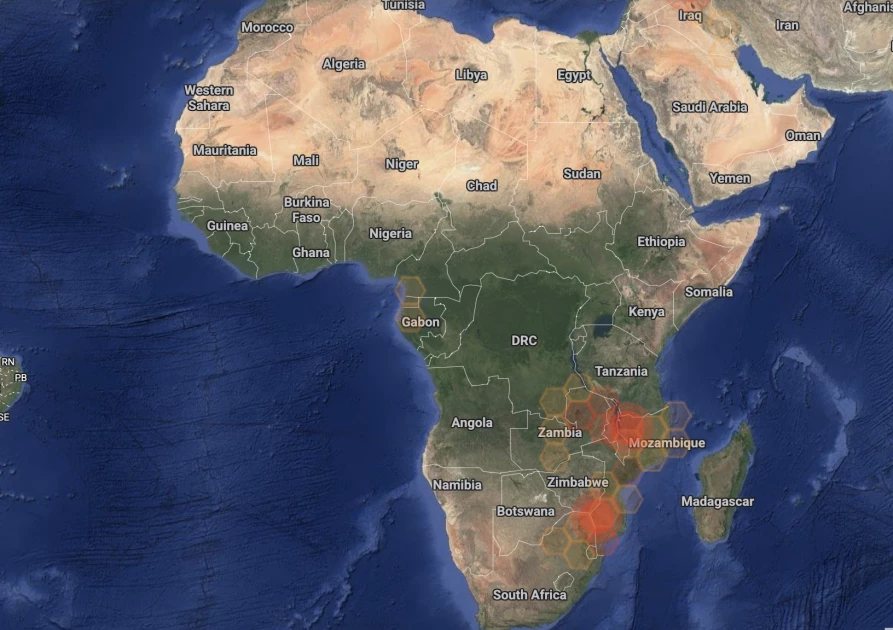
At the time of launch, Kenya had no active flood data on Flood Hub. However, the tool has flagged red alerts in other African countries, including Mozambique, Congo, Malawi, Zambia, and Zimbabwe.
The Promise of Flood Prediction
Google’s Flood Hub represents a significant step in leveraging AI and satellite technology to help governments, humanitarian agencies, and residents prepare for flash floods. Experts stress, however, that the tool should complement official early warnings rather than replace them.
“With flooding becoming a global disaster, tools like Flood Hub could save lives if integrated effectively with local emergency response systems,” says Google.