


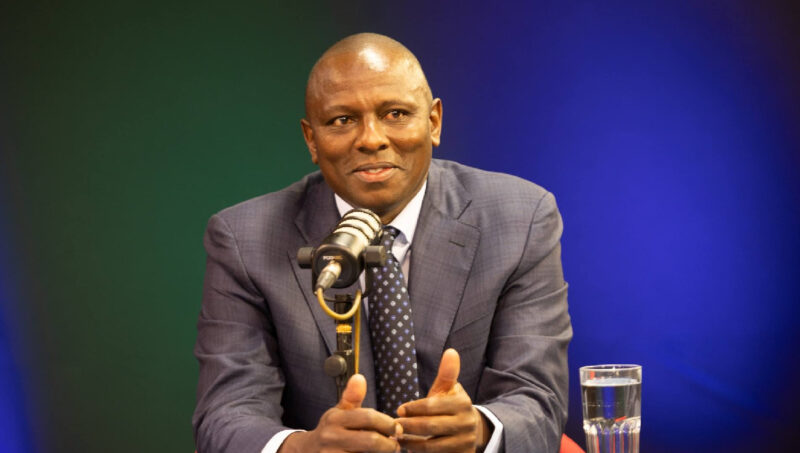
National Assembly Majority Leader Kimani Ichung’wah has directly blamed former Deputy President Rigathi Gachagua and his political allies for the violence that rocked Kikuyu Town on Saturday, April 11, escalating an already tense political standoff within the ruling coalition.
Speaking during an interview on NTV’s Fixing the Nation on Tuesday, April 14, the Kikuyu Member of Parliament alleged that the chaos was not spontaneous but carefully orchestrated, accusing fellow politicians of fueling a dangerous culture of violence by mobilizing unemployed youth as hired gangs.
“We know each other, we know who supports which gang,” Ichung’wah stated, challenging leaders across the political divide to stop protecting perpetrators and instead expose those behind the violence.
Direct Accusations Against Gachagua
When pressed on who was responsible for deploying the gangs witnessed in Kikuyu, Ichung’wah did not hesitate to point fingers.
“Of course, Gachagua and his cronies,” he said.
According to the Majority Leader, groups of youths had already been strategically positioned as early as 6 a.m., blocking sections of the Southern Bypass before later engaging in robberies targeting motorists after a political rally had dispersed.
Ichung’wah further claimed to have identified some of the individuals involved, including young women allegedly dressed in branded T-shirts linked to a senator from Kipipiri. He also cited individuals from Githurai whom he said had openly declared intentions on social media to “storm Kikuyu by all means.”
“I saw the same people I had seen online threatening to invade Kikuyu. I included that in my statement on Saturday night and have since forwarded video evidence to the police,” he said.
Prior Warning to Security Agencies
The Kikuyu MP maintained that the violence could have been prevented, insisting he had raised alarm well in advance.
He revealed that he formally wrote to the Inspector General of Police and notified local security agencies, including the sub-county security committee, about the potential unrest. He also claimed to have flagged Gachagua’s public remarks on the floor of Parliament as warning signs.
“When Gachagua made those statements publicly, I went to Parliament and stated exactly what he was planning. I relayed that information in writing to the Inspector General and security teams, urging them to act and stop goonism from taking root. I was vindicated,” he said.
Arrests Made, Evidence Submitted
Following the incident, several suspects have reportedly been arrested, with authorities confirming that evidence has been submitted to Kikuyu Police Station as investigations continue.
However, the incident has once again raised questions about the effectiveness of law enforcement in preventing politically instigated violence.
Youth Unemployment Fuelling Violence
Beyond the political accusations, Ichung’wah pointed to a deeper systemic issue — youth unemployment — which he said has created fertile ground for exploitation by politicians.
“We are taking advantage of desperate young people who are unemployed and turning them into gangs for hire,” he said, warning that the trend represents a growing national crisis.
He described the situation as a “deliberate and dangerous failure,” calling for urgent intervention to address both economic and political drivers of unrest.
Pressure on Police Leadership
The violence in Kikuyu adds to a series of similar incidents reported across the country, including in Othaya, Kisii, and Kakamega, increasing scrutiny on the National Police Service.
When asked whether the Inspector General of Police should step aside, Ichung’wah defended the police leadership, noting that Parliament had previously summoned the IG and the Interior Cabinet Secretary over such incidents.
According to him, police officials argued they require formal complaints and credible evidence before taking action.
“If you honestly believe the police should act, then provide the information you have,” Ichung’wah said, urging both politicians and the public to cooperate with law enforcement.
Rising Political Tensions
The accusations mark a significant escalation in tensions between factions allied to President William Ruto and those linked to his former deputy, highlighting deepening divisions that could shape the country’s political landscape ahead of the 2027 General Election.
As investigations continue, attention now turns to whether authorities will act decisively on the claims and evidence presented — and whether political leaders will heed calls to end the use of hired gangs in Kenya’s politics.


