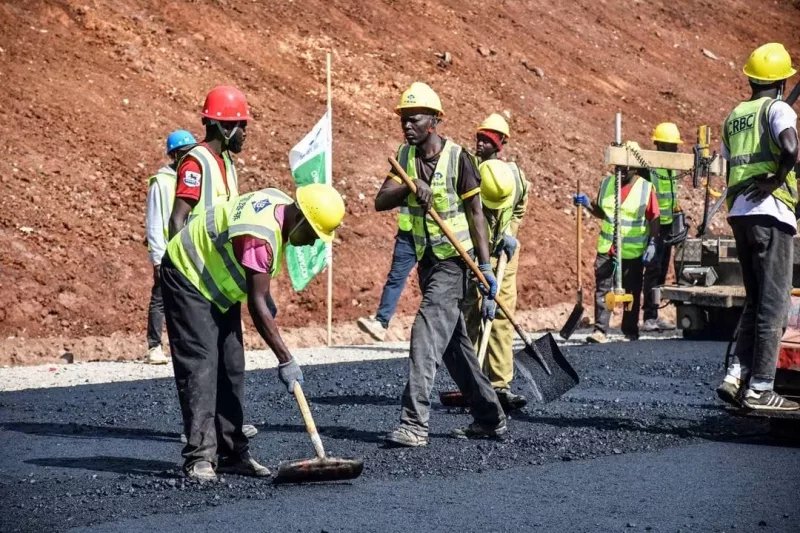
The Rironi-Naivasha section of the Rironi-Mau Summit Highway has entered a key phase, with the first layers of tarmac now being laid as the government prepares to open part of the upgraded road to motorists later this month.
Kenya National Highways Authority (KeNHA) Director General Luka Kimeli witnessed the laying of the blacktop on the approach to the Ngarariga Interchange on Tuesday during an inspection of ongoing construction works between Rironi and Naivasha.
The progress comes as the government works to meet its target of opening the Rironi-Naivasha section to traffic by October 30.
Roads Cabinet Secretary Davis Chirchir said last month that motorists would be allowed to use completed portions of the upgraded road even as construction continues on other sections of the wider Rironi-Mau Summit corridor.
Chirchir said the government would first open the upper A8 section before proceeding with the A8 South corridor connecting Rironi, Mai Mahiu and Naivasha.
The tarmacking at Ngarariga marks a significant step towards the planned opening and offers motorists a visible indication that construction is progressing towards completion.
The Rironi-Naivasha section is being upgraded to a dual carriageway as part of the wider project covering the A8 and A8 South corridors. The upgrade is expected to increase road capacity, improve safety and ease traffic along the busy Nairobi-Nakuru route.
The highway has for years experienced heavy congestion, particularly around the escarpment, Naivasha and Gilgil. The delays have affected both passenger transport and the movement of commercial goods between Nairobi and the western parts of the country.
The government has adopted a phased approach to the project, allowing completed sections to be opened progressively instead of waiting for the entire corridor to be completed.
However, the planned October opening will apply to the Rironi-Naivasha section and will not mean that the entire Rironi-Mau Summit Highway is complete.
The wider project is expected to improve connectivity between Nairobi, the Rift Valley and western Kenya while strengthening the movement of people and cargo along the Northern Corridor.
According to Chirchir, construction of the wider Rironi-Mau Summit corridor is expected to be completed by June 2027.