Published by Mulembe Times
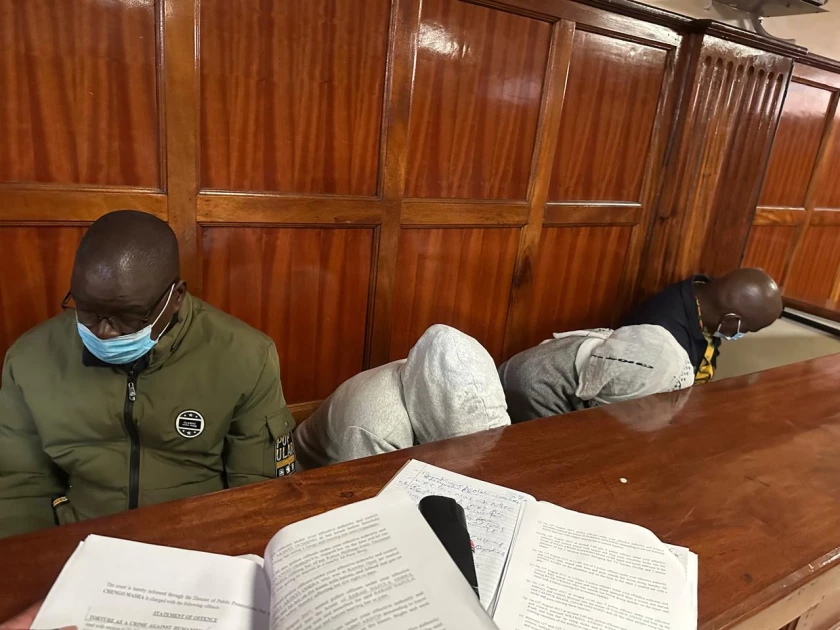
Suspects in Baby Pendo murder case appear in court.
Baby Pendo’s tragic death in the 2017 post-election violence remains a powerful symbol of police brutality in Kenya. As four officers are finally charged, the fight for justice for Baby Pendo continues.
KISUMU, KENYA – Nearly eight years have passed since the tragic death of six-month-old Baby Samantha Pendo during Kenya’s 2017 post-election violence. Her name, once a heart-wrenching headline, has since become a national symbol of the deadly consequences of police brutality and the urgent need for justice and accountability within the country’s security forces.
This week, her case returned to the national spotlight after the Director of Public Prosecutions (DPP) dropped murder charges against eight senior police officers, while pressing forward with criminal charges against four others. For a nation still haunted by the images of Baby Pendo’s bruised and swollen face in a Kisumu hospital bed, the announcement reopened painful wounds — and also revived long-dormant hopes for justice.
A Life Cut Short
Baby Pendo was just six months old when she was fatally injured during a police raid on her family’s home in Nyalenda, Kisumu, on August 12, 2017. Her parents, overwhelmed with grief, recounted how officers broke into their home in the middle of the night, struck their baby on the head with a blunt object, and then ignored their cries for help as she began convulsing.
The attack came amid a wave of violent police crackdowns in opposition strongholds following the disputed presidential election. Across Kisumu and other parts of western Kenya, security forces used tear gas, batons, and live ammunition to disperse protesters and raid homes — tactics that drew widespread condemnation from human rights groups.
Pendo’s parents rushed her to Aga Khan Hospital in Kisumu, where she battled for her life for three days before succumbing to traumatic head injuries. Her death sparked national outrage, with Kenyans from all walks of life mourning the loss of a child too young to understand the world she had just entered — let alone the politics that killed her.
Delayed Justice
Following Pendo’s death, initial investigations by the Independent Policing Oversight Authority (IPOA) recommended prosecution of several officers involved in the operation. But years of delay, shifting political winds, and a lack of accountability meant the case dragged on with little progress.
This week’s announcement by the DPP marks the first real movement in years. Four police officers — John Chengo Masha, Lina Kogey, Cyprine Robi Wankio, and James Rono — were formally charged with murder, and in some cases, rape and crimes against humanity, under Kenya’s International Crimes Act. It is the first time police officers in the country are being prosecuted under this law.
The DPP cited new evidence and a detailed review of investigative files as the basis for the charges. Meanwhile, charges against eight other officers, including one who has since disappeared, were dropped due to insufficient evidence or inability to locate the suspects.
A Family’s Fight, A Country’s Reflection
For Pendo’s parents, the news brought bittersweet emotions. While the progress toward justice is welcome, the pain of losing their daughter remains raw.
“No one can bring our baby back,” her father said in a past interview. “But what we want is for those responsible to be held accountable — not just for us, but for the country.”
Baby Pendo’s name has come to represent the plight of countless victims of police violence in Kenya. Human rights organizations say her case must set a precedent to break the cycle of impunity that has plagued law enforcement for decades.
As the trial proceeds, Kenya will be watching — not only for the outcome but for what it says about the value of life, the power of justice, and the promise that no child should ever again suffer the same fate as Baby Pendo.