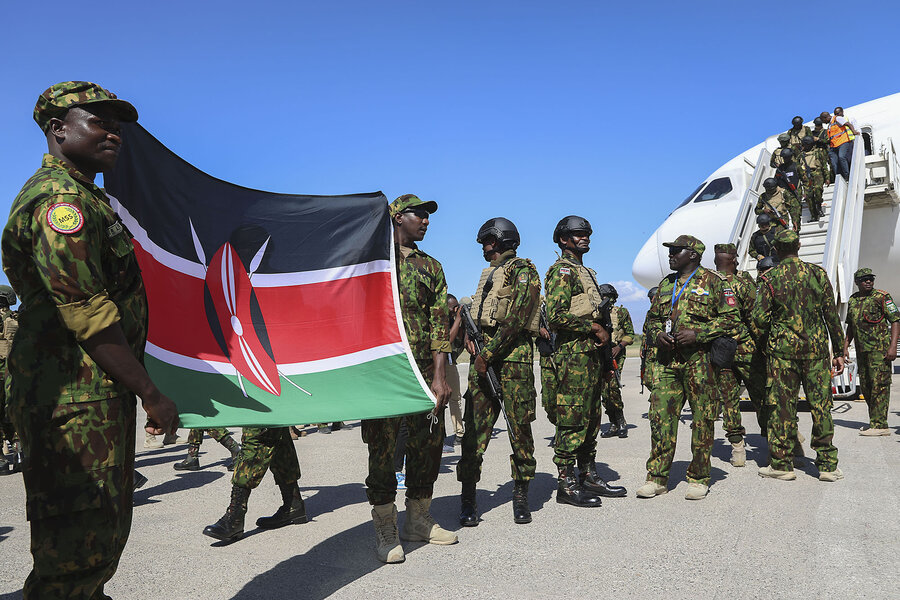
Kenya’s role in Haiti has entered a new chapter following the United Nations Security Council’s approval of the Gang Suppression Force (GSF), a new mission designed to confront the country’s spiraling gang violence. The development replaces the Multinational Security Support Mission (MSS), which Kenya had been leading, with a stronger, better-resourced operation.
The new force has been given an initial one-year mandate. Its responsibilities include carrying out intelligence-driven operations against armed gangs, protecting key infrastructure, ensuring safe humanitarian access, and supporting the reintegration of former fighters into society. Unlike the MSS, which was criticized for limited resources, the GSF will be supported by the United Nations through the newly established UN Support Office in Haiti (UNSOH). This office is expected to provide logistical assistance such as food supplies, medical care, transport, troop rotations, and communication support. It will also help ensure that all operations comply with international human rights standards.
The force will be sizeable, with about 5,550 personnel drawn from police, military, and civilian experts. Kenya, which played a central role in the MSS, is now expected to determine whether it will expand its contribution under the new framework. Foreign Affairs Principal Secretary Korir Sing’oei has welcomed the Security Council’s decision, saying the broader mandate offers an opportunity for Kenya to make a stronger impact in restoring peace in Haiti. He added that Nairobi would review its current deployment and decide if additional officers and resources are needed.
President William Ruto has in the past voiced concerns over inadequate support from the international community, saying that Kenyan officers deployed to Haiti faced serious logistical and resource challenges. With the UN now promising enhanced backing through UNSOH, expectations are high that the GSF will avoid the shortcomings of its predecessor.
Still, questions remain about funding, command structures, and the overall coordination of the mission. Analysts point out that Kenya must balance its international responsibilities with domestic priorities, particularly at a time when economic challenges and public debates over foreign deployments continue to dominate local discussions.
The Security Council resolution also underscored that Haiti’s government retains primary responsibility for national security and governance reforms. This means the GSF, including Kenya’s contribution, is expected to complement rather than replace Haitian institutions. Observers warn that this balance will be crucial to avoid perceptions of foreign overreach while ensuring that the force delivers tangible results.
The urgency of the mission is clear. Haiti has been grappling with escalating violence, kidnappings, sexual assaults, and widespread displacement of civilians. Gangs continue to control large parts of the capital, Port-au-Prince, leaving millions of people without access to basic services. For Haiti’s population, the effectiveness of the GSF will be measured not in statements but in improved security and humanitarian relief.
For Kenya, the transition from MSS to GSF is more than symbolic. It represents a test of leadership in international peacekeeping and an opportunity to show that Nairobi can play a decisive role in stabilizing one of the world’s most troubled nations. The coming months will reveal whether this expanded mission can overcome past failures and deliver the stability Haitians desperately need.
IMAGE : DW