


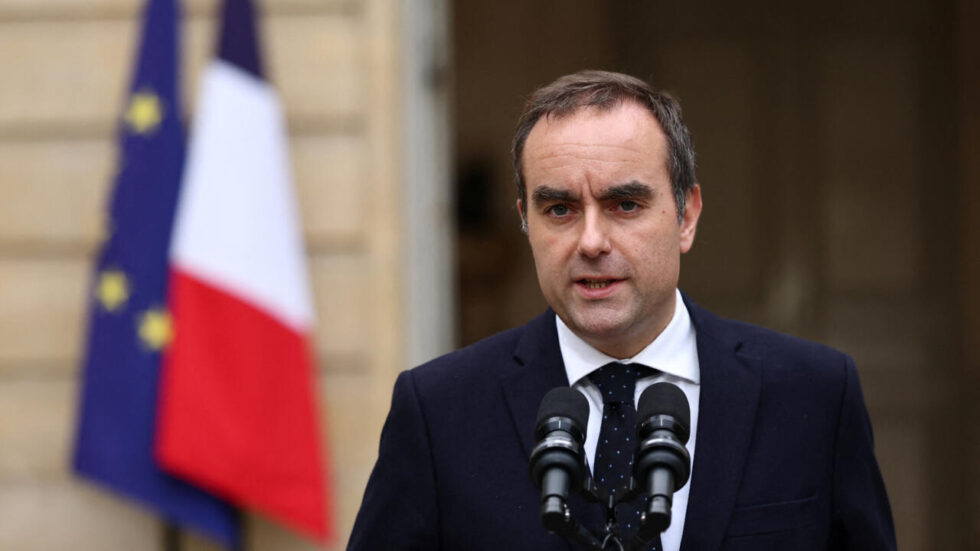
France is once again in the midst of political turbulence after Prime Minister Sébastien Lecornu abruptly resigned less than a month after assuming office. His exit—just hours after unveiling his cabinet—has thrown President Emmanuel Macron’s administration into renewed crisis, exposing deep divisions and growing instability within the French political landscape.
Lecornu’s resignation marks one of the shortest tenures in France’s modern political history, coming at a time when the government is already struggling to maintain unity and credibility. The former prime minister cited an inability to “govern effectively” amid intense opposition in Parliament, where no single party commands a majority. He accused rival factions of treating politics as a zero-sum game, making it impossible to build consensus or move the country forward.
Observers say Lecornu’s downfall was almost inevitable. His new cabinet, announced just a day before his resignation, was met with widespread criticism for mirroring Macron’s previous governments—retaining many of the same faces and offering little sign of renewal. Political analysts argue that this reinforced perceptions of stagnation and over-centralized power, undermining Macron’s pledge to usher in a new era of inclusivity and reform.
The president now faces a daunting challenge: to find a replacement capable of restoring confidence while navigating a Parliament deeply fractured between left, right, and centrist blocs. Some advisers are urging him to call a snap election, while others caution that doing so could backfire by empowering populist or far-right forces that have steadily gained traction in recent months.
Financial markets reacted nervously to the political uncertainty. The Paris stock index fell noticeably as investors questioned the government’s ability to pass key economic reforms or maintain fiscal stability. The resignation also casts doubt on upcoming legislative agendas, including crucial budget discussions and social welfare measures.
Opposition parties have seized on the crisis to intensify their attacks on Macron’s leadership. Leftist leaders argue that the government has lost its moral authority, while conservative voices accuse the president of clinging to power at the expense of democratic renewal. Meanwhile, protests have erupted in parts of Paris, with demonstrators calling for new elections to “let the people decide.”
For Macron, who has already endured multiple cabinet reshuffles and political setbacks during his presidency, Lecornu’s resignation represents both a political and symbolic blow. His government’s instability now threatens to overshadow his remaining years in office and could weaken his legacy ahead of the next presidential election.
Despite mounting pressure, Macron has ruled out resigning and insists he remains committed to guiding France through its current political deadlock. In a brief statement, the president described Lecornu’s departure as “regrettable” but emphasized the need for “calm, unity, and institutional continuity.”
Still, the road ahead appears uncertain. With power struggles intensifying and public confidence eroding, Macron faces one of the most defining tests of his leadership. Whether he can rebuild trust, stabilize his government, and reassert control will determine not only his political survival but also the direction of France in the years to come.
IMAGE: FRANCE 24


