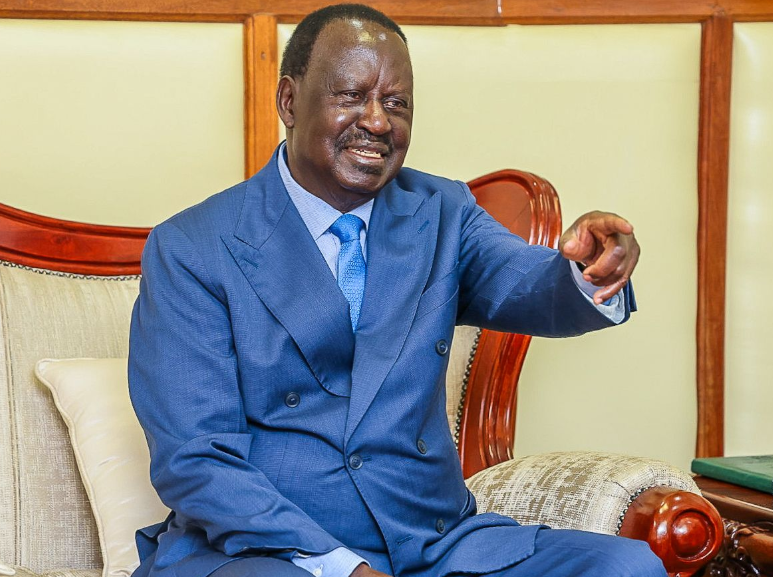
The sudden death of Kenya’s former Prime Minister Raila Amolo Odinga has left the nation in mourning and the world watching closely. But behind the heartbreaking announcement lies a tense and emotional medical battle that unfolded inside the walls of Devamatha Hospital in Kerala, India — one that doctors fought valiantly but ultimately could not win.
According to reports from the hospital, Mr. Odinga was rushed to Devamatha Hospital’s emergency department at around 8:20 a.m. after collapsing during his morning walk at the Sreedhareeyam Ayurvedic Eye Hospital and Research Centre, where he had been receiving wellness treatment. His personal physician and the attending medical team immediately began cardiopulmonary resuscitation (CPR) on the way to the hospital in an effort to revive him.
Upon arrival, Mr. Odinga had no detectable pulse or blood pressure. Doctors quickly intubated him — inserting a tube into his airway to assist breathing — and continued intensive CPR as part of Advanced Cardiac Life Support (ACLS) procedures. For a brief moment, monitors detected a faint heartbeat, offering a glimmer of hope. However, medical scans revealed ST-elevation and regional wall motion abnormalities, signs that his heart muscle was severely strained and his coronary arteries were struggling to supply blood effectively.
Dr. Sr. Alphons, one of the attending cardiologists, explained that Mr. Odinga’s condition was already complex due to several underlying health challenges. The veteran politician was diabetic and hypertensive, and he had been battling chronic kidney disease. In addition, he had a history of deep vein thrombosis (DVT) in his right leg, which had required the insertion of an Inferior Vena Cava (IVC) filter to prevent blood clots from traveling to his lungs.
Just days before his collapse, scans had revealed a thin subdural hematoma, a form of internal bleeding beneath the skull, further complicating his medical situation. These combined conditions left his body vulnerable, even as doctors at Devamatha Hospital launched an aggressive and coordinated effort to stabilize him.
During the emergency treatment, the team administered intravenous clot-dissolving drugs, hoping to clear any potential blockages in his heart’s arteries. IV fluids and oxygen therapy followed, and the doctors continued CPR for several minutes. Despite their tireless work and adherence to every known emergency protocol, his condition failed to improve.
Dr. Alphons later confirmed that all possible interventions had been performed in line with international standards. “We did everything within our capacity,” she said. “Our team worked round the clock, and despite his fragile condition, we hoped he would respond. Unfortunately, his body had already undergone too much strain.”
At approximately 9:15 a.m. local time, the hospital pronounced Raila Odinga dead. The announcement sent shockwaves through Kenya and beyond, as tributes poured in from global leaders, citizens, and supporters who regarded him as a symbol of resilience and democracy.
Hospital staff extended their condolences to the Odinga family, praising Mr. Odinga’s humility and courage even during his medical treatment. They also expressed gratitude for the professionalism shown by the attending Kenyan delegation and family members who remained by his side until the end.
As Kenya continues to grieve, Devamatha Hospital’s account paints a picture not just of a tragic loss, but of a determined fight — a moment when medicine and humanity intertwined in a desperate attempt to preserve the life of one of Africa’s most influential statesmen.
IMAGE : K24 DIGITAL