As Kenya pursues inclusive and sustainable growth, gaps in the education system are shaping the country’s ability to respond to climate change, food insecurity, and shifting labour markets. Today, education is increasingly viewed not merely as a pathway to employment, but as a shared national resource essential for resilience, productivity, and long-term development.
This reality is particularly evident in agriculture, a sector supporting the livelihoods of millions of Kenyans. In areas such as dairy, knowledge directly impacts food safety, nutrition outcomes, and household income stability. Industry stakeholders embedded in agricultural value chains say that education beyond formal classrooms has become critical for farmers and communities navigating environmental and economic uncertainty.
“Education today is not just about certificates,” says Victor Thumbi, Brand Manager at Kinangop Dairy Limited. “It is about practical knowledge that helps farmers manage risk, protect food safety, and adapt to climate pressures.”
Learning for Safer, Smarter Agriculture
Across Kenya’s farming communities, the link between knowledge and outcomes is increasingly clear. Farmers who understand food safety standards reduce health risks while building consumer confidence. With climate pressures intensifying—through erratic rainfall, prolonged droughts, and rising temperatures—this knowledge is now more urgent than ever.
Climate shocks affect not only agricultural output but also access to education itself. When harvests fail, household incomes decline, food insecurity rises, and school attendance suffers. This cycle of vulnerability highlights the critical role of education in breaking systemic risks. At the same time, technology is reshaping what is possible for smallholder farmers. Mobile platforms now provide weather forecasts, extension services, and market information, while sensors and digital tools allow farmers to monitor soil moisture, animal health, and farm conditions.
“Knowledge is what allows farmers to use these tools effectively,” Mr. Thumbi notes. “A farmer who understands climate trends can plan better. One who understands food handling protects consumers. Learning turns farming from survival into strategy.”
Climate Literacy and Institutional Partnerships
Kenya’s education reforms increasingly recognise climate literacy as a core skill for the future workforce. Integrating climate education into schools and training institutions equips learners to design solutions for droughts, floods, and environmental degradation.
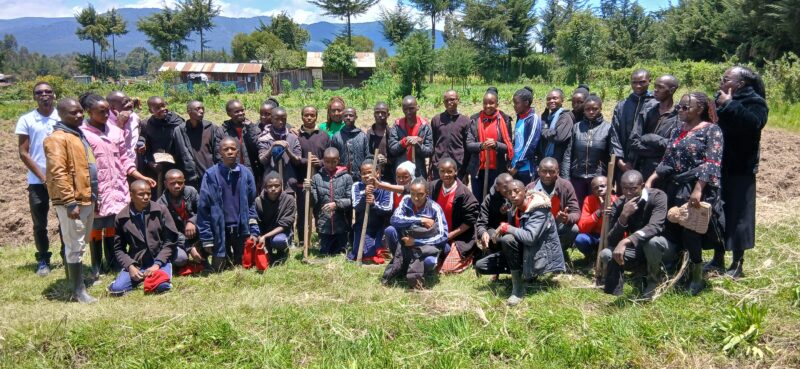
Private sector partnerships are reinforcing this approach. During a recent tree-planting exercise with the Nyandarua School for the Deaf, Kinangop Dairy highlighted the importance of linking environmental stewardship with learning.
“Supporting schools is an investment in the people who will solve tomorrow’s problems,” Mr. Thumbi said. “You cannot talk about sustainability without talking about education.”
This initiative reflects a broader shift in corporate engagement, where environmental action, community development, and learning are pursued together.
Technology, Nutrition, and Lifelong Learning
Digital platforms are expanding access to learning beyond traditional classrooms. Agricultural colleges are embedding technology into curricula, while digital extension services continue to support farmers long after formal training ends. Lifelong learning is becoming essential in a changing climate.
Nutrition is a central part of this equation. Research shows that well-nourished children perform better in school. During the recent back-to-school period, Kinangop Dairy ran an online campaign emphasizing how dairy products—including milk, yoghurt, and ghee—support healthy development and improved learning outcomes.
“Nutrition and education are inseparable,” Mr. Thumbi explains. “You cannot expect strong learning outcomes if children are not properly nourished.”
Sustainable dairy farming generates income for families, strengthens food systems, and supports education by improving household stability. Education, in turn, builds resilient communities capable of adapting to climate and economic shocks.
As Kenya faces growing environmental uncertainty, one message is clear: education is not just a right—it is a collective responsibility and one of the country’s most powerful investments in resilience, innovation, and long-term prosperity.