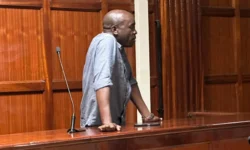
The high-profile murder trial of 31-year-old teacher and blogger Albert Omondi Ojwang has taken a stunning twist at the Kibera High Court. In a series of dramatic hearings, prosecutors dropped a bombshell, presenting forensically recovered CCTV footage that systematically dismantles the police narrative of a “custody self-injury”. The evidence details an orchestrated, cold-blooded fatal assault followed by a desperate high-level cover-up.
Director of Public Prosecutions (DPP) Renson Ingonga told High Court Judge Diana Kavedza that Ojwang’s death was not an accident. Instead, it was a “planned and deliberate plot to kill him” inside Nairobi’s Central Police Station.
The Catalyst: Why Was Albert Ojwang Arrested?
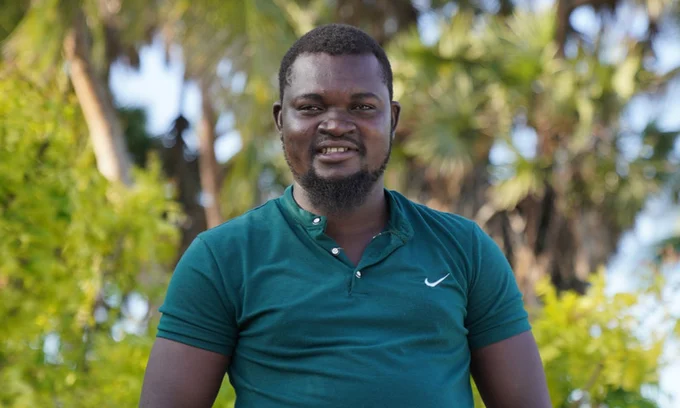
Albert Ojwang, a respected trained teacher and vocal online commentator, was tracked down and arrested on June 7, 2025. Court documents reveal that his arrest was triggered by a criminal defamation complaint filed by none other than the then-Deputy Inspector General of Police, Eliud Lagat.
Ojwang had allegedly published highly critical social media posts targeting the senior law enforcement boss. Following national outrage and massive street protests sparked by the blogger’s subsequent death, DIG Lagat stepped aside on June 16, 2025.
The Defendants: Six Charged With Murder
Six suspects have been formally charged with the murder of Albert Ojwang. Denied bail due to high risks of witness interference, the following suspects remain in state custody:
- Samson Kiprotich Talaam (Former Officer Commanding Station – OCS, Nairobi Central Police Station)
- James Mukhwana (Police Constable)
- Peter Kimani (Police Constable)
- John Ngige Gitau (Civilian)
- Gin Ammitou Abwao (Civilian)
- Brian Mwaniki Njue (Civilian)
Shocking Forensic Findings: The Illusion of Self-Harm
When news of Ojwang’s death first broke, station command claimed the blogger died from self-inflicted injuries after banging his head against a concrete cell wall. However, independent pathologists completely shattered this defense.
The autopsy report produced by the Independent Policing Oversight Authority (IPOA) revealed horrific trauma:
- Severe blunt force trauma and broken bones in the skull.
- Intracranial hemorrhaging (bleeding inside the brain).
- Clear signs of neck compression and strangulation.
- Defensive wounds on his arms and extensive soft-tissue bruising across his body, confirming he fought for his life.
The Fresh Twist: Step-by-Step CCTV Timeline Exposed in Court
Despite a desperate effort to wipe the crime from existence—which included a protected witness testifying that they were ordered to format the station’s Digital Video Recorder (DVR)—IPOA forensic investigators successfully extracted the deleted surveillance files.
The recovered timeline played before a packed courtroom reconstructs the final, agonizing hours of Albert Ojwang:
Phase 1: The Booking and Setup
- 9:24 PM (June 7): Ojwang makes a frantic phone call to his wife confirming he has been brought to Nairobi Central Police Station alive and walking entirely unaided.
- Late Evening: A black DCI SUV arrives; Ojwang is escorted inside by six men. While he is processed, Constables Mukhwana and Kimani are seen pacing nervously, making multiple phone calls.
- The Arrival of Hitmen: A mystery man arrives at the station on a motorcycle. Moments later, civilian suspect Gin Ammitou and two unidentified men wearing heavy hoodies and caps with concealed faces enter the cell area.
Phase 2: The Inside Execution
- The Clothes Swap: Constables Mukhwana and Kimani are captured on camera removing their official police uniforms and changing into civilian clothing.
- The Visual Blockout: An individual is seen hanging a thick rug over the cell door bars, intentionally blocking the line of sight from other cells and the main corridor.
- The Assault and Clean-Up: Four men aggressively drag Ojwang from one holding cell to another. A suspect is seen walking back and forth to the washroom twice to fetch buckets of water used inside the cell. Shortly after, one of the civilian men emerges from the room, meticulously examining blood stains covering his bare hands.
- 1:18 AM (June 8): Mukhwana and Kimani change back into their police uniforms. The motorcyclist leaves the compound.
Phase 3: Rushing a Corpse
- 1:35 AM: Former OCS Samson Talaam is seen walking ahead of a group as Constables Kimani, Mukhwana, and others carry Ojwang’s completely limp, unresponsive body out of the cells and load it into a police Land Cruiser.
- The Booking Fabrication: In a bizarre attempt to alter the legal timeline, station logs later recorded Ojwang as being “booked alive” at 2:35 AM and “declared dead” at 3:45 AM, despite him already being a cold corpse an hour prior.
Phase 4: The Mbagathi Hospital Drop
- 1:59 AM: The police Land Cruiser arrives at the Mbagathi Hospital casualty bay.
- The 20-Minute Delay: Hospital CCTV reveals that the officers sat in the vehicle for nearly 20 minutes before pulling Ojwang out. They leisurely wheel him in on a stretcher.
- 2:11 AM: Attending doctors examine Ojwang, only to discover his body is already cold, confirming he died long before arrival. Realizing they cannot fake a medical admission, the officers wheel the corpse back out, dump it into the police vehicle, and drive away to conceal it at the City Mortuary.
Trial Status and What Lies Ahead
The exposure of the resurrected CCTV timeline has completely shifted the power dynamics of the case. Facing ironclad forensic evidence and testimony from internal police whistleblowers, the defense’s narrative of “accidental custody death” has crumbled.
Following the intense multi-day presentation of digital evidence by IPOA Head of Forensics Joseph Mutua, Lady Justice Diana Kavedza has adjourned the murder trial. The High Court in Kibera scheduled the next phase of the full trial to resume on December 14, 2026, where remaining protected witnesses are slated to take the stand. The accused will remain remanded in custody without bail until the conclusion of the proceedings.