


Mulembe Times – July 10, 2025
Nairobi, Kenya – Police Constable Klinzy Barasa Masinde is set to face murder charges following the fatal shooting of 22-year-old hawker Boniface Kariuki Mwangi during anti-police brutality protests in Nairobi last month. The Office of the Director of Public Prosecutions (ODPP) on Wednesday approved the charges, marking a rare instance of a law enforcement officer being held directly accountable for a protest-related killing.
The incident occurred on June 17, 2025, outside Imenti House on Moi Avenue. Graphic video footage that circulated online showed two officers—later identified as Constables Klinzy Barasa and Duncan Kiprono—confronting Kariuki, an unarmed street vendor. In the footage, one officer is seen holding Kariuki while the other allegedly draws his firearm and shoots at close range.
Kariuki, who sold face masks in the Central Business District, sustained serious head injuries and later succumbed while receiving treatment at Kenyatta National Hospital. An autopsy confirmed that he had bullet fragments lodged in his brain.
The footage, which sparked public outrage and fresh calls for police reforms, was crucial in helping the Independent Policing Oversight Authority (IPOA) identify the officers involved. Following investigations, the DPP concluded that there was sufficient evidence to charge Constable Barasa with murder under Sections 203 and 204 of the Penal Code.
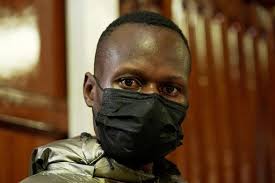
Appearing before Justice Kanyi Kimondo at the Milimani High Court on Wednesday, Barasa, aged 32, did not take a plea, as the judge ordered a mental assessment to determine his fitness to stand trial. He will remain in custody at Nairobi Remand Prison until his next court appearance, scheduled for July 28, 2025, at 11:00 a.m., when he is expected to enter a plea.
In contrast, his co-accused, Constable Duncan Kiprono, was released without charges. According to the DPP’s office, there was insufficient evidence to prove that Kiprono directly contributed to the fatal shooting.
Family members of the late Kariuki welcomed the DPP’s move, calling it a first step toward justice. “Boniface was not a criminal. He was trying to earn a living,” said a tearful relative outside the courtroom. “We are glad someone is finally being held responsible.”
Civil rights organizations also praised the decision, describing it as a turning point in efforts to end extrajudicial killings by police officers. The Independent Medico-Legal Unit (IMLU), in a statement, noted that while many Kenyans have lost their lives at the hands of rogue officers, very few cases have resulted in prosecutions—let alone murder charges.
“This case must be a wake-up call for the National Police Service. Accountability is no longer optional,” the statement read.
The National Police Service is yet to issue an official response regarding Barasa’s indictment. However, insiders say the Internal Affairs Unit is conducting an internal review of the officers’ conduct on the day of the protests.
The June 17 protest, part of a broader wave of demonstrations against alleged police excesses and impunity, saw thousands of mostly young Kenyans take to the streets demanding justice for victims of police brutality. The demonstrations were largely peaceful until confrontations erupted near the city center.
This is not the first time IPOA has recommended criminal charges against police officers, but successful prosecutions remain rare. Legal experts say the Kariuki case could set a precedent if it results in a conviction.
As Barasa awaits his day in court, the public continues to watch closely. For many, Kariuki’s death symbolizes the deep-rooted issues of state violence and lack of accountability that have plagued Kenya’s policing system for years.
The trial will not only determine Barasa’s fate but could also shape the public’s trust in the justice system’s ability to handle cases involving powerful institutions like the police.


