By Mulembe Times | July 19, 2025
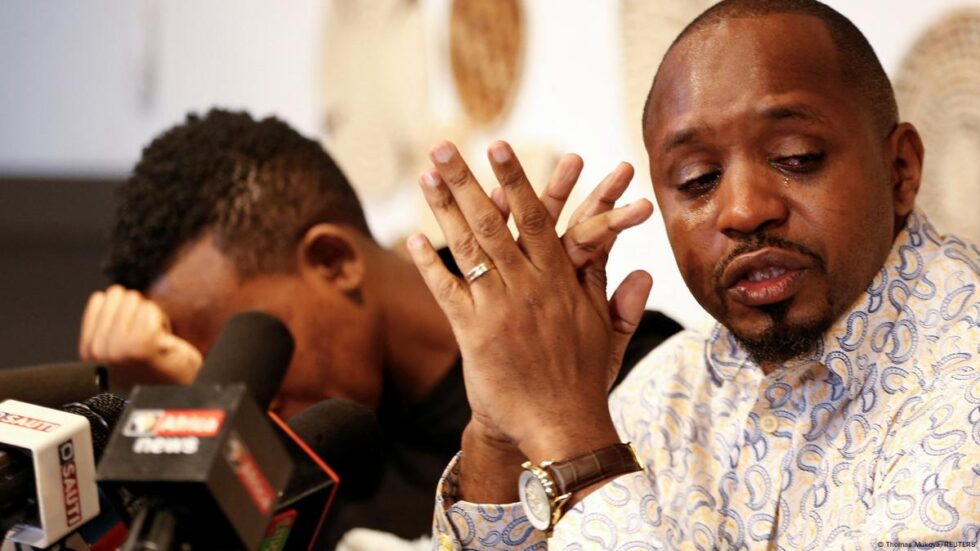
Prominent Kenyan activist Boniface Mwangi and Ugandan journalist and human rights defender Agather Atuhaire have filed a landmark case at the East African Court of Justice (EACJ), accusing the Tanzanian government of grave human rights abuses. The two, alongside seven civil society organisations, claim they were abducted, tortured, and unlawfully deported in May this year while in Dar es Salaam to observe the treason trial of opposition leader Tundu Lissu.
In the suit filed this week, the petitioners are demanding public apologies from the governments of Tanzania, Uganda, and Kenya, compensation of at least USD 1 million (approximately Ksh.130 million) for each victim, as well as rehabilitation and psychological support. They argue that the three countries either participated in or failed to prevent violations of their rights under regional and international law.
According to the victims, their ordeal began when unidentified individuals believed to be Tanzanian security agents abducted them from their hotel room. They were initially taken to the Tanzanian Immigration Department, then held at the Central Police Station in Dar es Salaam, without being informed of any charges. Later, they were transferred to an undisclosed location where they say they were tortured, sexually abused, and interrogated in violation of due process. After days in captivity, Mwangi says he was dumped near the Kenya border, while Atuhaire was left at the Uganda border.
“What happened to us was evil and meant to silence us—but we refused. We are going to court not only to fight for justice, but to show the world what happened to us in the dark,” Mwangi said in a written statement. Atuhaire echoed the sentiment, stating that the legal action is about accountability and the protection of civil society voices across East Africa.
The activists say they were never formally charged or informed why they were being detained. Their deportation was carried out without any official documentation or process, raising questions about the legality of their treatment and the complicity of the respective governments.
The petition, which also includes regional human rights groups such as Chapter Four Uganda and the African Defenders Network, argues that the actions taken against the two were in breach of the East African Community Treaty and the African Charter on Human and Peoples’ Rights. It also accuses Uganda and Kenya of failing to protect their citizens and of standing by as their rights were violated by a neighboring government.
International human rights groups, including Amnesty International and Human Rights Watch, have expressed solidarity with the activists and called for a full investigation into the matter. Local legal experts suggest the case could set a significant precedent in East Africa for the protection of activists, journalists, and other vulnerable groups targeted for political reasons.
A Nairobi-based human rights lawyer described the case as more than just a legal battle. “It’s a moral reckoning,” the lawyer said. “If the court rules in their favor, it could send a strong message to states that there will be consequences for human rights abuses, even across borders.”
The East African Court of Justice, based in Arusha, is expected to begin hearings in the coming months. Should the court find the accused governments liable, it could impose financial penalties and issue binding rulings with implications for all East African Community member states.
Despite the trauma they endured, Mwangi and Atuhaire remain resolute in their activism. “They tried to silence us with fear and pain, but we won’t stop,” Mwangi said. “Our fight is for every activist, journalist, and ordinary citizen who’s ever been silenced by state terror.”