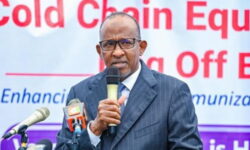
The Social Health Authority (SHA) has dismissed claims that whistleblower Andrew Kipkurui Rotich was fired after exposing fraud in the health sector, insisting instead that he remains in employment and has not been locked out of opportunities unfairly.
In a statement released on Wednesday evening, SHA Board Chair Dr. Abdi Mohamed clarified that Rotich is still serving as a Senior Officer within the Authority. He explained that Rotich, like other staff, is protected by transitional arrangements that were put in place to safeguard employees during the restructuring of the institution.
The controversy emerged after reports suggested that Rotich had been sidelined in the recruitment of senior audit officers despite his role in exposing irregular claims within the sector. However, Dr. Mohamed said records show that Rotich did not apply for the advertised position of Deputy Director, Internal Audit. According to the Authority, Rotich only expressed interest in the role of Assistant Director, Internal Audit, but even this application was not completed through the required formal process. The SHA chair stressed that only candidates who submit official applications can be considered and shortlisted, and the Authority must follow the law when handling such matters.
The dispute was further complicated by a ruling delivered on May 29, 2025, in ELRC Petition No. E078 of 2025, which nullified previous appointments to SHA, including Rotich’s earlier promotion to Deputy Director. The court decision forced the Authority to re-advertise senior positions, effectively restarting the recruitment process. Dr. Mohamed noted that this ruling applied to all affected staff and was not targeted at Rotich individually.
He further emphasized that SHA remains committed to a transparent hiring process, guided strictly by merit and professional requirements. For the Deputy Director’s role, applicants must be registered members of professional bodies such as the Institute of Certified Public Accountants of Kenya (ICPAK) or the Institute of Internal Auditors (IIA). These conditions, Dr. Mohamed said, ensure accountability and adherence to high professional standards.
Addressing concerns about victimization, the Board Chair cautioned the media against misleading reporting. He urged journalists to verify information before publication, noting that inaccurate stories risk undermining both the credibility of institutions and the public’s trust.
At the same time, SHA highlighted its ongoing reforms to strengthen accountability within the health sector. Dr. Mohamed revealed that the Authority has adopted advanced digital systems, including artificial intelligence and big data tools, to monitor irregularities in health claims. He added that evidence gathered from these systems has already been forwarded to the Directorate of Criminal Investigations (DCI) for further action.
The case of Rotich has attracted public attention because of his earlier role in exposing fraudulent claims within the sector. While whistleblowers are often seen as vulnerable to retaliation, SHA’s assurance that Rotich remains employed and not victimized is aimed at restoring confidence both internally and among Kenyans who rely on health insurance.
By reaffirming its stand on transparency, the Authority hopes to demonstrate that the fight against fraud and mismanagement in Kenya’s health sector remains on course, even as it works to rebuild trust with stakeholders and employees alike.
Image by Kenya News Agency