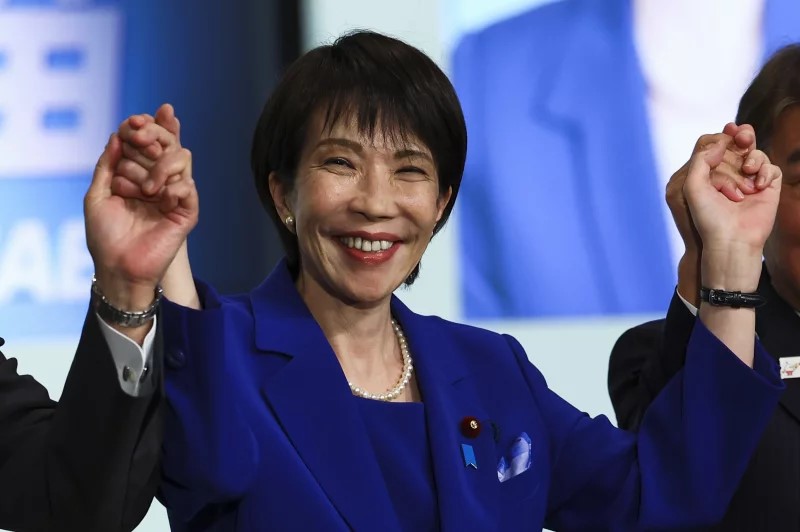
Japan has witnessed a groundbreaking moment in its political history as Sanae Takaichi, a seasoned conservative politician, ascended to the nation’s highest office—becoming Japan’s first-ever female Prime Minister. The 64-year-old leader, who also heads the ruling Liberal Democratic Party (LDP), was elected through a parliamentary vote on October 21, 2025, marking a monumental step in a country long dominated by male leadership.
Takaichi’s election follows the resignation of outgoing Prime Minister Shigeru Ishiba, whose administration collapsed amid internal party disagreements and public dissatisfaction. Her victory was secured after the LDP formed a new coalition with the Japan Innovation Party, effectively sidelining its long-time ally, Komeito. The political realignment symbolized not just a transfer of power, but a moment of reckoning for Japan’s conservative establishment.
In her acceptance speech, Prime Minister Takaichi pledged to prioritize economic revitalization, technological innovation, and national security, while reinforcing Japan’s diplomatic ties with the United States. She emphasized the need to safeguard Japan’s sovereignty amid rising tensions in East Asia, particularly with China, while also pushing for digital and industrial reforms to boost Japan’s global competitiveness.
Despite the jubilation surrounding her appointment, Takaichi’s leadership has sparked mixed reactions. Many see her historic rise as a beacon of progress for women in a nation ranked low in gender equality among developed economies. However, critics caution that her deeply conservative ideology may not translate into progressive gender reforms. Takaichi has publicly opposed same-sex marriage, supports the continuation of male-only imperial succession, and has appointed just two women to her cabinet—moves that some analysts view as contradictory to the symbolic nature of her achievement.
Political analysts argue that while Takaichi’s elevation represents a symbolic victory, Japan’s road toward gender parity in governance remains steep. Her ascent challenges centuries-old traditions but also underscores the limitations of representation without reform. Still, for many young women in Japan, her victory has ignited hope and inspired conversations about leadership, equality, and the future of women in politics.
As Japan’s 104th Prime Minister, Takaichi inherits a fragile economy weighed down by inflation, a declining birth rate, and an aging population. She also faces the monumental task of balancing Japan’s strategic alliances while navigating domestic pressure for economic and social reforms. Her appointment of Satsuki Katayama as the nation’s first female Finance Minister has been praised as a symbolic step, though questions remain about whether it will lead to substantive policy change.
Observers note that Takaichi’s tenure will be a test of her ability to unite a divided electorate and prove that her leadership transcends symbolism. For now, she stands as a historic figure in Japan’s evolution—a woman who broke a centuries-old glass ceiling in a nation where political conservatism and gender barriers have long walked hand in hand.
Her rise, whether seen as a triumph of opportunity or an extension of the status quo, marks an indelible chapter in Japan’s political narrative. The world watches with cautious optimism as Sanae Takaichi steps into history, carrying both the weight of tradition and the promise of transformation.
Image by NPR