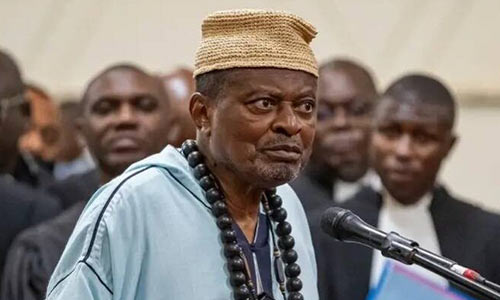
Veteran Cameroonian opposition leader Anicet Ekane has died while in military detention, a development that has ignited national and international outrage and renewed concerns over political repression in the country. Ekane, aged 74, had been arrested in late October following demonstrations that challenged the credibility of the recent presidential election. Authorities accused him of inciting insurrection—charges his party dismissed as politically motivated.
After his arrest in Douala, Ekane was transferred to a military detention facility in Yaoundé. According to his family and legal team, his health deteriorated significantly during his detention. They claim he suffered from chronic medical conditions that worsened due to inadequate care. In the days leading up to his death, Ekane reportedly struggled to breathe and eat, repeatedly requesting urgent medical attention. His family alleges that these pleas were ignored.
Security officials informed his relatives on Monday morning that he had died in the custody of the National Gendarmerie. The government later announced that he passed away at a military medical centre after falling ill and stated that an investigation would be conducted into the circumstances surrounding his death.
However, this explanation has done little to quell rising frustration. Ekane’s political party denounced the incident as an act of negligence amounting to “murder” and demanded a transparent, credible investigation. Human rights groups and civil society organisations echoed these demands, warning that Cameroon’s political environment has become increasingly dangerous for opposition figures.
Ekane was a longstanding figure in Cameroonian politics. He began his activism in the 1970s with the Union of the Peoples of Cameroon before founding the African Movement for New Independence and Democracy (MANIDEM) in 1995. Over the years, he emerged as an outspoken advocate for democratic reform, participating in presidential races in 2004 and 2011. His recent alignment with opposition candidates against long-time President Paul Biya placed him at the centre of heightened political tensions.
Analysts warn that Ekane’s death could deepen the country’s political crisis, especially amid ongoing reports of election-related abuses and mass detentions. The incident has drawn international attention, with global bodies urging Cameroon to ensure accountability and to protect the rights and safety of political actors.
As the investigation proceeds, many inside and outside Cameroon are waiting to see whether it will bring answers—or further highlight long-standing concerns about human rights and political freedoms in the country.
Image by TheNigeriaLawyer