President Donald Trump has declared that the United States is now “in charge” of Venezuela, a claim set to be dramatically underscored on Monday as the country’s deposed leader, Nicolas Maduro, is expected to appear before a New York court on narcotrafficking charges.
Maduro, 63, was seized in a shock US operation over the weekend that involved special forces, air strikes by jet aircraft, and a massive naval deployment off Venezuela’s coast. His wife was also detained and flown out of Caracas as part of the operation, according to US officials.
The unprecedented intervention has sent shockwaves across the international community and prompted Venezuela to request an emergency meeting of the United Nations Security Council, scheduled for Monday. The session is expected to provide a platform for global concern over Washington’s intentions in the oil-rich South American nation of about 30 million people.
Trump, however, appeared unfazed.
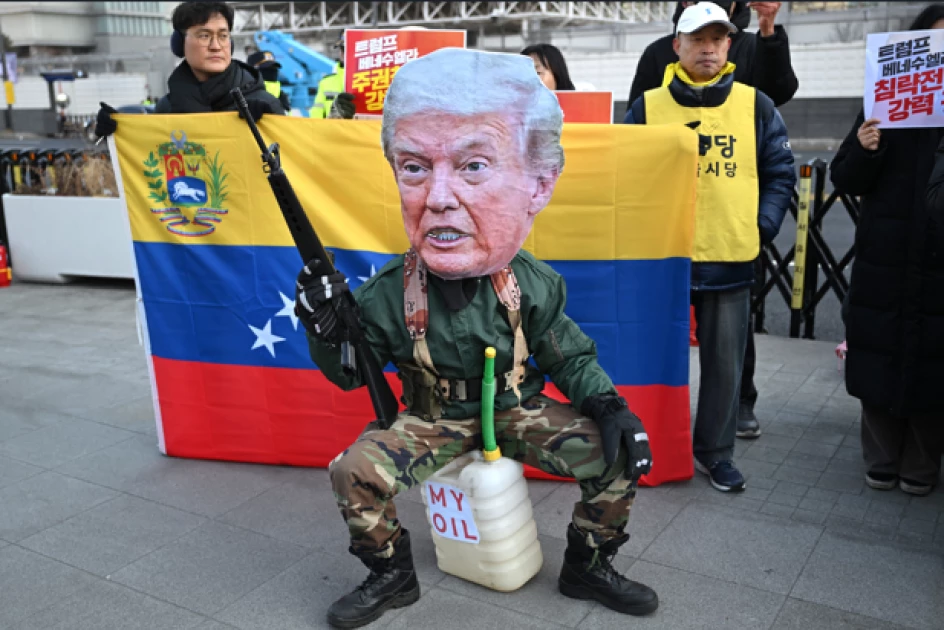
“We’re in charge,” the US president declared late Sunday, as his administration moved to consolidate control over Venezuela’s vast oil resources.
Interim leader signals cooperation
In what could be seen as a diplomatic breakthrough for Washington, Venezuela’s interim leader Delcy Rodríguez softened her initial defiant tone and issued a statement late Sunday offering cooperation with the Trump administration.
“We extend an invitation to the US government to work together on an agenda for cooperation,” said Rodríguez, the former vice president who assumed leadership following Maduro’s removal.
Her remarks came just hours after Trump warned that she would pay a “very big price, probably bigger than Maduro,” if she failed to comply with US demands.
Asked what Washington expected from Rodríguez, Trump was blunt.
“We need total access,” he said. “We need access to the oil and other things in their country that allow us to rebuild their country.”
Although US officials say no American ground troops remain inside Venezuela, a large naval force — including an aircraft carrier — continues to operate off the country’s coastline. The administration has also emphasized its ability to exert pressure by blockading Venezuelan oil tankers and has not ruled out further military action.
Uncertain future, no full regime change
Despite the dramatic intervention, the Trump administration insists it is not pursuing a full regime change following nearly 25 years of hard-left rule under Maduro and his late predecessor Hugo Chávez.
Senate Democratic Leader Chuck Schumer said Americans were reacting with alarm.
“People are scratching their heads in wonderment and in fear,” he told ABC News.
Secretary of State Marco Rubio stressed that Washington is not seeking an immediate democratic transition or a sweeping overhaul of Venezuela’s political system.
“We’re not going to make ideological demands,” Rubio said on CBS News. “We’re going to make an assessment based on what they do.”
The stance has sidelined Venezuela’s opposition, which the US claims was denied victory in recent elections.
Opposition leader Edmundo González Urrutia said the US intervention was “important” but insufficient without the release of political prisoners and recognition of his claim that he won the disputed 2024 presidential election.
International backlash grows
Major global powers including China, Russia and Iran — longtime allies of the Maduro government — swiftly condemned the US operation.
China called for Maduro’s “immediate release,” with its foreign ministry describing the action as a “clear violation of international law.”
Colombian President Gustavo Petro labeled the intervention “an assault on the sovereignty of Latin America,” warning it could trigger a humanitarian crisis in the region.
Some US allies also expressed unease, with the European Union voicing concern over the legality and long-term consequences of the operation.
However, Italy and Israel — whose leaders are close political allies of Trump — offered more supportive reactions, signaling fractures within the Western response.
As Maduro prepares to face US justice and Venezuela’s interim leadership weighs cooperation, the crisis has plunged the country into uncharted territory, raising fundamental questions about sovereignty, international law, and the future balance of power in Latin America.