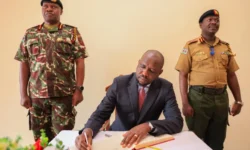
National Assembly Speaker Amoth Wetang’ula has predicted that more than half of Kenya’s Members of Parliament (MPs) risk losing their seats in the 2027 general elections, even as he urges lawmakers to support reforms that would secure pension funding for retiring legislators.
In a speech to colleagues and parliamentary staff, Wetang’ula said that current political dynamics and voter expectations mean that about 56 per cent of sitting MPs could be voted out at the next ballot. He argued that this turnover should prompt parliamentarians to take seriously the need to plan for the future, including how MPs are supported after leaving office.
Wetang’ula’s remarks come amid debates over a proposal to allocate funds for a retirement and pension scheme for legislators — a matter that has attracted mixed reactions from both inside and outside the National Assembly. The speaker said that many MPs serve multiple terms with little financial security afterward, and that a formal pension structure would provide dignity and stability to retiring leaders.
“Public service should not condemn those who serve in our institutions to uncertainty when they exit,” Wetang’ula said. He noted that numerous legislators have stepped away from parliament after years of service only to face economic challenges, and that a pension framework would reduce the risk of hardship for former MPs and their families.
While the push for a parliamentary pension fund has resonated with some legislators, it has also drawn criticism. Opponents argue that Kenya faces pressing social and economic needs — such as health care, education, housing and cost-of-living pressures — that take priority over benefits for a relatively small group of elected officials. Critics have questioned whether public funds should be used to enhance the retirement packages of MPs when many ordinary citizens struggle to access basic services.
Political analysts say the speaker’s comments reflect broader anxieties among lawmakers about their political futures. With mounting dissatisfaction over economic conditions and service delivery in many constituencies, several MPs are reportedly nervous about their chances of returning to parliament. Wetang’ula’s warning that a majority of incumbents may be ousted is seen by some as a call to action for legislators to serve more effectively and remain responsive to their voters’ needs.
In emphasising the importance of a pension scheme, the speaker pointed out that other arms of government — such as the judiciary and executive — already have established retirement benefits for their officials. He argued that parliament, which plays a critical role in shaping national policy and law, should similarly ensure that its members are not left without post-service support.
The proposal under consideration would require parliamentary approval and budgetary allocation, a step that may involve negotiations with the national Treasury and consideration by parliamentary committees. Wetang’ula has focused on building consensus, framing the pension discussion as part of broader efforts to modernise the legislative institution and uphold the dignity of public office.
But the debate has ignited fresh discussion about the role and responsibilities of MPs, especially at a time when many Kenyans are grappling with economic hardship. Opponents of the pension plan have called for increased transparency, saying that any new financial commitments for lawmakers must be weighed against the urgent needs of the wider population. Some have even proposed alternative support mechanisms, such as contributory schemes, rather than fully taxpayer-funded retirement packages.
Wetang’ula reiterated that the intention is not to prioritise MPs above the public, but to ensure that people who have devoted years of service to the nation do not face financial insecurity after leaving office. He said he is open to dialogue and amendments that safeguard both the welfare of legislators and prudent management of public resources.
The discussion over pension funding and political vulnerability among MPs is expected to continue in the coming months, particularly as party nominations and election preparations gather pace ahead of 2027. For now, Wetang’ula’s message underscores rising political uncertainty and the evolving conversation on how best to support public servants during and after their tenure.
Image by People Daily