

By Mulembe Times
William Ruto has explained why fuel prices in Kenya are often higher than in neighboring countries, pointing to differences in economic status, taxation policies, and infrastructure demands.
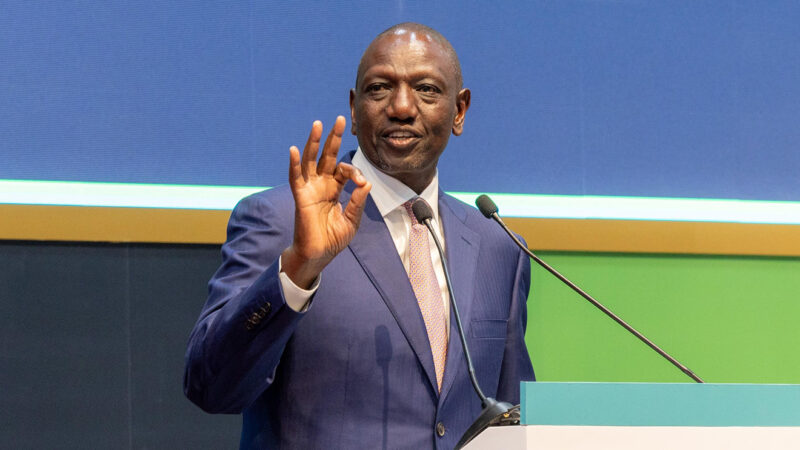
Speaking during a Sunday service at the Karen Africa Gospel Church, the President said comparisons made by Kenyans with regional countries often fail to consider key economic realities.
Kenya’s Economic Status a Key Factor
Ruto noted that Kenya’s classification as a middle-income country places it in a different category from many of its neighbors, which are considered least developed countries.
“Kenya is a middle-income country. Our neighbors are the least developed countries. There is a big difference,” he said.
He urged Kenyans to make fair comparisons by looking at countries with similar economic standing.
“If you want to compare Kenya fairly with others, compare Kenya with other middle-income countries,” he added.
Taxes and Infrastructure Drive Costs
The President also highlighted taxation as a major contributor to fuel pricing, noting that levies collected from fuel help support national development—especially road infrastructure.
“Our fuel supports transport infrastructure,” he stated.
According to Ruto, Kenya has an extensive road network, with over 20,000 kilometres of paved roads, alongside thousands of kilometres currently under construction.
“20,000 kilometres of tarmac is actually the same for the other six or seven East African countries combined,” he said.
Global Factors Still in Play
Beyond local factors, the Head of State pointed to global issues such as instability in the Middle East, which continues to disrupt supply chains and push up fuel prices worldwide.
“There are situations that affect transport routes and logistics, escalating prices,” he noted.
VAT Reduction to Cushion Kenyans
Ruto also commended Parliament for approving tax adjustments, including a reduction in Value Added Tax (VAT) on fuel, which he said has helped ease the burden on consumers.
“And that has significantly adjusted the prices downwards,” he said, adding that the government will continue monitoring the situation.
Balancing Development and Cost of Living
The President’s remarks come amid growing public concern over the rising cost of fuel, which has had a ripple effect on transport and commodity prices across the country.
While the government maintains that taxes on fuel are necessary to fund infrastructure and economic growth, critics argue that the burden on ordinary Kenyans remains high.