Ebola Quarantine Controversy: Government Says Kenya Is Ready, Doctors Warn System Is Not Fit
A growing controversy over a planned Ebola quarantine facility in Kenya has escalated into protests, court battles, and a sharp public clash between government officials and medical professionals, all centered on a single question: why Kenya?
The decision, announced by US Secretary of State Marco Rubio in late May, has triggered widespread opposition from sections of the public and health stakeholders, with critics questioning Kenya’s selection as a host country for Ebola-related quarantine and treatment arrangements.
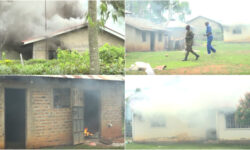
In Nanyuki, near Laikipia Air Base where the facility is proposed, protests erupted and turned deadly, with one person killed during demonstrations. Authorities have not yet fully clarified the circumstances surrounding the incident.
The matter has since moved to court, where the High Court has issued conservatory orders temporarily blocking the establishment of any Ebola quarantine, isolation, or treatment facility in the country. The court also ordered the government to release full details of the Kenya–US agreement, a directive that remains partially unfulfilled.
Government: Kenya Is Prepared
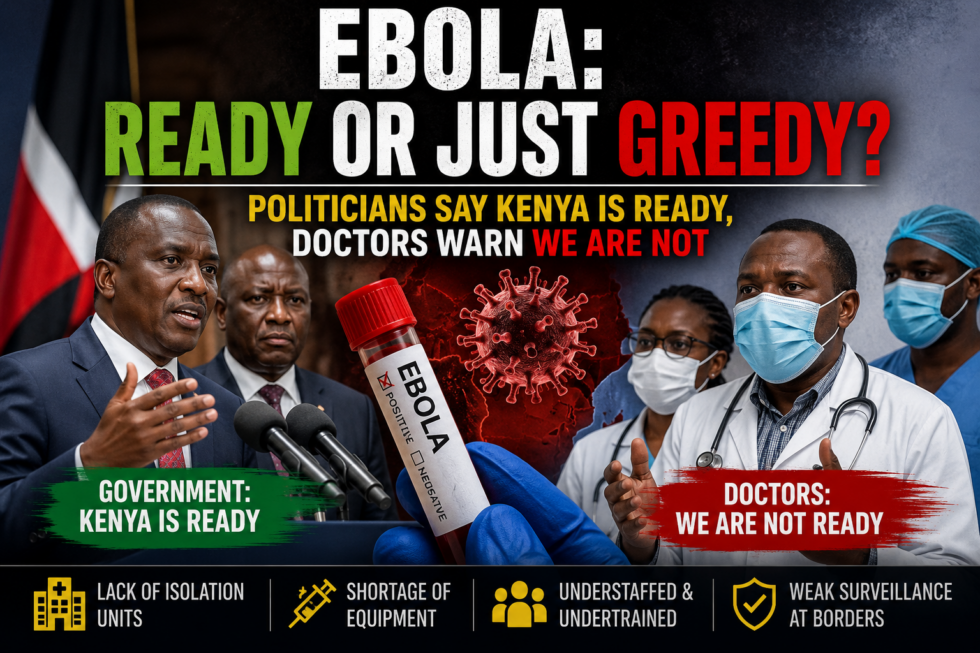
Health Cabinet Secretary Aden Duale has led the government’s defence of the project, insisting that Kenya is adequately prepared to manage Ebola risks due to its strategic position as a regional transport and trade hub.
Presenting to the National Assembly, Duale outlined what he described as strong preparedness indicators, including isolation units in 29 counties, four national reference laboratories operating continuously, and a national assessment showing high performance in contact tracing and rapid response systems.
“We know what we are doing. Kenya is capable and will continue to act responsibly in safeguarding global health security,” President William Ruto has also stated, dismissing concerns raised by the public.
Medical Services Principal Secretary Ouma Oluga further argued that Kenya has significant isolation capacity and strong laboratory systems, while the Kenya Medical Research Institute (KEMRI) confirmed the country has trained personnel capable of conducting Ebola testing.
The US Embassy in Nairobi has also defended the arrangement, stating that the Laikipia facility poses no risk to surrounding communities and will strengthen Kenya’s overall preparedness. The United States has committed approximately Ksh 1.7 billion ($13.5 million) toward Ebola preparedness in Kenya.
Doctors Push Back
Despite government assurances, the Kenya Medical Practitioners, Pharmacists and Dentists Union (KMPDU) has strongly opposed the project, warning that Kenya’s health system is not adequately equipped to handle Ebola quarantine operations.
KMPDU Secretary General Dr Davji Atellah has questioned the rationale behind Kenya’s selection, asking why the country was chosen when the outbreak’s epicentre is in the Democratic Republic of Congo.
The union argues that public hospitals remain under-resourced, citing shortages of essential medicines, diagnostic tools, and critical care infrastructure. It also highlights a national shortage of health workers, estimating a deficit of over 100,000 professionals.
“We should first fix our healthcare system before discussing quarantine arrangements for foreign nationals,” the union stated, warning of possible industrial action if the agreement proceeds without transparency.
Gaps in Preparedness Data
Even government-released preparedness figures reveal uneven capacity. While Kenya reports strong performance in some areas, infection prevention and control stands at 56%, logistics at 50%, and case management at just 36%, raising concerns about readiness for high-risk infectious disease containment.
Independent experts have also raised doubts, noting that Kenya has limited high-level biosafety laboratories and uneven isolation capacity across counties. Concerns have further been raised about the absence of proven treatment for certain Ebola strains currently circulating in the region.
A former US disaster response official also questioned the logic of relocating high-risk Ebola containment operations outside countries with more advanced medical systems.
The Core Question Remains
With court orders in place, protests ongoing, and medical professionals warning of systemic weaknesses, the debate has now shifted beyond policy into a broader question of trust.
Is Kenya truly prepared for an Ebola quarantine facility, or is confidence from political leadership outpacing the reality on the ground?
For now, the answer remains deeply contested: the government says yes, doctors say no, and the numbers suggest a far more complicated reality.