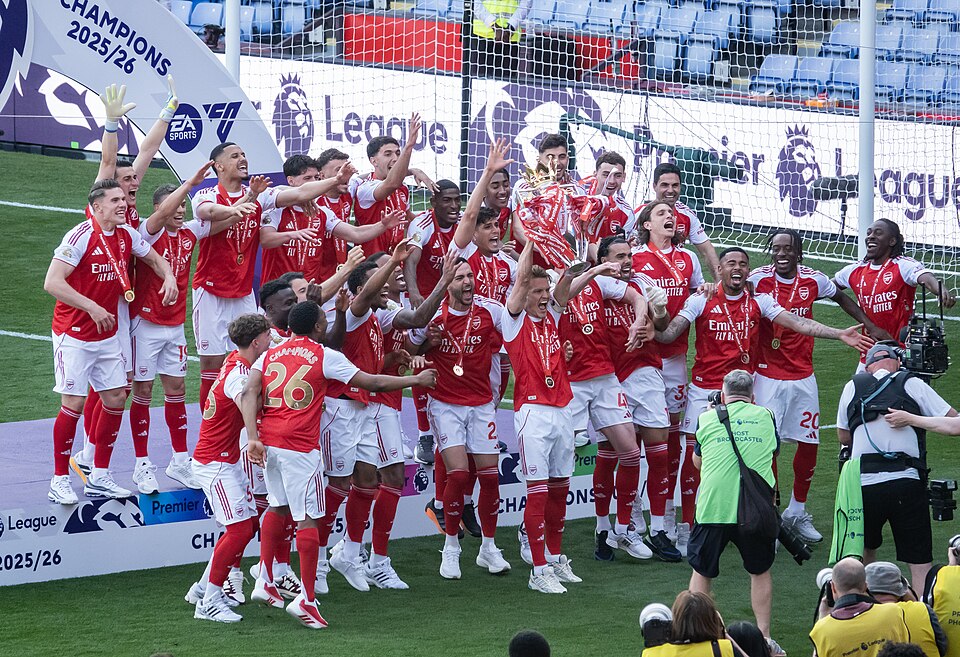
The 2026/27 Premier League season has been shaped into a tightly packed and strategically spaced campaign, with defending champions Arsenal set to launch the title defence under the lights at the Emirates Stadium against newly promoted Coventry City on Friday, August 21 at 22:00 EAT.
The opening weekend fixtures promise immediate drama across England, with all of the traditional “Big Six” clubs beginning their campaigns in varied but competitive circumstances.
Manchester United begin their season away from home, travelling to the MKM Stadium to face newly promoted Hull City on Saturday, August 22 at 14:30 EAT. The fixture is expected to test United’s early-season rhythm against an energetic side buoyed by top-flight return momentum.
Later that day, Tottenham Hotspur travel to West London for a 19:30 kickoff against Brentford at the Gtech Community Stadium. Spurs will be aiming to set an early tone in what is expected to be a highly competitive mid-table and European qualification battle.
Defeated title challengers from last season, Manchester City, start their new campaign at home at the Etihad Stadium on Sunday, August 23, hosting AFC Bournemouth at 16:00 EAT. Pep Guardiola’s side will be expected to immediately reassert their dominance in the title race.
On the same day, Aston Villa open their campaign away at Brighton & Hove Albion at the American Express Stadium. Under Unai Emery, Villa continue to position themselves as consistent top-four contenders, and an early away test could shape their trajectory.
One of the standout fixtures of the opening weekend sees Liverpool FC travel to St. James’ Park to face Newcastle United on Sunday, August 23 at 18:30 EAT. The clash is widely viewed as one of the most high-profile early-season encounters, with both sides expected to challenge for Champions League qualification and possibly more.
The opening round concludes on Monday, August 24, when Chelsea FC visit Craven Cottage for a West London derby against Fulham at 22:00 EAT. The fixture carries added intrigue as Chelsea enter a new tactical era under Xabi Alonso, with expectations high for a refreshed identity and improved consistency.
May Run-In Promises Title Drama
Beyond the opening fixtures, the final month of the 2026/27 campaign—May 2027—has already been identified as a potential title-deciding stretch, with multiple direct clashes among top contenders.
Arsenal’s closing schedule appears particularly demanding. The Gunners will host Tottenham Hotspur in a decisive North London derby on May 1 at the Emirates Stadium, a match that could carry major implications for the title race. They then conclude their league season at home against Brighton & Hove Albion on May 30.
Manchester City’s final run-in is equally intense. City host Liverpool on May 8 in a fixture that could prove pivotal in determining the direction of the title. They then travel to Aston Villa on May 23 before ending the season away at Sunderland on May 30.
Aston Villa find themselves in a potentially decisive role in the final weeks, hosting Manchester City on the penultimate weekend before travelling to face Tottenham Hotspur on the final day. Their fixtures could heavily influence both the title race and European qualification spots.
Manchester United’s end-of-season schedule includes a challenging away trip to Tottenham Hotspur on May 23, followed by a final-day home fixture against Fulham at Old Trafford on May 30. Depending on their form, these matches could define their push for Champions League qualification.
Chelsea also face a demanding finish, with an away trip to Liverpool at Anfield followed by a meeting with Tottenham Hotspur before concluding their campaign at Stamford Bridge against Brentford on May 30.
Player Welfare and Scheduling Adjustments
The Premier League has also confirmed structural changes aimed at improving player welfare during the congested season. The campaign’s start has been pushed one week later than traditional mid-August kickoffs, allowing a mandatory 89-day recovery period for players following international tournaments.
In addition, a strict 60-hour minimum recovery window between matches will remain in force during the festive period, a time historically associated with fixture congestion and increased injury risk.
League officials say the adjustments are designed to balance commercial demands with athlete welfare, while maintaining the intensity and competitiveness that defines English football.
With a balanced mix of early-season tests, high-profile clashes, and a tightly packed title-deciding run-in, the 2026/27 Premier League season is already shaping up to be one of the most strategically demanding campaigns in recent memory.