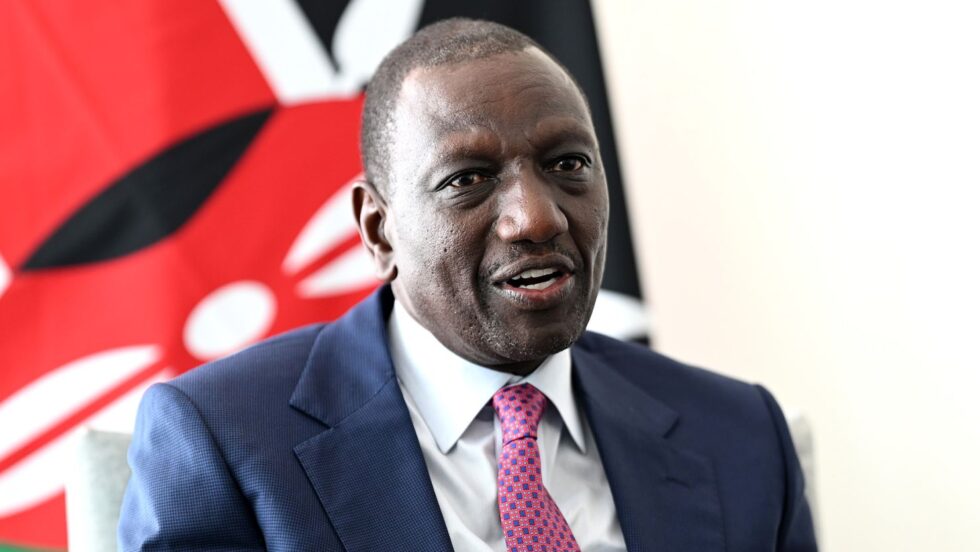
President William Ruto’s recent remarks about transforming Kenya into a first-world nation within the next 30 years have reignited debate over the country’s long-term development goals. His statement has left many Kenyans wondering whether Vision 2030—the national blueprint launched in 2008 to guide Kenya toward industrialization and middle-income status—is being replaced or quietly phased out.
Vision 2030 was introduced under former President Mwai Kibaki as a comprehensive plan built around three main pillars: economic, social, and political development. It was meant to be implemented through a series of five-year Medium-Term Plans (MTPs), each setting measurable goals to move the country closer to the 2030 targets. Currently, the government is working on the Fourth Medium-Term Plan (MTP IV) for 2023–2027, which also integrates President Ruto’s Bottom-Up Economic Transformation Agenda (BETA). This plan emphasizes job creation, improved healthcare, affordable housing, enhanced agriculture, and the expansion of digital and creative industries.
Government officials have maintained that Vision 2030 remains in effect and continues to guide national projects and investments. Evidence from official planning documents shows that the framework still shapes the country’s development agenda, particularly through sectoral programs funded in national budgets. However, Ruto’s announcement of a “30-year plan” to make Kenya a first-world nation by 2055 has sparked confusion and curiosity. Many are asking whether this new vision represents a continuation of Vision 2030 or the introduction of an entirely new development framework.
Supporters of President Ruto’s long-term plan argue that extending the vision is a logical step, ensuring Kenya continues to pursue growth even beyond the 2030 deadline. They believe the proposed Vision 2055 will build upon the progress made under Vision 2030 while addressing emerging global challenges such as climate change, digital transformation, and population growth. Ruto’s allies also view the initiative as a show of confidence in Kenya’s future, emphasizing that long-term planning is essential for sustainable national transformation.
However, critics see things differently. Political leaders and policy analysts have accused the government of abandoning the Vision 2030 agenda. According to opposition figures such as Wiper Party leader Kalonzo Musyoka, many flagship Vision 2030 projects have been neglected or underfunded, with attention shifting toward new programs under the Bottom-Up model. These critics argue that instead of introducing new visions, the government should focus on completing ongoing projects and evaluating the success of existing ones.
Development experts also caution that creating new long-term plans without strong institutions and consistent implementation could make such visions merely political statements rather than actionable strategies. They stress the importance of accountability, adequate financing, and continuity across administrations to ensure the success of any national development blueprint.
For now, the government insists that Vision 2030 is still on course and that the new 30-year plan is an extension rather than a replacement. Yet, many Kenyans remain skeptical, eager to see whether the promise of Vision 2055 will bring tangible benefits or simply become another ambitious dream.
As Kenya looks toward the future, one thing is clear—whether through Vision 2030 or Vision 2055, citizens expect measurable progress, job creation, and improved living standards. The challenge for Ruto’s administration will be to prove that this long-term ambition can translate into real, lasting transformation for all Kenyans.
IMAGE: CNN