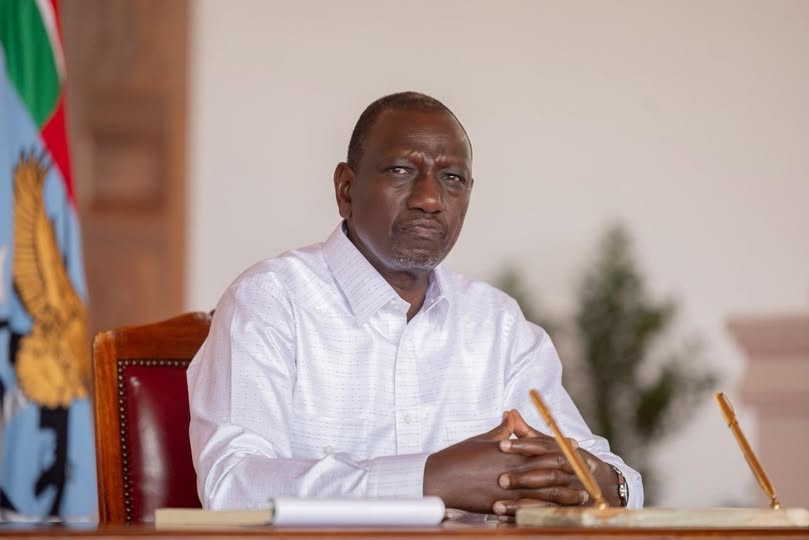
President William Ruto has moved to defend his decision to sign eight contentious bills into law shortly before announcing the death of opposition leader Raila Odinga, insisting that his actions were constitutional, transparent, and carried out in good faith. Speaking firmly during a press briefing at State House, the president reiterated that there was “hakuna kitu ya kuficha” — nothing to hide — emphasizing that government functions must continue even in times of national tragedy.
The president’s move has sparked mixed reactions across the political divide and among ordinary citizens. Critics have described the timing as politically insensitive, arguing that the signing of the bills during a moment of mourning dishonored the spirit of unity that had gripped the nation following Raila’s passing. Some opposition leaders claimed that Ruto’s decision was a deliberate attempt to divert public attention from the national tragedy and push through controversial laws with minimal scrutiny.
However, Ruto dismissed such claims as unfounded and politically motivated. He maintained that his actions were guided by the Constitution, which requires the president to assent to bills passed by Parliament within specific time limits. “The work of government cannot come to a halt because of mourning,” Ruto stated, adding that his administration had to ensure that pending legislative matters were concluded in accordance with the law.
Among the bills signed were measures touching on taxation, digital governance, and administrative restructuring — all of which had already generated intense debate in Parliament. Civil society organizations and human rights groups have voiced concern that the bills were pushed through too hastily, potentially undermining public consultation. Despite these objections, Ruto affirmed that the new laws are aimed at promoting efficiency, accountability, and economic progress.
Supporters of the president have rallied behind him, praising his decisiveness and adherence to procedure. According to political analyst Professor Edward Kisiangani, the timing, though unfortunate, should not overshadow the constitutional necessity of the president’s duty. “Ruto acted within the framework of the law. Leadership sometimes requires making tough decisions at difficult times,” he explained.
Nevertheless, the backlash remains strong. Opposition figures and Raila’s allies accused Ruto of lacking empathy, arguing that a symbolic gesture of postponement would have demonstrated respect and unity during a moment of collective grief. “This was not about legality but morality,” said a close aide of the late Raila Odinga. “Kenyans were mourning. The president should have shown solidarity instead of pushing an agenda.”
Observers have noted that this controversy further deepens Kenya’s already polarized political environment, where every government action is viewed through a partisan lens. The timing of the bill signing, just hours before the formal announcement of Raila’s death, has added emotional weight to an already charged atmosphere.
Despite the criticism, Ruto stood his ground, stating that his conscience was clear and that every decision he made was in the interest of the Kenyan people. “My responsibility is to ensure that the government functions effectively. Raila Odinga was a leader I respected, but I also have a duty to the nation,” he said.
As the nation continues to mourn Raila’s passing — a man whose political career spanned decades and whose influence shaped Kenya’s democracy — the debate over President Ruto’s timing underscores the delicate balance between leadership responsibility and national sentiment. Whether his decision will be remembered as an act of constitutional diligence or political insensitivity remains a matter of public opinion, but one thing is clear: it has reignited a national conversation about empathy, governance, and the moral weight of power.
Image by The Kenyan DAILY POST