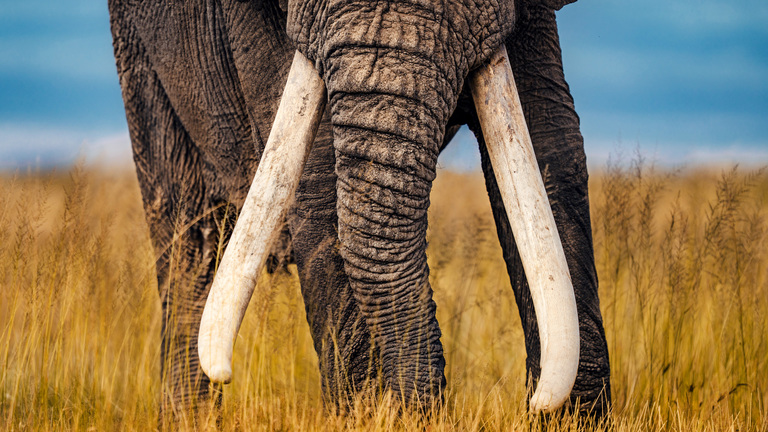
A court in Kilifi has fined two men KSh 1 million each after finding them guilty of possessing an elephant tusk valued at around KSh 500,000, in a case that highlights ongoing efforts to curb wildlife crime and protect Kenya’s endangered species.
The accused, whose identities have been withheld pending formal procedures, pleaded guilty to the charge of unlawful possession of a tusk believed to have been sourced from an elephant — an offence under the Wildlife Conservation and Management Act. The tusk was recovered during a targeted operation by wildlife officers following credible intelligence of illegal wildlife trafficking in Kilifi County.
During the hearing, the prosecution told the court that the tusk, weighing several kilograms, had no valid documentation or permit, as required under Kenyan law for ownership or transport of elephant ivory. The officers testified that the defendants failed to show any lawful basis for possessing the item, which is classified as a conflict species product, meaning its handling is strictly regulated to prevent poaching and illegal trade.
In delivering his ruling, the presiding magistrate underscored the seriousness of wildlife offences and the need for stringent penalties to deter would-be offenders. The fine of KSh 1 million per defendant — double the estimated value of the seized tusk — was ordered to be paid within a specified period, failing which the court warned the men could face alternative custodial punishment.
The magistrate noted that elephant tusks have no legitimate commercial value in Kenya, where elephants are a protected species under national law and international agreements such as the Convention on International Trade in Endangered Species of Wild Fauna and Flora (CITES). He emphasised that strong penalties are critical to reinforcing the government’s commitment to combating wildlife trafficking and preserving biodiversity.
Conservationists and wildlife officials welcomed the outcome, describing the judgment as a positive step in the fight against poaching and illegal ivory trade. “This sends a clear message that Kenya will not tolerate wildlife crime,” said one conservation advocate. “Protecting elephants is not just an environmental issue; it is about upholding the rule of law and safeguarding our natural heritage for future generations.”
Elephants in Kenya face ongoing threats from poaching driven by demand for ivory, despite international bans and national laws prohibiting its trade. Authorities have repeatedly called on communities living near wildlife habitats to report suspicious activities and support efforts to protect endangered species.
The Kenya Wildlife Service (KWS), which collaborates with law enforcement agencies on anti-poaching operations, applauded the ruling and urged continued vigilance. KWS officials noted that intelligence-led operations and community participation are vital in intercepting illegal wildlife products before they reach illicit markets.
Under the Wildlife Conservation and Management Act, penalties for possession or trafficking of prohibited wildlife products can include hefty fines and imprisonment. The magnitude of fines is intended to reflect both the value of the item and the broader harm caused by poaching and illegal trade.
The case in Kilifi serves as a reminder that even individual possession of wildlife products carries serious legal consequences. Ivory, whether in raw or processed form, cannot be legally owned or traded in Kenya without strict permits that are typically issued only for scientific or educational purposes — and even then, under tight conditions.
As Kenya continues to strengthen its anti-poaching framework and enforce wildlife laws, cases like this underscore the importance of judicial support in deterring wildlife crime. The swift and firm ruling by the Kilifi court is expected to reinforce deterrence and encourage citizens to respect conservation laws.
IMAGE COURTESY