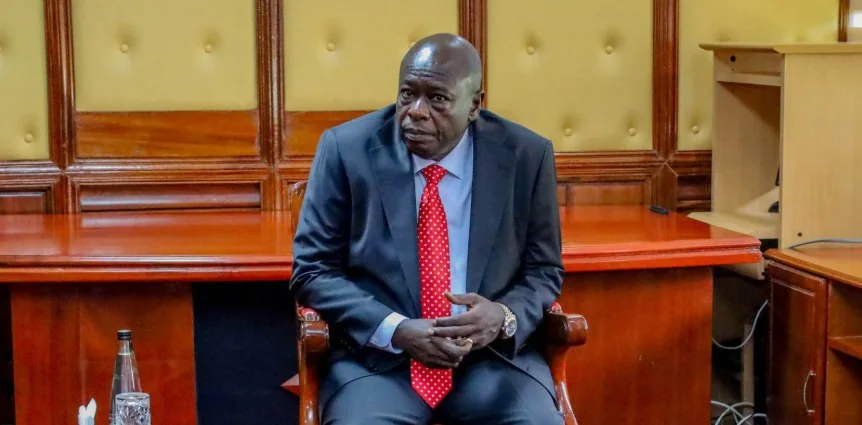
A new legal controversy has emerged surrounding the judgment that upheld the impeachment of former Deputy President Rigathi Gachagua, after his legal team raised concerns over what they describe as inconsistencies between the ruling delivered in open court and the version later issued to parties.
In a letter to the court registry, Gachagua’s lawyers claim that the certified judgment they received contains 286 pages, despite the court allegedly indicating during delivery that the full decision ran to about 350 pages. They argue that the apparent absence of 64 pages raises serious questions about the completeness of the official court record.
The judgment in question was delivered on June 8, 2026, by a three-judge bench comprising Justices Eric Ogola, Anthony Mrima, and Freda Mugambi. It arose from consolidated constitutional petitions challenging Gachagua’s impeachment, a politically charged case involving multiple petitioners and state respondents, including the National Assembly of Kenya and its Speaker.
According to the lawyers, Justice Ogola stated during the lengthy ten-hour reading of the ruling that the decision comprised 350 pages. However, the version subsequently circulated to litigants reportedly contained only 286 pages, prompting claims of a discrepancy that they say undermines confidence in the judicial process.
“The discrepancy raises concerns regarding the completeness and authenticity of the official judgment record,” the legal team stated, urging the Judiciary to clarify whether the difference resulted from a clerical, procedural, or substantive error.
The matter has added fresh attention to an already politically sensitive case that tested Kenya’s constitutional impeachment framework and drew national scrutiny.
Separately, Martha Karua has also weighed in on broader concerns about judicial consistency in politically significant cases. She referenced past election petition experiences, arguing that courts have in some instances acknowledged procedural gaps and missing records but still proceeded to deliver final rulings.
Gachagua’s legal team is now demanding immediate access to what they insist is the full version of the judgment as read in court, insisting that clarity is necessary to safeguard public confidence in the administration of justice.
The Judiciary has not yet issued a public response to the claims.