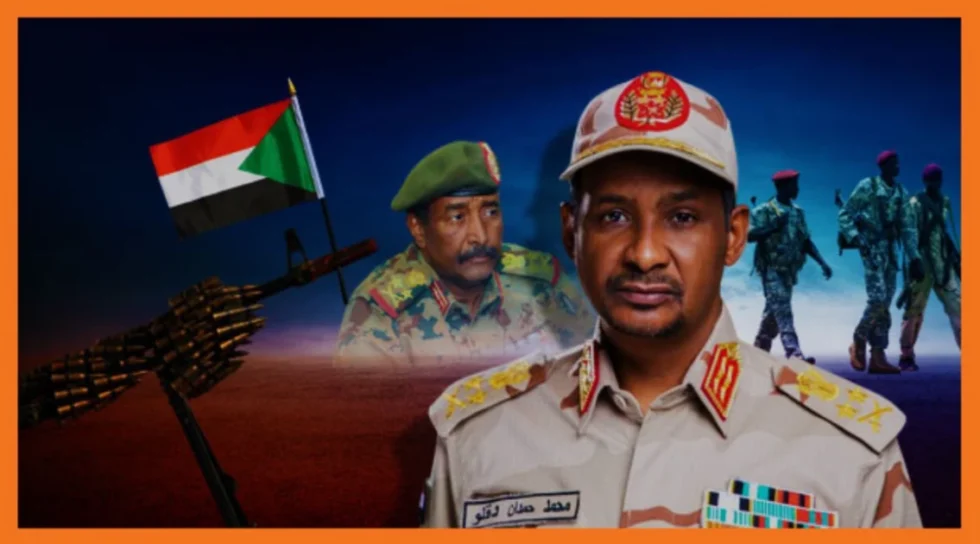
Khartoum, Sudan – In a move that significantly escalates Sudan’s already dire political and humanitarian crisis, the Rapid Support Forces (RSF) announced the formation of a parallel government in areas under their control. This bold declaration deepens the divide between the RSF and the Sudanese Armed Forces (SAF), further complicating international efforts to restore stability in the war-torn nation.
The RSF, led by General Mohamed Hamdan Dagalo (commonly known as Hemedti), unveiled the new administrative structure in a televised address late Tuesday. The group claims the move is necessary to “protect civilians and fill the vacuum of governance” in territories outside SAF control, primarily in Darfur and parts of central and western Sudan.
“This is not a coup against the people, but a step towards inclusive governance,” said RSF spokesperson Al-Fateh Al-Rahman Bakri. “We are committed to a civilian-led transition and this government will reflect the will of marginalized communities.”
The announcement has drawn swift condemnation from Sudan’s internationally recognized Sovereign Council, which labeled the RSF’s actions as “illegitimate and dangerous,” accusing Hemedti of attempting to divide the country.
Fighting between the RSF and SAF has raged since April 2023, leading to the collapse of many state institutions, mass displacement of civilians, and widespread humanitarian suffering. The conflict has displaced over 10 million people, according to UN estimates, and severely strained access to food, healthcare, and basic services.
Regional leaders and international mediators fear the RSF’s latest move could further derail peace negotiations brokered by the African Union and IGAD. “This declaration undermines efforts to achieve a unified political solution and threatens the sovereignty of Sudan,” said an AU envoy, calling for immediate de-escalation.
Analysts warn that the emergence of a dual government scenario may lead to a prolonged period of instability akin to Libya’s civil war model, where rival administrations operate in parallel without a clear path to reunification.
Despite international condemnation, the RSF appears emboldened, citing widespread civilian support and a network of tribal alliances in Darfur. Meanwhile, the SAF has vowed to reclaim lost territories and reassert national authority, setting the stage for further military confrontation.
As the power struggle intensifies, ordinary Sudanese continue to bear the brunt. With no ceasefire in sight and diplomacy faltering, Sudan stands at a dangerous crossroads—one that could define the nation’s future for decades to come.