


Family Planning Crisis in Africa: Bungoma’s Women Caught in the Crossfire: Millions of women in Africa, including in Bungoma, face a critical shortage in access to contraception. This article explores the human, environmental, and policy impact of unmet family planning needs—and what is being done to change the future.
Bungoma, Kenya – In the quiet corners of rural Africa, beyond the reach of hospitals and paved roads, a silent crisis is unfolding—one that ties the fate of millions of women to the broader health of a continent and its fragile environment. At the heart of this issue lies a persistent challenge: the unmet need for family planning.
Despite decades of global advocacy and billions in aid, access to modern contraception remains elusive for millions of women. In 2023, the African Population and Health Research Center (APHRC) reported that 67 million women across sub-Saharan Africa wished to delay or avoid pregnancy but lacked access to effective contraceptives.
For these women, the consequences go far beyond personal hardship. They ripple outward—affecting maternal health, child survival, economic development, and even environmental sustainability.

The Human Toll: A Mother’s Story from Bungoma
In a dusty village near Bungoma, 28-year-old Mary Nabwire cradles her sixth child. At an age when many women are charting their careers, Mary has known little else but motherhood.

“I love my children,” she says with tired eyes, “but I had hoped to stop after my third. There’s no clinic nearby with contraceptives, and traveling is too expensive.”
Her voice echoes the lived reality of millions across the continent. Sub-Saharan Africa, home to the highest unmet need for contraception, also carries 66% of the world’s maternal deaths. Many of these result from closely spaced, high-risk pregnancies and limited access to reproductive healthcare.
“Every year, thousands of African women die from preventable complications,” says Dr. Catherine Kyobutungi, Executive Director of APHRC. “We are sitting on a ticking time bomb.”
The Numbers Behind the Crisis
In Eastern Africa alone, over 22 million women lack access to contraceptives, making up 21% of women of reproductive age. West Africa holds the highest burden, with 25 million women—a staggering 25% of the female reproductive population—unable to access modern family planning services.
Central and Southern Africa report about 10 million women each, with unmet needs ranging from 15% to 20%.
These numbers are mirrored by a maternal mortality rate of 505 deaths per 100,000 live births in 2023—a grim figure that shows only marginal improvement over the past five years.
Science and Hope: New Frontiers in Contraceptive Innovation
While the statistics paint a sobering picture, hope lies in innovation. Male contraceptives, once seen as a scientific fantasy, are now in advanced clinical trials. Simultaneously, digital health platforms are allowing women in remote areas to access mobile-based contraceptive counseling and virtual health services discreetly.
Breakthroughs in biotechnology—such as hormonal implants with fewer side effects and gene-editing technologies—could revolutionize how modern contraceptives are delivered and tolerated.
Still, experts caution that technology alone cannot bridge the gap.
“We must connect scientific progress with real-world application,” says Dr. Kyobutungi. “That means education, trust, and culturally sensitive outreach.”
Environmental Fallout: When Family Planning Meets Climate Change
The impact of unmet family planning needs is not only a health crisis—it’s an environmental one.
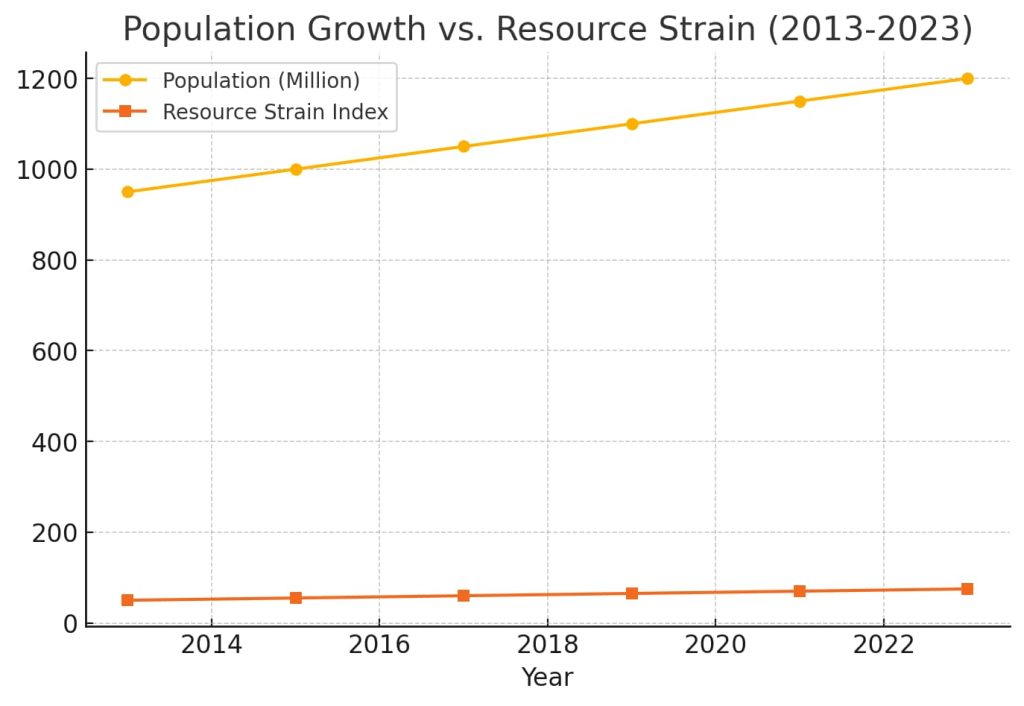
Population growth, driven largely by unintended pregnancies, increases pressure on land, water, forests, and other finite resources. In Karamoja, Uganda, over-farming and deforestation have turned once fertile lands into dust.
“We are clearing more land each year for homes and farms,” says local farmer Samuel Akello, “but the soil is weaker and harvests are smaller.”
Amina Yusuf, an environmental economist, adds,
“Family planning is a powerful but overlooked climate solution. Slower population growth means fewer carbon emissions and reduced strain on fragile ecosystems.”
Cultural Barriers: Myths and Misinformation
Efforts to expand family planning access also face deep-rooted cultural and religious barriers. Myths about infertility, fears of side effects, and societal taboos often keep women—especially in rural areas—away from contraception.
In Kisumu, Reverend Samuel Otieno, a local church leader, is challenging this narrative by advocating for inclusive, respectful dialogue within communities.
“Change begins with open conversations,” Otieno says. “Involving men, faith leaders, and families is essential if we want to dismantle fear and misinformation.”
APHRC and Bungoma’s Bold Steps Toward Change
Leading this transformation is the African Population and Health Research Center, whose 2023 Catalyze Impact Initiative connected hundreds of African institutions to research and funding opportunities. The center released 310 research products, a 47% increase from the previous year, and played a pivotal role in advocating for stronger reproductive health policies.
In Bungoma County, real infrastructure is being put in place to complement advocacy. Under the leadership of Governor Ken Lusaka, the county is currently constructing an Sh82 million Modern Outpatient Complex at Webuye County Hospital.
The two-storey facility will house:
- Emergency care units
- A CT scan department
- A doctors’ plaza
- Specialized outpatient services
“This facility will be a game changer for our people,” Lusaka said during a recent inspection. “It will decongest hospitals and bring crucial services closer to home.”
In addition, following Lusaka’s appeals, the Kenyan Cabinet recently approved the establishment of a Level VI hospital in Bungoma—set to provide top-tier specialized services and relieve pressure on lower-tier health centers.
The Road Ahead: From Crisis to Commitment
As Mary Nabwire rocks her newborn in Bungoma, the hope is that her daughters will inherit a different reality—one where access to reproductive healthcare is a right, not a privilege.
“Meeting family planning needs is about more than health,” says Dr. Kyobutungi. “It’s about justice, gender equity, and sustainability. This is a battle we can and must win.”


