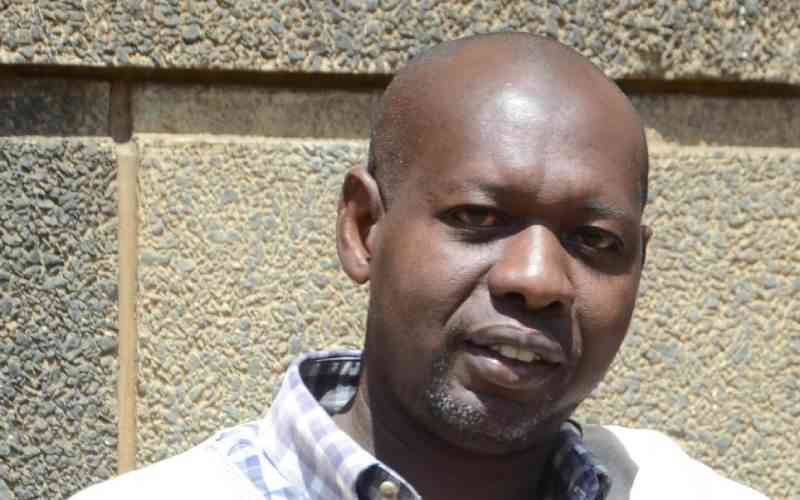
Photojournalist Collins Kweyu, of the Standard Media Group, found himself arrested and later released as questions swirl around threats and possible intimidation tied to his reporting on corruption involving a judge in Migori County. His ordeal has stirred outcry from journalist associations and underscored concerns over press freedom in Kenya.
Kweyu was taken into custody on Friday, September 19, 2025, in Nairobi after beginning work on a story that alleged a judge had requested a KSh 10 million bribe to decide a case. The arrest followed a complaint lodged by the judge with the Directorate of Criminal Investigations (DCI) in Migori. According to Kweyu’s account, he had contacted the judge, via text, seeking clarification about the allegations, believing it was part of fair reporting and giving the judge a chance to respond. Instead, he was arrested.
He was detained at the Central Police Station in Nairobi, remaining in custody overnight. He was subsequently released on free bond the next day, with orders to report later to the Migori County CCIO (Criminal Investigations Officer). His phones and electronic devices had been confiscated, police having acquired a warrant to search his home and seize equipment. Kweyu, however, insisted that police overreached, noting that the warrant authorized only a search, not detention. He also pointedly refused to reveal his sources, citing journalistic ethics.
The Crime Journalists Association of Kenya (CJAK) and other media bodies strongly condemned the manner of Kweyu’s arrest. CJAK described the use of police powers in this case as an attempt to silence a journalist investigating possible corruption within the judiciary. They said the arrest late on Friday, and holding him through the weekend, suggested bad faith on the part of the authorities. The Court Reporters Association of Kenya (CRAK) also expressed concern, stressing that suspects are legally entitled to bail unless there are compelling reasons not to grant it.
After cooperating with investigators, Kweyu was later named a state witness in the case, according to DCI officials. Senior investigators confirmed he was no longer considered a primary suspect. He recorded his statement in Migori and offered full cooperation. Even so, Kweyu maintains that the entire episode, his arrest, the seizure of his devices, and the complaint against him, stemmed from his journalistic work: following up on allegations that a judge had demanded bribes.
The case has drawn attention not just for its legal twists, but for what it reveals about the risks journalists face when covering powerful individuals. Beyond the legal and procedural questions, such as whether Kweyu’s rights were breached—many media watchers have flagged the psychological threat posed by detention, seizure of equipment, and demands for disclosure of sources.
After his release, Kweyu thanked those who advocated on his behalf. He acknowledged the support from CJAK, CRAK, the Kenya Union of Journalists, and others. He also emphasized that he will continue to report, while respecting legal obligations and journalistic standards regarding fairness and the protection of sources.
As this matter progresses, it is likely to become a precedent for how similar cases involving journalists are handled. There are expectations that law enforcement will need to operate transparently, that arrests be justified, and that protections guaranteed under Kenya’s Constitution, such as freedom of expression and the right to report, are preserved.
IMAGE : THE STANDARD