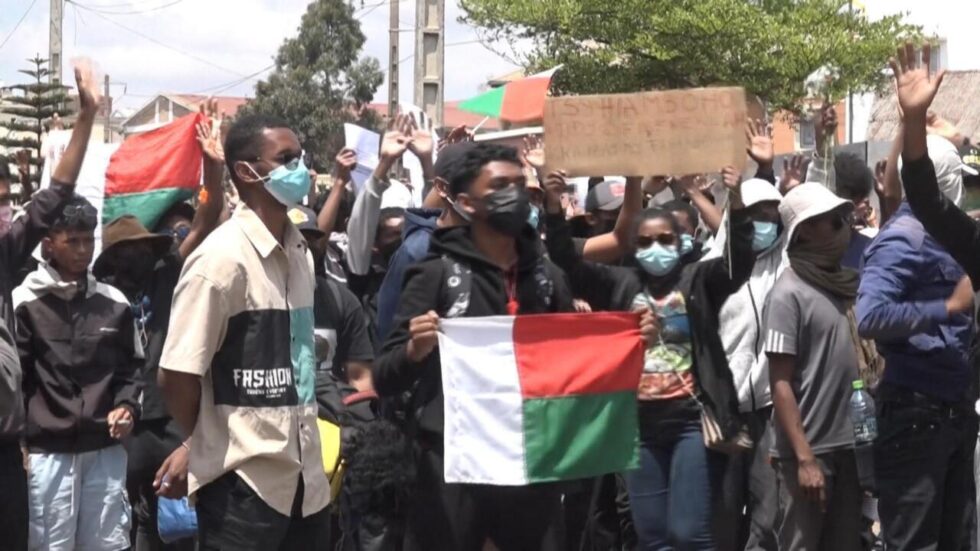
Fresh protests have erupted in Madagascar as frustration over worsening water and electricity shortages continues to fuel public anger against the government. The demonstrations, largely driven by young people under the movement “Gen Z Madagascar,” have spread across major cities, including Antananarivo, Antsiranana, Mahajanga, and Toliara.
Chanting slogans and carrying placards, the protesters accused President Andry Rajoelina of failing to address basic service delivery and governance issues. Some demonstrators went as far as calling the president an “assassin,” while others demanded his resignation, highlighting the growing distrust between the youth and state leadership.
The protests, which began on September 25, have already turned deadly. According to the United Nations, at least 22 people have been killed and more than 100 others injured during confrontations with security forces. Police have used tear gas and rubber bullets to disperse crowds, while authorities insist that some of the figures being reported are exaggerated.
In response to the mounting pressure, President Rajoelina dissolved his cabinet earlier this week. While the move was meant to signal a readiness to reset his government, many protesters dismissed it as insufficient. They argue that replacing ministers without tackling the root causes of the crisis—unreliable utilities, high unemployment, and lack of accountability—will not resolve the country’s problems.
The government has also imposed a dusk-to-dawn curfew in Antananarivo to contain unrest, with several businesses, schools, and public offices forced to close. However, demonstrations have continued despite the restrictions, and reports of vandalism, looting, and destruction of property have emerged. Some protesters have specifically targeted homes of politicians allied to the president, underscoring the growing hostility toward state institutions.
Analysts note that the movement in Madagascar mirrors youth-led demonstrations in other parts of the world, such as Kenya and Nepal, where young people are increasingly using social media to mobilize against poor governance. The Gen Z movement has managed to sustain daily protests, amplifying their demands for deeper reforms rather than superficial changes.
For many, the cabinet dissolution represents only a symbolic gesture unless accompanied by long-term structural improvements. Citizens are demanding a government that guarantees reliable access to water and electricity, addresses corruption, and invests in public services. Without this, observers warn that unrest could escalate further, threatening stability in one of Africa’s most fragile democracies.
As the situation unfolds, Madagascar stands at a crossroads. The government faces the delicate task of restoring order while addressing the grievances of its youthful population. For the protesters, this moment is seen as an opportunity to push for meaningful change that could redefine the country’s political landscape.
IMAGE : FRANCE 24