


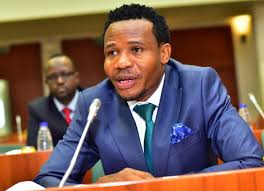
The ongoing hate speech case against Mumias East Member of Parliament Peter Salasya has taken a new turn after a Nairobi court directed that the matter be referred to the National Cohesion and Integration Commission (NCIC) for further review and action.
Salasya, who has been at the center of public attention for his outspoken remarks, is accused of making statements that allegedly incited tension between the Luo and Luhya communities. The controversial remarks were reportedly shared on social media earlier this year, prompting his arrest and subsequent arraignment in May.
During Monday’s session, the presiding magistrate ruled that the case should be handed over to NCIC, noting that the commission has the legal mandate and expertise to assess whether the MP’s statements meet the threshold for hate speech under the National Cohesion and Integration Act. The court’s decision effectively pauses the criminal proceedings to allow NCIC to carry out an independent investigation.
According to the directive, NCIC will now review the evidence presented by the prosecution, evaluate the nature of the remarks, and determine whether Salasya’s conduct violated the laws on ethnic harmony and public communication. Depending on its findings, the commission may recommend disciplinary or corrective measures, or refer the case back to the court for further legal action.
Salasya’s legal team has maintained that the charges against him are politically motivated, insisting that his statements were taken out of context. They argue that the MP’s social media comments were meant to highlight political issues and not to provoke ethnic hostility. Meanwhile, prosecutors have emphasized the seriousness of the matter, arguing that hate speech — especially from public leaders — threatens Kenya’s fragile ethnic balance.
The referral marks a significant moment in Kenya’s ongoing efforts to manage hate speech and promote unity through both legal and institutional frameworks. The NCIC, established to foster peace and cohesion, has increasingly taken a central role in investigating public utterances that could inflame ethnic divisions, particularly during politically charged periods.
Analysts say the case could set a precedent for how Kenya handles inflammatory speech by public officials. By involving NCIC, the judiciary appears to be promoting dialogue and social responsibility over punitive action, acknowledging that hate speech often reflects deeper social and political tensions that require more than courtroom punishment to resolve.
As the investigation continues, the public will be watching closely to see whether NCIC’s findings will lead to reconciliation, further prosecution, or policy reforms on how political speech is regulated. Whatever the outcome, the case underscores the delicate balance between freedom of expression and the responsibility of leaders to uphold peace in a diverse society.
IMAGE BY PEOPLE DAILY


