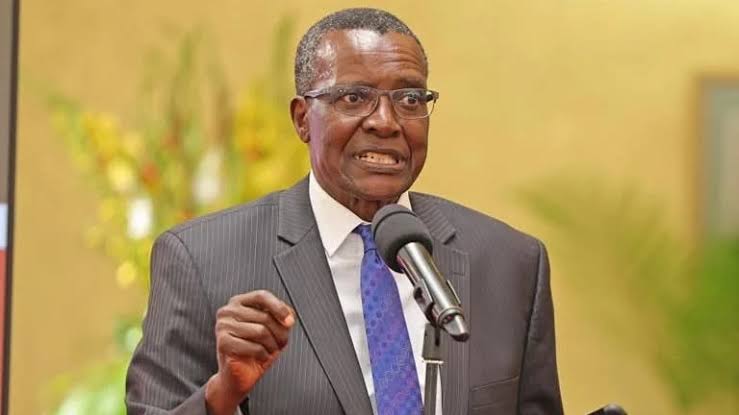
Former Chief Justice David Maraga has fiercely criticized President William Ruto’s recent decision to sign into law several controversial bills, describing them as “draconian” and a direct threat to Kenya’s constitutional democracy. Speaking during a press briefing in Nairobi on October 21, 2025, Maraga accused the president of taking advantage of a national moment of mourning to enact laws that could roll back fundamental freedoms and undo years of democratic progress.
According to Maraga, President Ruto’s move to sign eight contentious bills on the same day the nation was mourning the passing of Raila Odinga was not only insensitive but also politically calculated. “On the very day the nation was mourning Raila, the President signed into law not one but eight bills, some of which are quite draconian,” he lamented.
Among the laws that drew Maraga’s strongest criticism were the Computer Misuse and Cybercrimes (Amendment) Act, 2024, and the Privatisation Act, 2025. He argued that the cybercrimes law gives excessive power to government-appointed bodies, allowing them to monitor and punish online activity in ways that could easily suppress freedom of expression. “This law effectively makes a committee the investigator, prosecutor, and judge on matters of free speech,” he said, warning that such provisions undermine Articles 33 and 34 of Kenya’s Constitution, which guarantee freedom of expression and media independence.
Maraga was equally outspoken about the Privatisation Act, 2025, which he described as a tool that enables state officials to dispose of public assets without proper oversight or public scrutiny. He expressed concern that the Treasury Cabinet Secretary and the Privatisation Authority had been granted sweeping powers, potentially allowing government insiders to sell national assets for personal gain. “They could sell to themselves; Kenyans would never know,” he cautioned, emphasizing the lack of transparency and accountability embedded in the law.
Beyond the content of the laws themselves, Maraga took issue with the process through which they were passed. He accused Parliament of rubber-stamping the bills without adequate debate or meaningful public participation, calling the entire legislative process unconstitutional. “These amendments are unconstitutional, null and void,” he declared. “A President who does not respect the Constitution has no legitimacy to continue governing this country.”
Maraga also warned that the new laws mark a dangerous slide toward authoritarianism, where checks and balances are weakened and citizens lose their voice in governance. He urged Kenyans to stand firm in defending their democratic rights, reminding them that the Constitution vests ultimate power in the people. “The power lies with us — the sovereign people of Kenya,” he said passionately.
His comments have sparked nationwide discussion, echoing sentiments from civil society groups and legal experts who fear that the new legislative measures could erode freedoms won under the 2010 Constitution. The timing of Ruto’s decision—coming on the day of national grief over Odinga’s death—has further fueled criticism that the administration acted in bad faith.
Maraga’s remarks have also inspired legal action, with several groups reportedly preparing to challenge the new laws in court. The former Chief Justice vowed to support such petitions, insisting that Kenya’s constitutional safeguards must not be dismantled quietly. “We cannot allow our freedoms to be buried silently,” he warned.
As the debate continues, Maraga’s outspoken opposition places him in direct confrontation with the Ruto administration and positions him as a leading voice in defense of Kenya’s constitutional order. Whether his warnings will spark real change or remain symbolic resistance, his message is clear: the struggle for democracy and accountability in Kenya is far from over.
Image by The Star