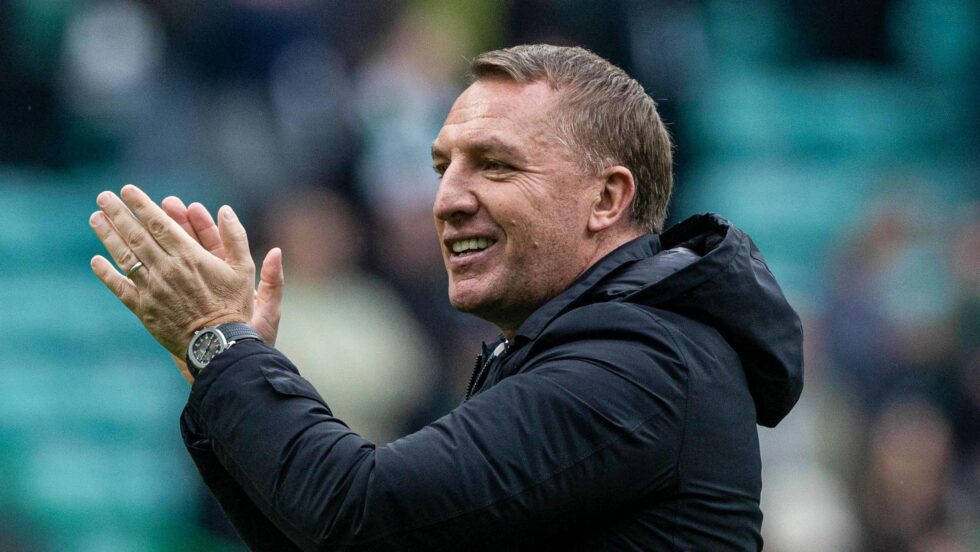
Celtic Football Club has been thrown into disarray following the unexpected resignation of manager Brendan Rodgers, marking a turbulent end to his second spell at the club. The 52-year-old Northern Irishman stepped down after a disappointing run of results, capped by a 3-1 defeat to Heart of Midlothian, which left Celtic eight points adrift of the Scottish Premiership leaders.
Rodgers’ departure came amid growing tension between him and the club’s hierarchy. Reports indicate that Celtic’s majority shareholder, Dermot Desmond, accused the outgoing manager of sowing division within the club’s ranks. In a strongly worded statement, Desmond claimed Rodgers had “full control of football matters, including recruitment,” yet chose to “publicly misrepresent the board” and engage in actions that were “divisive, misleading, and self-serving.”
The fallout reportedly began months earlier, following Celtic’s shock Champions League qualifying exit to Kazakhstan’s Kairat Almaty. Frustrations over the team’s form, transfer strategy, and Rodgers’ management style intensified, creating a rift that ultimately proved irreparable. The club, while acknowledging Rodgers’ contributions, emphasized that the decision was necessary to restore stability and unity.
“Celtic thanks Brendan Rodgers for his service and achievements during his two spells as manager,” the club’s statement read. “However, recent circumstances demanded decisive action to ensure progress and harmony within the team.”
Rodgers first took charge of Celtic in May 2016, where he enjoyed a golden period of dominance—securing two league titles, two Scottish Cups, and two League Cups, including an “Invincible” domestic season. His return in 2023 reignited high expectations, with fans hopeful he could replicate his early success. However, this season’s poor start and a visibly fractured dressing room signaled an inevitable end.
In the wake of his resignation, Celtic announced Martin O’Neill, a revered figure in the club’s history, as interim manager. O’Neill will be supported by former player Shaun Maloney, as the board begins searching for a permanent replacement. The move aims to stabilize the team ahead of crucial upcoming fixtures, including a League Cup semi-final.
Rodgers’ exit has divided opinion among supporters. Some see his resignation as an act of accountability after failing to meet expectations, while others blame the club’s leadership for creating an environment of conflict and poor communication. Regardless, the timing of his departure—mid-season and amid a title race—has left fans anxious about the club’s direction.
As Rodgers leaves Parkhead, questions linger about his next career move. Having previously managed Liverpool and Leicester City, his reputation as a tactical and development-focused coach remains intact, though his tenure at Celtic ends under a cloud of controversy.
For Celtic, the focus now shifts toward rebuilding morale and rediscovering their winning rhythm. With O’Neill at the helm, the club hopes to steady the ship and remind the Scottish Premiership why Celtic Park remains one of football’s most storied grounds.
Rodgers’ departure underscores a harsh truth of modern football: success can be fleeting, and harmony between the manager and the board can determine whether glory is sustained—or lost overnight.
Image by BBC