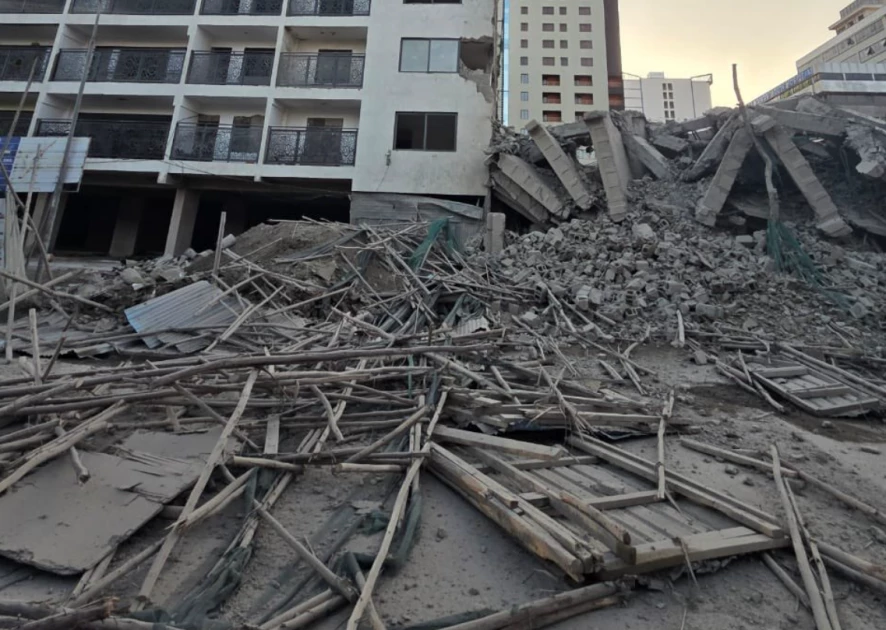
The South C Residents Association (SouCRA) has called for urgent and decisive action following the collapse of a 16-storey building that was under construction in the area, saying the incident exposes deep-seated failures in regulatory oversight and enforcement.
In a statement issued after the incident, the Association said it had repeatedly raised concerns over development approvals and lax enforcement by the Nairobi City County Government, warning that such a tragedy was both foreseeable and preventable.
“This incident, tragic as it is, was foreseeable and preventable. For several years, the South C Residents Association has formally and repeatedly raised concerns with the Nairobi City County Government,” said SouCRA chairman Abdulmalik Gichuki, a professional architect.
Gichuki noted that the Association had previously flagged approvals for developments that may not comply with zoning, density, and height regulations, as well as the disregard of building lines, planning standards, and site supervision requirements.
The Association also criticised enforcement practices, saying accountability often stops at site level, with site agents and workers arrested while developers, financiers, and professional consultants remain largely unaccountable.
“It is common to see court proceedings that result in the release of site agents, while higher-level decision-makers are never charged,” Gichuki said.
According to SouCRA, preliminary visual observations suggest that the building may have collapsed due to structural weaknesses at the foundation level.
“Without prejudice to the findings of any statutory, forensic, or judicial investigation, and based solely on visual observations and available photographic evidence, the manner of failure appears consistent with a progressive structural collapse initiating at or near the lower levels of the building,” Gichuki stated.
He explained that the configuration of the debris — including the near-horizontal stacking of floor slabs — could indicate a loss of load-bearing capacity in key structural elements such as columns or shear walls.
Gichuki noted that such structural failure could arise from multiple factors, including design flaws, poor material quality, substandard construction practices, or deviations from approved plans.
“These observations are not findings of fact. They are intended to underscore the need for an independent and comprehensive forensic investigation and to contextualise our long-standing concerns regarding development control and supervision under the Physical and Land Use Planning Act, 2019,” he said.
The Association called on Nairobi City County, national oversight institutions, and investigative agencies to act independently and without fear or favour.
“No more warnings. No more ignored letters. No more preventable tragedies,” Gichuki said.
When contacted for comment, the Nairobi County Government said it would issue a comprehensive statement on the incident.