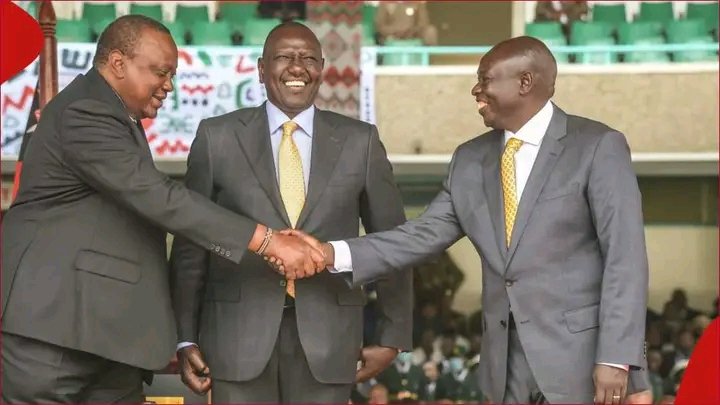
Deputy President Rigathi Gachagua and former President Uhuru Kenyatta have maintained a complicated political relationship marked by both cooperation and tension, illustrating the shifting alliances and strategic manoeuvres that define Kenya’s contemporary political landscape. Their dynamic — at times warm, at times fraught — reflects broader realignments in national politics as leaders navigate succession, influence and power ahead of the 2027 general election.
The relationship between Gachagua and Uhuru spans several years, rooted in mutual interests but also punctuated by disagreements and contrasting political imperatives. When Gachagua was selected as running mate to President William Ruto in 2022, Uhuru’s support played a decisive role in solidifying the ticket, particularly among portions of the electorate that had remained loyal to the former president’s influence and networks. The alliance helped bridge political divides and expand appeal beyond narrow bases.
However, the partnership has not been without strains. At various junctures, observers have noted divergences in policy priorities, communication styles and approaches to governance that have tested the rapport between the two leaders. Some of these tensions have played out publicly, feeding a narrative of intermittent friction even as both figures have reiterated their commitment to national development and party unity.
One of the key drivers of the love-hate dynamic is political positioning. Uhuru, a former head of state with a broad national profile and deep party connections, remains a kingmaker in many circles, while Gachagua — as deputy head of state — is tasked with consolidating influence within the current government and among key constituencies. Their respective priorities sometimes align and at other times diverge, especially as Kenya’s political field evolves ahead of the next election cycle.
Analysts say that some of the tension stems from differing visions about how best to engage with opposition groups, manage internal party politics, and build coalitions that can secure electoral success. Where Uhuru has sometimes taken on a more measured or diplomatic posture, Gachagua’s assertive political style has occasionally unsettled allies and critics alike, shaping perceptions of their partnership in different ways.
Part of the “love” component of the relationship is rooted in strategic necessity and history. Uhuru’s backing was instrumental in Gachagua’s rise to national office, and the two have collaborated on several national initiatives, including infrastructure projects and executive policy agendas that require coherence and cooperation across the leadership. Their ability to work together has helped maintain stability within the ruling coalition and manage competing interests within the political establishment.
Yet critics argue that the “hate” or tension in the relationship arises from individual ambitions and accountability dynamics. As deputy president, Gachagua has had to balance loyalty to the presidency with his own political identity and base, a balancing act that can create friction when expectations do not fully align. Meanwhile, Uhuru’s role as elder statesman and senior party figure means his views and interventions carry considerable weight — sometimes influencing internal debates in ways that may not always sit comfortably with other leaders.
Public opinion on their relationship has been equally mixed. Supporters of the duo argue that differences are natural in any high-stakes political partnership and that both leaders have, more often than not, demonstrated the ability to prioritise national interest over personal disagreements. They point to instances where the two have shown solidarity, especially on matters requiring collective leadership.
Others, however, view the relationship as symptomatic of broader challenges in Kenya’s political culture, where shifting alliances and public differences can fuel uncertainty and distract from policy implementation. In this view, the love-hate narrative reflects not only personal dynamics but also structural pressures within political parties and state leadership that demand negotiation, compromise and sometimes conflict.
As Kenya moves toward the 2027 general election, the nature of the relationship between Gachagua and Uhuru will continue to attract scrutiny, with implications for coalition building, party strategy and voter perceptions. Observers say that how the duo manages their differences — and whether they can present a unified front on key national issues — may influence broader political alignments and outcomes.
For now, the Gachagua-Uhuru dynamic remains a compelling example of how personal rapport, political calculation and national leadership responsibilities intersect in Kenya’s evolving democratic journey.
Image by Newsflash