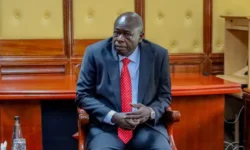
Tensions within Kenya’s opposition are escalating following recent political developments involving former Interior Cabinet Secretary Dr. Fred Matiang’i, raising concerns about unity ahead of the 2027 general elections.
Matiang’i, a prominent figure in the country’s political landscape, has been engaging with leaders across various political factions, including some allied with Deputy President Rigathi Gachagua’s Democratic Change Party (DCP). These interactions have sparked apprehension among Gachagua’s allies, who interpret the meetings as politically strategic moves that could undermine their influence within the opposition.
Speaking publicly, Njeri Kahiga, DCP National Youth Coordinator, expressed her concern: “Your political enemies are your enemies, and this is a phrase that Matiang’i must understand, having served in government for the last ten years. When we saw him dining with our party leader’s rivals, it confirmed our worst fears that he has been hiding a dagger against us all along.” Her remarks underscore the depth of mistrust brewing within the opposition.
Political analysts argue that such fractures could weaken the opposition’s ability to present a cohesive front against the ruling United Democratic Alliance (UDA) government. “The opposition is dealing with multiple competing ambitions,” said Dr. Henry Wekesa, a political analyst at the University of Nairobi. “While some leaders aim to build alliances to strengthen their chances, others perceive these moves as betrayals. These dynamics risk fragmenting their collective influence ahead of the 2027 elections.”
Matiang’i’s interactions with leaders from various opposition factions are viewed differently across the political spectrum. Supporters argue that his engagements are strategic, aiming to foster dialogue and explore coalition possibilities that could ultimately consolidate opposition votes. Critics, however, see the moves as indicative of internal divisions, suggesting that a lack of trust among key players may prevent the opposition from forming a unified strategy to challenge the ruling party.
The situation highlights broader challenges for opposition parties, particularly the difficulty of balancing personal political ambitions with collective electoral goals. In recent months, opposition leaders have expressed concern over rising UDA influence in several key counties, intensifying pressure to forge alliances. Yet, the Matiang’i-Gachagua rift demonstrates how internal disagreements and competing loyalties continue to complicate these efforts.
Observers note that how the opposition navigates this period will be crucial. Analysts say that clear communication, compromise, and a willingness to prioritize collective goals over individual interests will determine whether opposition parties can build the cohesion necessary for a credible challenge in 2027. Without such unity, fragmented messaging and mistrust could undermine their electoral prospects.
While the Matiang’i-Gachagua rift is currently dominating headlines, it is just one manifestation of the broader challenges facing opposition parties. Political commentators emphasize that upcoming months will test the ability of opposition leaders to reconcile differences, foster trust, and develop a coherent strategy that resonates with voters.
As Kenya moves closer to the 2027 elections, the developments surrounding Matiang’i and Gachagua serve as a reminder that internal opposition dynamics are as critical to electoral outcomes as public support. The path the opposition chooses in addressing these divisions may ultimately shape the political landscape of the country in the years to come.