National Assembly Speaker Moses Wetang’ula has called on church leaders to spearhead voter registration efforts in Western Kenya, saying more than 700,000 eligible residents in Bungoma and Kakamega counties have yet to register despite possessing national identity cards.
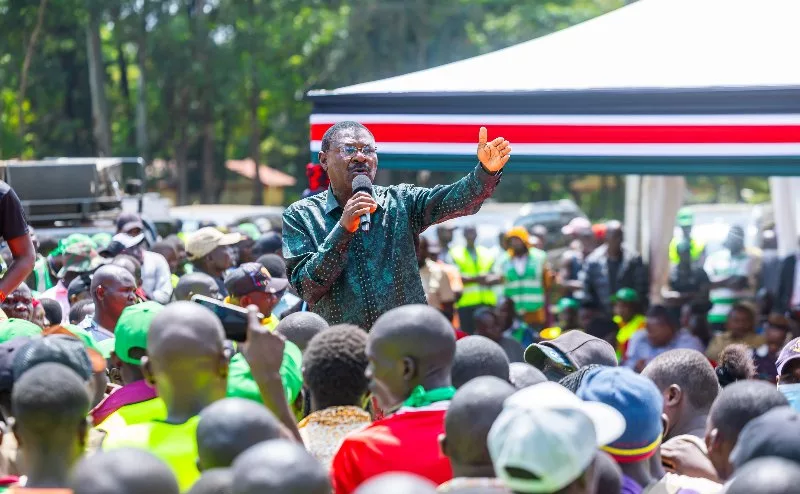
Speaking during a Mothers’ Union fundraising event at Nangili ACK Church in Matungu Constituency, Wetang’ula urged religious leaders to mobilise their congregations ahead of the 2027 General Election, describing voter registration as both a civic duty and a critical step toward strengthening the region’s political influence.
According to the Speaker, research conducted by leaders from Western Kenya revealed that a significant number of eligible voters remain outside the electoral register.
“We are appealing to our church leaders to encourage members of their congregations who have acquired national identity cards to register as voters,” Wetang’ula said.
He argued that increasing voter registration would enhance Western Kenya’s bargaining power in national politics.
“If we organise ourselves and register every eligible voter, our region will have a stronger voice in national affairs,” he added.
Calls for peaceful politics
Wetang’ula also appealed to political leaders to embrace peaceful, issue-based campaigns as the country prepares for the 2027 elections.
He cautioned against personal attacks, insults and divisive rhetoric, saying political competition should focus on improving the lives of Kenyans.
“Politics is not enmity. We do not want insults or abusive language. We want politics that focuses on development and improving the lives of our people,” he said.
Defends Kenya Kwanza’s development record
The Speaker defended President William Ruto’s development agenda in Western Kenya, arguing that the region has benefited significantly from government investments under the Kenya Kwanza administration.
Among the projects he highlighted were the revival of Mumias and Nzoia sugar factories, the resumption of stalled infrastructure projects such as Bukhungu Stadium and the Kakamega Level 6 Teaching and Referral Hospital, construction of modern markets, and the planned extension of the Standard Gauge Railway (SGR) from Naivasha to Malaba.
Wetang’ula also pointed to reforms in the sugar sector requiring millers to share annual bonuses with cane farmers after profits are realised.
“The reforms are aimed at ensuring farmers benefit directly from the success of the sugar industry and improve their livelihoods,” he said.
Patience in leadership
Addressing the region’s political ambitions, Wetang’ula urged leaders from Western Kenya to exercise patience in their pursuit of higher office, saying leadership is built over time through experience and strategic planning.
“Leadership is a journey. Those who have led this country built their careers over many years before becoming president. We should also remain patient and strategic,” he said.
Focus shifts to 2027
Wetang’ula’s appeal highlights the growing importance political leaders are placing on voter registration ahead of the 2027 General Election.
By urging churches to mobilise eligible voters, the Speaker signalled the role religious institutions could play in increasing voter participation across Western Kenya.
His remarks also reflect Kenya Kwanza’s broader political strategy of linking ongoing development projects with electoral support in a region expected to play a decisive role in the next general election.
At the same time, his calls for issue-based politics and patience among aspiring leaders underscore efforts to foster unity within Western Kenya while positioning the region as a stronger political bloc in future national leadership contests.