


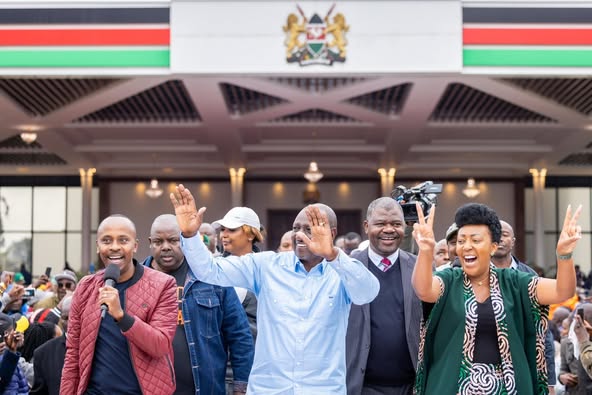
The Kenyan government’s new youth empowerment project, NYOTA (National Youth Opportunities Towards Advancement), has once again ignited debate over its financial sustainability and long-term impact. Marketed as a bold solution to youth unemployment, the program promises grants and business support of up to KSh 50,000 per enterprise across all wards — a move officials claim will uplift small and medium-sized businesses nationwide. Yet, beneath the optimistic headlines lies growing public concern about whether the government can afford such generosity given its current financial struggles.
Many Kenyans question the wisdom of launching new funding initiatives when the country’s debt levels remain high and austerity measures are tightening across essential sectors. Critics note that even as ministries slash operational budgets and delay payments to contractors, the government continues to unveil new schemes such as Hustler Fund Empowerments, the Women Enterprise Fund, and now NYOTA. To skeptics, these initiatives appear more like political handouts than structured development programs.
The Hustler Fund, for instance, was introduced in 2022 with the aim of providing affordable credit to informal workers and small business owners under the Bottom-Up Economic Transformation Agenda. Initially hailed as a game changer, the fund soon faced major challenges. Reports indicate that default rates have soared to over 70 percent, while many borrowers claim to have received minimal support in growing their businesses. The lack of a clear repayment framework, coupled with limited auditing, has further fueled suspicions that the fund is losing its intended focus.
Adding to this unease is the unclear source of funding for the empowerment drives. Observers point out that senior government officials have been crisscrossing counties, disbursing millions of shillings to youth groups and traders at public rallies — yet little documentation shows where the money originates or how it is being accounted for. In some cases, these disbursements exceed budget allocations approved by Parliament, raising questions about fiscal discipline.
Nevertheless, government representatives insist the empowerment programs are legitimate and aligned with their manifesto commitments. They argue that NYOTA and similar funds are designed to stimulate grassroots economic activity by giving youth and women access to quick capital. According to officials, every program includes mechanisms for oversight, transparency, and exclusion of Hustler Fund defaulters to ensure only eligible participants benefit.
But for economists and civil society watchdogs, the concern remains that Kenya is spending money it doesn’t have. With the country already relying heavily on foreign loans to service its existing debts, launching new cash-transfer programs could worsen the fiscal deficit. Former Chief Justice David Maraga and other opinion leaders have warned that politically motivated “empowerment” tours risk undermining national priorities such as healthcare, education, and infrastructure development.
As the country gears up for another election cycle, the timing of these initiatives has sparked speculation that the government is using public funds to strengthen its political base. Without transparency, detailed audits, and measurable outcomes, empowerment could become yet another populist slogan that leaves no lasting economic footprint.
For these programs to succeed, Kenya will need more than lofty speeches and cash disbursements. It will require strict accountability, clear implementation frameworks, and a realistic understanding of the country’s financial limitations. Otherwise, the nation risks turning empowerment into a cycle of dependency — one that burdens taxpayers instead of building true economic resilience.
IMAGE BY KRN


