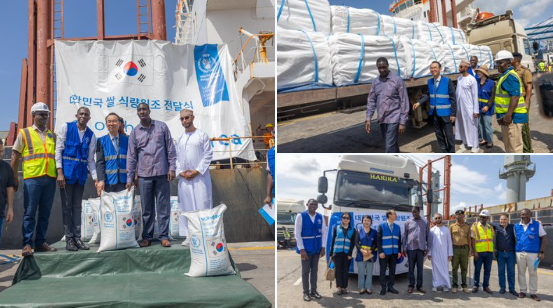
The World Food Programme (WFP) has received a substantial donation from the Republic of Korea to bolster food assistance efforts for refugees in Kenya. The consignment, valued at KSh2.3 billion, consists of over 23,000 metric tons of rice and is expected to benefit approximately 720,000 refugees residing in Dadaab, Kakuma, and Kalobeyei settlements.
The shipment arrived at the Port of Mombasa on Friday, July 11, marking the largest donation made by South Korea to WFP’s operations in Kenya since the partnership began in 2018. With this contribution, WFP will be able to meet the food needs of vulnerable refugee populations for the next six months, easing pressure on already strained resources amid rising humanitarian needs.
Baimankay Sankoh, WFP’s Deputy Country Director in Kenya, expressed deep appreciation for the support, saying the rice will make a critical difference at a time when humanitarian resources are shrinking. “This generous contribution is vital as we work to respond to the needs of an increasing number of refugees in Kenya, while the resources available to support them are decreasing,” Sankoh said. “Most refugees are unable to work or return home and are entirely dependent on humanitarian assistance to survive. This generous rice contribution from the Republic of Korea is more vital than ever for WFP to continue supporting the food needs of hundreds of thousands of refugees. And we sincerely hope that this expanded rice contribution will continue in the future.”
The donation comes at a time when humanitarian actors have been sounding the alarm over worsening food insecurity in Kenya’s refugee-hosting regions, especially following the termination of a critical USAID programme that had previously supported food and nutrition interventions in the north. The situation has been compounded by conflict-driven displacement in neighbouring countries such as Somalia, South Sudan, and the Democratic Republic of Congo, all contributing to the surge in Kenya’s refugee population.
According to the United Nations, Kenya now hosts over 843,000 refugees and asylum seekers, a sharp increase of more than 70 percent over the last five years. The influx has stretched the capacity of humanitarian agencies, forcing WFP to scale back assistance. As a result of funding gaps, food rations for many refugees have been reduced to one-third of the minimum daily requirement, raising concerns over rising malnutrition and humanitarian vulnerability.
South Korea’s Ambassador to Kenya, Kang Hyung-shik, underscored his country’s commitment to supporting vulnerable populations, not just in Kenya, but across the East Africa region. “The Republic of Korea is proud to stand alongside other nations in responding to the rising hunger crisis and providing hope to thousands of families in the eastern Africa region,” he said. “Our history is deeply rooted in global solidarity, and we remain committed to standing with those in need.”
The WFP has called on other international partners and donor countries to emulate South Korea’s example by stepping up their support for refugee communities in Kenya. With the growing demands and limited humanitarian funding, sustaining aid efforts in the long term will require consistent global cooperation, especially as climate change, conflict, and economic instability continue to displace thousands across the continent.
The rice donation will be distributed through WFP’s existing food relief structures within the camps, with priority given to the most vulnerable groups, including women, children, and the elderly. The WFP has also assured beneficiaries of transparent and efficient distribution, in coordination with Kenya’s Department of Refugee Services and relevant humanitarian partners.
As Kenya continues to play host to one of the largest refugee populations in the Horn of Africa, the country’s reliance on global partnerships remains a critical pillar in supporting the dignity and survival of displaced families. The Republic of Korea’s timely assistance has not only filled an urgent food gap but also renewed a spirit of international cooperation in times of need.