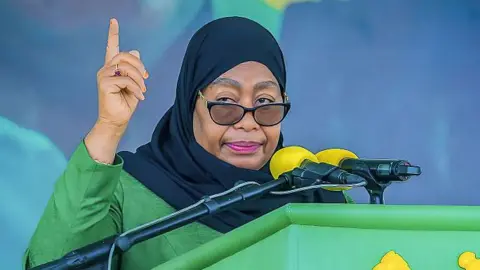
Tanzania’s President Samia Suluhu Hassan was officially sworn in for a second term on Monday, November 3, 2025, at a ceremony in Dodoma, marking the beginning of another five-year tenure following a controversial election that has sparked both celebration and unrest across the nation.
The inauguration, held at a military parade ground in the capital, was attended by senior government officials, members of the diplomatic corps, and regional leaders, including representatives from Kenya and Uganda. President Suluhu, dressed in her signature red headscarf and dark sunglasses, took the oath of office as thousands watched on state television. The event, however, was held under tight security, reflecting the tension that followed the October 29 election, which has been criticized for its lack of competition and transparency.
The election results, which declared President Suluhu the winner with over 97 percent of the vote, were quickly dismissed by opposition leaders and human rights groups as a “mockery of democracy.” Several opposition candidates had been barred from running, and reports from international observers indicated irregularities and intimidation of voters in some regions. Despite this, the ruling Chama Cha Mapinduzi (CCM) party maintained that the election was free and fair.
In her inaugural address, President Suluhu Hassan pledged to continue her administration’s efforts to strengthen economic growth, promote gender equality, and enhance infrastructure development. She also called for unity and peace, urging Tanzanians to “look forward, not backward,” and to focus on rebuilding the nation together.
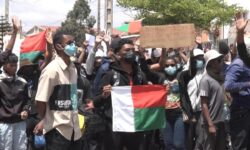
Her message of reconciliation, however, did little to calm critics who accuse her government of stifling dissent and restricting media freedoms. In several regions, notably in Dar es Salaam and Arusha, small groups of protesters clashed with police during and after the announcement of the election results. The Tanzanian Human Rights Defenders Coalition has since reported multiple arrests and at least ten fatalities linked to the unrest.
President Suluhu Hassan’s political journey has been marked by both progress and controversy. When she first assumed office in 2021 following the death of former President John Magufuli, many viewed her as a reformist leader who would open democratic space and mend ties with the international community. However, as she begins her second term, critics argue that her administration has increasingly adopted authoritarian tendencies, raising fears that Tanzania’s democracy is regressing.
Despite the controversy, the inauguration ceremony drew support from several African leaders, who praised Suluhu’s leadership and emphasized the need for regional stability. Kenyan Interior Cabinet Secretary Kithure Kindiki represented President William Ruto, underscoring Kenya’s continued cooperation with Tanzania in areas of trade, security, and regional integration.
As President Suluhu embarks on her new term, she faces an uphill task of restoring public trust, addressing economic challenges, and navigating the delicate balance between authority and accountability. Her leadership in the coming months will likely define not only her legacy but also the future of democracy in Tanzania.
Image by BBC