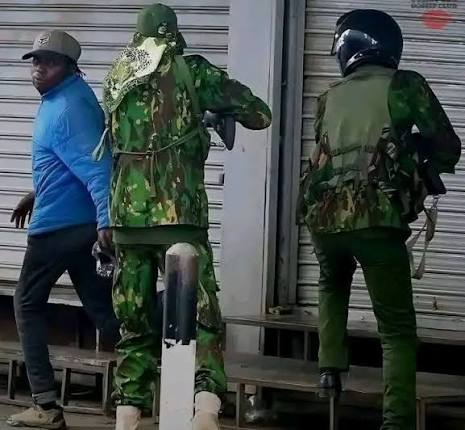
The High Court has declined to grant bail to police officer Klinzy Baraza, who is facing a murder charge in connection with the fatal shooting of mask vendor Boniface Mwangi.
In a ruling delivered by Justice Margaret Muigai, the court found that the circumstances surrounding the case were exceptional and raised serious concerns about the safety of witnesses and the integrity of the ongoing investigations.
Justice Muigai noted that the incident had attracted wide public attention and had already entered the public domain, a factor the court said heightened the sensitivity of the matter.
The judge further observed that members of the deceased’s family had reportedly been subjected to harassment since the incident. According to submissions presented before the court, the family has received numerous unsolicited phone calls and messages, creating fear and anxiety among relatives and raising concerns about possible interference with the case.
“The court is alive to the fact that this matter has generated intense public interest and that the deceased’s family is vulnerable at this stage of the proceedings,” the judge stated in her ruling.
A key issue considered by the court was the professional position of the accused. Justice Muigai underscored that Baraza is a serving police officer and therefore holds authority and influence that could potentially be used to interfere with witnesses or disrupt investigations.
The court agreed with the prosecution that the accused’s status as a law enforcement officer presented a real risk, particularly in a case where witnesses may already feel intimidated or exposed.
The prosecution argued that there were compelling reasons to deny bail, including the need to protect victims and witnesses, preserve public order and safeguard the integrity of the judicial process. Prosecutors warned that releasing the accused at this stage could compromise the safety of key individuals involved in the case and undermine public confidence in the justice system.
In her decision, Justice Muigai found that the prosecution had met the constitutional threshold for demonstrating compelling reasons to restrict the accused person’s right to bail.
“The court is persuaded that the risks highlighted by the prosecution, particularly in relation to witness protection and public security, cannot be adequately mitigated at this stage,” the judge ruled.
Baraza, through his defence, had urged the court to release him on bail, assuring the court that he would fully comply with all conditions set by the court. He also cited his personal circumstances, including the fact that he has a young family that depends on him for care and support.
However, the court held that while the accused’s family responsibilities were acknowledged, they were not sufficient to outweigh the risks identified by the prosecution.
Justice Muigai stressed that the right to bail, though constitutionally protected, is not absolute and must be balanced against the broader interests of justice, including the protection of victims and witnesses.
“The court has carefully weighed the personal circumstances of the accused against the compelling reasons advanced by the State and finds that the scales tilt in favour of preserving the integrity of the trial process,” the judge stated.
At the same time, the court assured both the accused and the public that the matter would be handled without unnecessary delay. The trial court committed to fast-tracking the proceedings to ensure that the case is concluded within a reasonable time.
The matter is scheduled to be mentioned on 17 February to confirm compliance with pre-trial directions and to set further timelines.
Following the ruling, Baraza will remain in custody as the murder trial continues.
The case has attracted significant public attention, with many observers closely monitoring how the courts handle allegations involving serving security officers, amid growing calls for accountability and protection for vulnerable victims and witnesses in criminal proceedings.