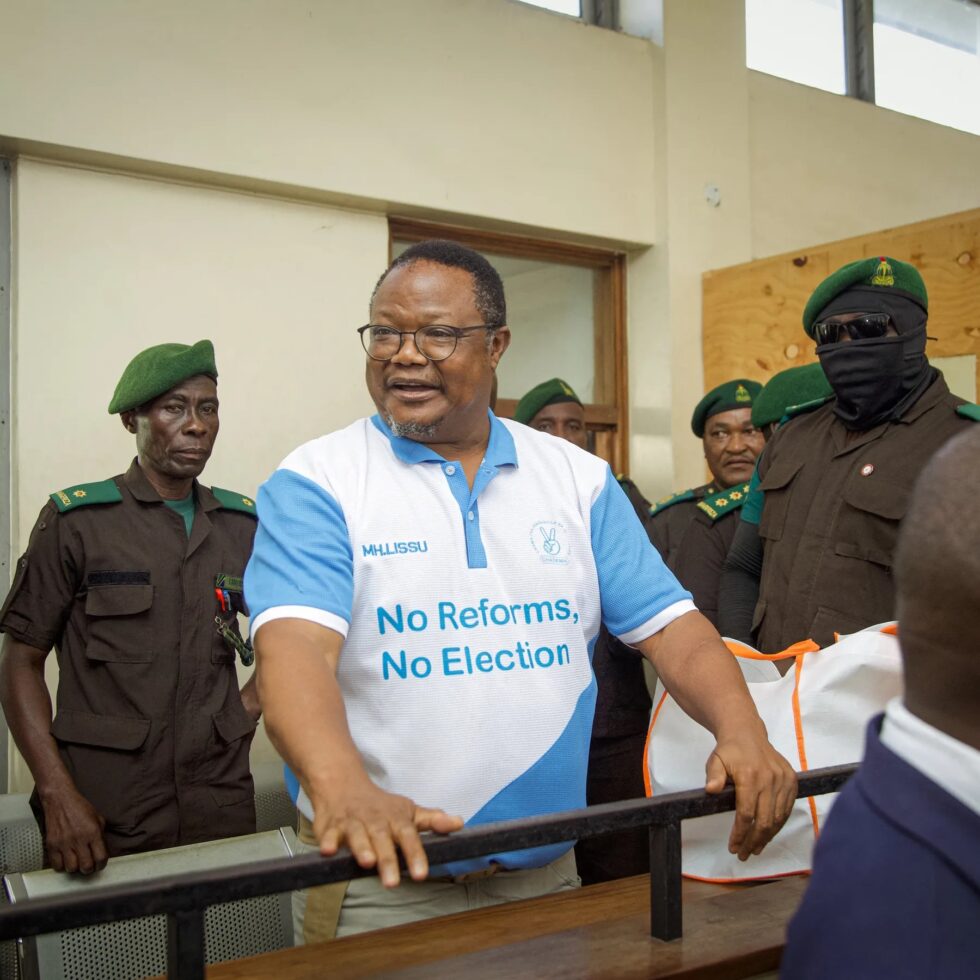
Tanzanian opposition leader Tundu Lissu has gone on trial for treason, just weeks before the country’s national elections. The case has attracted both local and international attention, with observers calling it a critical moment for Tanzania’s democracy.
Lissu, a senior member of the CHADEMA party, was arrested earlier this year on charges of inciting rebellion and attempting to undermine state authority through public remarks. According to prosecutors, Lissu’s statements during a political rally in April amounted to an attempt to disrupt peace and influence the upcoming elections unlawfully. The politician has, however, dismissed the accusations as politically motivated, insisting that the government is using the courts to silence opposition voices.
The trial, which began under heavy police presence, was closed to live media coverage following a directive from the court. Authorities said the decision was necessary to protect witnesses and ensure order during the proceedings. Members of Lissu’s legal team have accused the state of restricting their access to their client, claiming he has not been allowed to consult his lawyers privately since his detention. The court later permitted Lissu to represent himself in some parts of the proceedings, a move that his supporters say underscores the difficulty of his legal defense.
Lissu’s prosecution comes at a time when his party, CHADEMA, has been barred from contesting in the October 28 elections, after electoral officials claimed the party failed to sign a mandatory code of conduct. The disqualification, coupled with Lissu’s arrest, has sparked growing concern among civil society groups and international human rights organizations about the shrinking political space in Tanzania.
Rights advocates have pointed out that the case reflects a broader pattern of government suppression of dissent, including reports of arbitrary arrests, harassment of journalists, and intimidation of opposition candidates. They argue that using treason charges—a serious offense punishable by death—against a political figure sets a dangerous precedent that criminalizes free speech and opposition politics.
In response, government officials have maintained that the judiciary must be allowed to operate independently and that every citizen, regardless of political affiliation, is subject to the law. They argue that if there is credible evidence of wrongdoing, it should be presented and tested in court rather than dismissed as a political ploy.
Despite these assurances, the trial has fueled tension across the country, with supporters of Lissu staging peaceful demonstrations in several regions, calling for his release and a fair electoral process. Analysts warn that the outcome of the case could shape both the credibility of the upcoming elections and Tanzania’s international reputation regarding human rights and political freedoms.
As proceedings continue, Lissu remains resolute, stating that his fight is not just for his own freedom but for the right of Tanzanians to speak and vote without fear. For many observers, his case has become a symbol of the struggle for democracy and justice in Tanzania, a test of whether the nation can balance law enforcement with the protection of political liberty.
Image by Aljazeera