For decades, fields of sugarcane have defined the economic landscape of Ikhanyi Village in Malava Constituency, Kakamega County.
However, heavy reliance on the crop has often left families vulnerable to long maturation periods, fluctuating prices and unpredictable payment cycles.
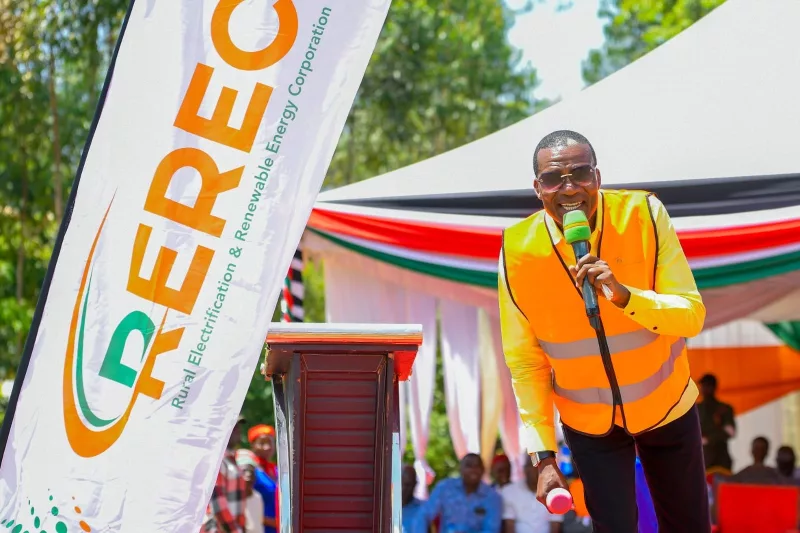
That economic dependence is now beginning to change following a recent grid-connection drive by the Rural Electrification and Renewable Energy Corporation (REREC), which is opening new opportunities for households and small businesses.
In the first phase of the project, 95 homes were connected to electricity, bringing renewed optimism to residents who see reliable power as more than a source of lighting.
Local entrepreneurs are already exploring opportunities in welding, refrigeration, salons and other electricity-dependent businesses at nearby shopping centres.
The new connections are expected to provide residents with opportunities to diversify their sources of income and reduce dependence on sugarcane farming.
Hope for unemployed youth
Peter Adanje, a resident of Ikhanyi Village and father of six, views the electrification project as an important opportunity for young people in the area.
Adanje said several of his children have struggled to find employment after completing their studies.
“The grid connection offers a viable platform for them to venture into self-employment and build independent livelihoods,” he said.
For residents like Adanje, access to electricity could allow young people to establish small enterprises instead of relying solely on formal employment opportunities, which remain limited.
The emergence of welding workshops, salons, refrigeration businesses and other enterprises could also create additional employment opportunities within the community.
Better learning environment
The impact of the project is also being felt by students.
Simon Mukuchu, a Form Three student at Mugai Secondary School, said reliable electricity would allow him to study for longer in the evenings.
He noted that students have previously depended on dim tin lamps for evening studies.
Access to reliable lighting, he said, would eliminate that dependency and give learners more time to prepare for national examinations.
The project therefore has the potential to support not only economic activity but also education and household welfare.
Sh2.46 billion electrification plan
The local project forms part of a wider Sh2.46 billion county-wide electrification masterplan aimed at expanding access to electricity across Kakamega County.
During a project appraisal in Malava, Energy Cabinet Secretary Opiyo Wandayi said the national government intends to connect more than 40,000 households across the county.
Wandayi said the rollout was part of efforts to promote equitable development and expand access to essential infrastructure in underserved communities.
The Cabinet Secretary also praised Malava MP David Athman Ndakwa for his efforts to advance development projects in the constituency despite having served in Parliament for only seven months.
From electricity to enterprise
For residents of Ikhanyi, the arrival of electricity represents an opportunity to transform the local economy.
While sugarcane farming is expected to remain an important economic activity, reliable electricity could enable households to establish additional income-generating activities.
The availability of power can support businesses ranging from welding and salons to refrigeration, food processing, retail and other small-scale enterprises.
However, the success of the project will ultimately depend on how residents use the new infrastructure.
As power lines now crisscross Ikhanyi, residents are being encouraged to move beyond simply having access to electricity and instead turn the new connections into productive economic opportunities.
The infrastructure is in place. The next challenge is for households, entrepreneurs and young people to harness the power supply to create businesses, support education, generate employment and build more resilient livelihoods.
For a community long defined by sugarcane, electricity could provide the spark needed to build an economy that extends beyond the cane fields.